


Professional catering is defined as the full management of food, service, and dining logistics for a hosted event. Understanding why catering supports fundraiser dinner events comes down to one fact: food shapes how donors feel, and how donors feel determines how much they give. Great catering creates a positive atmosphere where guests feel welcomed and engaged. That atmosphere is not a bonus. It is the foundation of every successful charity dinner. Desertdine has seen this firsthand across events in the Greater Palm Springs area, where a well-executed meal turns a room of guests into a room of committed supporters.
Why catering supports fundraiser dinner events: the core case
Catering at a fundraiser dinner is not simply about feeding attendees. It is the primary tool for shaping donor experience, controlling event flow, and building the emotional conditions that lead to generous giving. Donors stay 15–30% longer and engage more actively when they are well-fed and comfortable. That additional time translates directly into more auction bids, more pledge cards signed, and more conversations with your organization’s leadership.
The industry term for this effect is “hospitality-driven donor retention.” It recognizes that the physical comfort of a guest, including food quality, service pace, and table presentation, influences their emotional state and willingness to commit. Nonprofit organizers who treat catering as a line-item cost rather than a fundraising tool consistently leave money on the table. Treating it as an investment changes the entire planning calculus.
Food is also the strongest impression guests take away from any event. A donor who remembers a beautifully presented three-course meal will associate that quality with your organization’s credibility and professionalism. That association carries forward to future giving cycles.
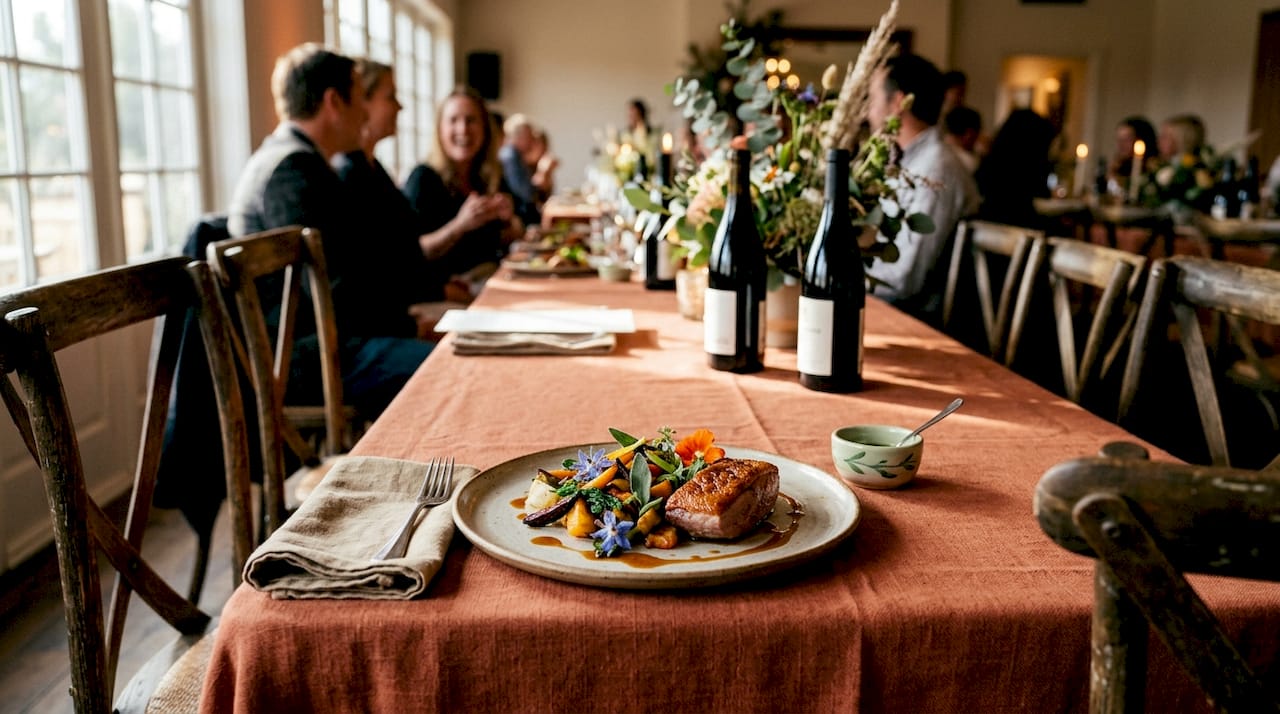
How does catering enhance donor engagement and generosity?
The connection between quality catering and donor behavior is direct and measurable. Comfort drives generosity. When guests are not waiting long for their meals, not struggling with unclear service, and not distracted by poor food quality, their attention stays on your mission.
Consider a gala dinner where the main course arrives during the keynote speech. Service interruptions break emotional momentum at exactly the wrong moment. A professional caterer coordinates food timing with your program schedule so that plates clear before the ask, not during it.
“The meal is the moment. When guests feel genuinely cared for at the table, they carry that feeling into every decision they make that evening, including how much they give.”
Well-structured catering also supports specific fundraising mechanics:
- Silent auctions benefit from a reception-style canapé service that keeps guests moving through the room and stopping at bid sheets.
- Live auctions need a seated, plated format so attention is focused and bidding is not interrupted by guests getting up for food.
- Pledge drives work best after a satisfying main course, when guests are relaxed and emotionally open.
- Networking segments thrive with passed appetizers and stationed food that encourages mingling rather than anchoring guests to their seats.
Matching your catering format to your fundraising mechanics is one of the most underused tactics in nonprofit event planning.
What are the operational benefits of professional catering?
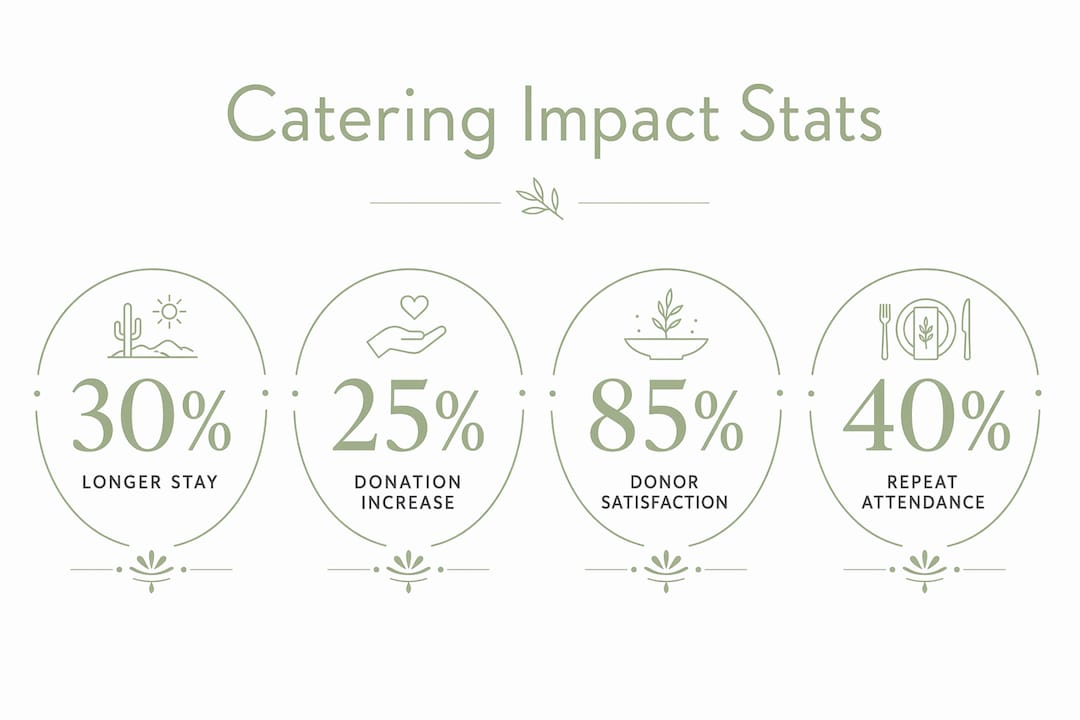
Professional catering reduces organizer stress by managing inventory, preparation, delivery, staffing, and cleanup. That scope of work is significant. When a catering team owns those responsibilities, your staff and volunteers can focus entirely on donor relationships, program execution, and fundraising goals.
The operational benefits follow a clear sequence:
- Pre-event planning. Share a detailed event schedule with your catering manager at least 2–4 weeks in advance. Detailed briefs improve event flow and service timing far more than headcounts alone. Include your program run-of-show, speaker slots, auction timing, and any planned pauses.
- Day-of coordination. A professional catering team assigns a dedicated event lead who communicates directly with your event coordinator. This single point of contact prevents the timing errors that derail dinner programs.
- Service execution. Trained servers understand pacing. They know when to clear, when to hold, and when to refill without disrupting a speaker or a moment of recognition.
- Post-event cleanup. A full-service caterer handles breakdown and cleanup, which means your team ends the night focused on thanking donors, not stacking chairs.
Pro Tip: Build a 15-minute buffer into your catering schedule between the end of the main course and the start of your live ask. That window lets servers clear plates quietly and gives your auctioneer or executive director a clean, attentive room.
Many organizers underestimate the importance of detailed program coordination with caterers. The caterer who receives only a headcount and a venue address will default to standard timing. The caterer who receives your full program becomes a strategic partner in your event’s success.
How do you choose the right catering style for a fundraiser?
Matching catering style to event goals affects both atmosphere and donor interaction. The three primary formats each serve different fundraising objectives.
| Catering style | Best for | Donor experience |
|---|---|---|
| Plated sit-down dinner | Live auctions, pledge drives, formal galas | Focused, attentive, emotionally engaged |
| Buffet service | Community fundraisers, casual events | Relaxed, social, self-directed |
| Canapé/reception style | Silent auctions, networking receptions | Mobile, interactive, exploration-focused |
Thematic alignment between your menu and your organization’s mission also matters more than most organizers realize. A food bank fundraiser that serves locally sourced, farm-to-table dishes tells a story about community and nourishment. An environmental nonprofit that offers a plant-forward menu reinforces its values through every course. These choices are not decorative. They deepen the donor’s connection to your cause.
Inclusivity is non-negotiable. Dietary accommodations including vegan, gluten-free, and lactose-free options ensure every guest feels considered. A donor who cannot eat anything on the menu will not stay engaged. Communicate dietary needs to your caterer during the planning phase, not the week of the event.
Key menu planning considerations for charity dinners:
- Confirm dietary accommodation options at least three weeks before the event.
- Request a tasting for multi-course meals to verify quality and presentation.
- Align portion sizes with your event length. A three-hour gala needs more food than a 90-minute reception.
- Ask your caterer about building a custom menu that reflects your organization’s identity and guest profile.
How do you maximize catering ROI for a nonprofit fundraiser?
Balancing high-quality food within budget and leveraging local food partnerships can maximize return on investment for charity event catering. The goal is not to spend the least. The goal is to spend wisely so that catering quality supports, rather than competes with, your fundraising proceeds.
Practical budget tactics for nonprofit organizers:
- Prioritize the main course. Guests judge the meal by its centerpiece. A well-executed entrée with a simple salad and dessert outperforms a mediocre multi-course spread.
- Seek in-kind sponsorships. Local restaurants, food distributors, and beverage companies often sponsor charity events in exchange for recognition. This reduces your catering cost while adding credibility.
- Optimize portion sizes. Work with your caterer to right-size portions for your guest count and event length. Overordering drives up cost without improving experience.
- Reduce waste through accurate RSVPs. Confirm final headcounts no later than five days before the event. Late additions are manageable; last-minute reductions mean wasted food and wasted budget.
Pro Tip: Ask your caterer about a tiered menu structure. A premium option for VIP tables and a strong standard menu for general seating lets you honor major donors without inflating your per-head cost across the entire event.
Well-presented food enhances guests’ enjoyment and encourages generous donations. Presentation is part of the investment. A beautifully plated dish signals that your organization takes quality seriously. That signal matters to donors who are deciding whether your nonprofit is worth their continued support.
Key Takeaways
Professional catering supports fundraiser dinner events by shaping donor comfort, controlling event flow, and creating the conditions that lead directly to higher giving.
| Point | Details |
|---|---|
| Catering drives donor retention | Well-fed donors stay 15–30% longer and engage more actively with auctions and pledges. |
| Format matches fundraising mechanics | Plated dinners suit live asks; canapé service supports silent auctions and networking. |
| Coordination is the key variable | Sharing a detailed program schedule with your caterer 2–4 weeks out prevents timing failures. |
| Inclusivity protects engagement | Dietary accommodations for vegan, gluten-free, and lactose-free guests keep every donor at the table. |
| Budget wisely, not cheaply | Prioritize the main course, seek in-kind sponsorships, and right-size portions to protect fundraising proceeds. |
What I’ve learned about catering as a fundraiser asset
Most nonprofit organizers I’ve worked with treat catering as a necessary expense. They budget for it last, negotiate it down first, and hand it off to a volunteer coordinator who has never managed a food service operation. That approach costs more than it saves.
The organizers who raise the most at their dinner events treat catering as a program decision, not a logistics decision. They ask: “How does this meal support our ask?” They build the catering timeline around the fundraising program, not the other way around. That shift in thinking changes everything about how the evening unfolds.
The misconception I hear most often is that donors do not notice the food. They notice. They may not articulate it, but a rushed service, a cold entrée, or a table with no vegetarian option creates friction. Friction kills generosity. Comfort creates it.
My advice: spend 30 minutes with your caterer reviewing your program run-of-show before you finalize any other event detail. That conversation will surface timing conflicts, service gaps, and menu mismatches that would otherwise show up on the night of the event. Learning how to choose a caterer who understands event programming, not just food production, is the single most valuable decision you will make in your planning process.
— James
Desertdine: catering built for events that matter
Planning a fundraiser dinner in the Greater Palm Springs area means you need a catering partner who understands both the culinary and the programmatic demands of nonprofit events.
Desertdine specializes in full-service catering for events where the stakes are high and the details matter. From customizable multi-course menus built around your mission to dedicated event coordination that keeps your program on schedule, Desertdine brings the same level of care to a charity gala as it does to a private celebration. Locally sourced ingredients, bespoke menu design, and professional staffing are standard. Book your event with Desertdine and give your donors an evening that reflects the quality of your cause. You can also explore private event catering options tailored to your guest count and budget.
FAQ
Why does catering quality affect fundraising results?
Donors stay longer and engage more when they are well-fed and comfortable, which directly increases auction participation and pledge totals. Catering quality shapes the emotional state that drives giving decisions.
What catering style works best for a charity dinner?
Plated sit-down service works best for live auctions and pledge drives because it creates a focused, attentive room. Canapé and reception-style service suits silent auctions where guest movement supports bidding activity.
How far in advance should I coordinate with my caterer?
Share a detailed event schedule with your catering manager at least 2–4 weeks before the event. Detailed briefs that include your program run-of-show produce better service timing than headcounts alone.
How do I keep catering costs manageable for a nonprofit event?
Prioritize the main course, seek in-kind food sponsorships from local partners, and confirm final headcounts at least five days out to reduce waste. A tiered menu structure for VIP and general seating also controls per-head costs without reducing quality.
Do dietary accommodations really matter at fundraiser dinners?
Vegan, gluten-free, and lactose-free options ensure every guest feels included and stays engaged throughout the event. A donor who cannot eat the meal will disengage early, which reduces their likelihood of giving.
Recommended
- Desert Dine Catering |Why Catering Supports Outdoor Sunset Parties• Palm Springs & Coachella Valley
- Desert Dine Catering |How Catering Supports Networking Events That Connect• Palm Springs & Coachella Valley
- Desert Dine Catering |How Catering Supports Networking Events That Connect• Palm Springs & Coachella Valley
- Desert Dine Catering |Why Catering Supports Wellness Retreat Menus• Palm Springs & Coachella Valley


