


A wedding catering coordination call is a dedicated planning conversation between you and your caterer that establishes the foundation for your entire food and beverage service. Industry professionals refer to this as a discovery call or initial consultation, and it covers the core logistics of your event: guest count, budget, service style, and venue constraints. This call happens before any tasting or contract, typically 6–12 months before your wedding date. Getting it right sets the tone for everything that follows.
What is a wedding catering coordination call?
A wedding catering coordination call is a structured, focused conversation where you and your caterer align on the essential details of your event before any formal planning begins. The industry standard term is a discovery call or initial consultation, though couples often search for it as a coordination call. Either way, the purpose is the same: establish baseline logistics and determine whether the caterer is the right fit for your vision.
This call moves the relationship beyond a sales exchange. Coordination calls shift the dynamic from information gathering to a collaborative partnership, where the caterer begins tailoring their approach to your specific event. That shift matters because a generic caterer proposal rarely reflects your actual needs.

The call also filters fit on both sides. You learn whether the caterer can handle your guest count, your venue’s kitchen setup, and your preferred service style. The caterer learns whether your budget and expectations align with what they deliver. Both parties leave with clarity.
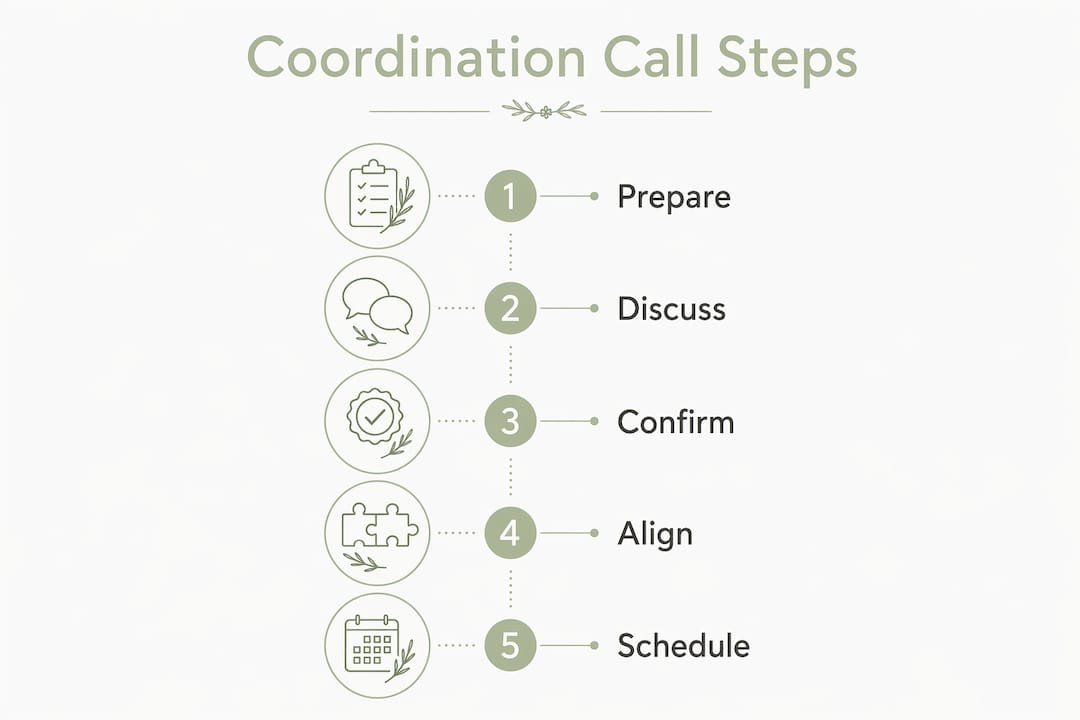
What happens during a wedding catering coordination call?
The call covers more ground than most couples expect. A well-run coordination call addresses seven core areas:
- Guest count and budget range. Your caterer needs a firm headcount estimate and a per-person budget to build a realistic proposal. Vague numbers lead to vague quotes.
- Service style preferences. Plated dinners, buffets, food stations, and family-style service each require different staffing levels and kitchen logistics. Knowing your preference early shapes every decision that follows. A wedding catering menu styles guide can help you decide before the call.
- Dietary restrictions and special needs. Gluten-free, vegan, nut allergy, and kosher requirements all affect menu design and food handling protocols. Bring a complete list, not a rough estimate.
- Venue logistics. Kitchen capacity, loading dock access, and power availability directly affect what a caterer can execute. Discussing venue technical requirements during this call prevents costly surprises on your wedding day.
- Preliminary menu ideas. You do not finalize the menu on this call. You share flavor preferences, cuisine styles, and any must-have dishes so the caterer can build a starting point.
- Staffing and service flow. How many servers, bartenders, and kitchen staff your event requires depends on your guest count and service style. A brief overview during this call confirms the caterer has the capacity.
- Expectations and next steps. The call ends with a clear picture of what comes next: a written proposal, a tasting appointment, or a venue walkthrough.
Pro Tip: Write down your top three non-negotiables before the call. Sharing them upfront gives the caterer exactly what they need to send a precise, customized proposal rather than a generic price sheet.
When and how to schedule your wedding catering coordination call
Timing your catering consultation correctly is one of the most practical decisions you will make in the planning process. Follow this sequence:
- Start outreach 6–12 months before your wedding. Couples should contact caterers at least six months out, and ideally closer to twelve for peak-season dates. Top caterers book quickly, and waiting until four months out often means settling for second-choice vendors.
- Prepare before you dial. Gather your guest count estimate, venue name and address, wedding date, and a rough per-person budget. Also prepare a list of dietary restrictions and your preferred service style. Having non-negotiables ready lets the caterer skip the guesswork and respond with a tailored proposal.
- Block 15 minutes on your calendar. Industry experts recommend a 15-minute discovery call as the standard format. This is not a tasting or a deep-dive planning session. It is a focused screening conversation.
- Involve your wedding planner if you have one. Your planner can join the call or brief you on venue-specific logistics beforehand. That said, you should still speak directly with the caterer. Direct communication builds the working relationship that carries through to your event day.
- Follow up within 48 hours. After the call, confirm the next step in writing. Whether that is a tasting appointment or a written proposal, a quick email keeps the process moving and creates a paper trail.
Pro Tip: Check the caterer’s response time before the call even happens. A caterer who takes four days to confirm a 15-minute call is showing you exactly how they will handle last-minute requests on your wedding day.
How does a coordination call differ from tastings and other planning meetings?
Couples often confuse the coordination call with the tasting or the venue walkthrough. Each meeting serves a distinct purpose, and attending them in the wrong order wastes time.
| Meeting type | Duration | Purpose | Who attends |
|---|---|---|---|
| Coordination call | ~15 minutes | Screen fit, gather logistics, confirm availability | Couple, caterer |
| Tasting session | 90–120 minutes | Refine menu, finalize dishes, discuss presentation | Couple, caterer, sometimes planner |
| Venue walkthrough | 30–60 minutes | Assess kitchen, access, and layout constraints | Couple, caterer, venue coordinator |
| Planning meeting | 60+ minutes | Integrate catering into full event timeline | Couple, caterer, wedding planner |
Tastings typically run 90–120 minutes as working sessions focused entirely on food refinement. They happen after the coordination call confirms the caterer is the right fit. Skipping the coordination call and jumping straight to a tasting wastes both parties’ time if the budget or venue turns out to be incompatible.
Catering coordinators focus exclusively on food and beverage service, staff management, and kitchen logistics. They are not wedding planners. A wedding planner manages the broader event timeline, vendor relationships, and ceremony flow. Understanding that distinction helps you direct the right questions to the right person during each meeting.
The venue walkthrough, covered in detail in Desertdine’s wedding catering walkthrough guide, is a separate session that happens after the coordination call and often before the tasting. It gives the caterer a firsthand look at the physical constraints they will work within.
Common questions to ask during your catering coordination call
Walking into the call with prepared questions separates couples who get precise proposals from those who receive generic ones. Cover these areas:
- Guest count confirmation process. Ask how the caterer handles final headcount changes and what the cutoff date is. Most require a final number 7–14 days before the event.
- Budget transparency. Ask for a per-person price range based on your service style. Ask what is included and what triggers additional charges, such as overtime, cake cutting fees, or rental equipment.
- Customization options. Ask whether the caterer builds menus from scratch or works from a fixed catalog. Farm-to-table caterers like Desertdine build menus around locally sourced, seasonal ingredients, which affects both flavor and pricing.
- Venue logistics and kitchen constraints. Ask directly whether the caterer has worked at your venue before. If not, ask what information they need about the kitchen setup. Addressing technical venue requirements during this call prevents service delays and unexpected fees.
- Staffing levels. Ask how many staff members they assign per guest and how they handle last-minute no-shows on their team.
- Event timing coordination. Ask how the catering timeline integrates with your ceremony and reception schedule. A wedding catering timeline built around your event flow prevents cold food and rushed service.
- Communication and problem-solving. Ask who your point of contact is on the day of the event and how they handle unexpected issues like a delayed ceremony start or a dietary restriction discovered at the last minute.
Pro Tip: Ask the caterer to describe a time they solved a problem at an event. Their answer tells you more about their reliability than any portfolio photo.
Key takeaways
A wedding catering coordination call is the single most important first step in building a catering partnership that delivers a personalized, well-executed food experience on your wedding day.
| Point | Details |
|---|---|
| Define the call’s purpose | Use it to screen fit and align on logistics, not to finalize menus or sign contracts. |
| Time it correctly | Contact caterers 6–12 months before your wedding to secure availability. |
| Prepare non-negotiables | Bring guest count, budget, dietary needs, and service style preferences to the call. |
| Know the difference | Coordination calls last ~15 minutes; tastings run 90–120 minutes and come later. |
| Ask the right questions | Cover budget transparency, venue constraints, staffing, and problem-solving approach. |
What I’ve learned from watching couples skip this call
Most couples treat the coordination call as a formality. They assume the tasting is where the real work happens. That assumption costs them.
Caterer responsiveness during the initial call is one of the clearest signals of how they will perform under pressure on your wedding day. A caterer who answers your questions directly, asks smart follow-up questions, and confirms next steps without prompting is showing you their operating style. A caterer who is vague, slow to respond, or dismissive of your venue constraints is also showing you their operating style.
The couples who get the best catering outcomes treat this call as a high-stakes interview. They come prepared with firm requirements, they listen as much as they talk, and they pay attention to how the caterer handles the unexpected questions. That preparation pays off in a proposal that actually reflects their event, not a template with their name swapped in.
One more thing: do not let your wedding planner handle this call on your behalf. Planners are invaluable for logistics, but the catering relationship is personal. You are the one who knows whether you want a multi-course plated dinner or a relaxed family-style feast. Speak directly with the caterer at least once before signing anything.
— James
Desertdine’s approach to wedding catering planning
Desertdine brings full-service wedding catering expertise to the Greater Palm Springs area, with a focus on bespoke menus built around locally sourced, seasonal ingredients. Every catering relationship starts with a dedicated coordination call where the team listens to your vision, reviews your venue logistics, and builds a proposal tailored to your event.
From that first call through the tasting and final service, Desertdine handles every detail of your food and beverage experience. Explore the full range of wedding and event catering services or book your event to schedule your coordination call and take the first step toward a wedding menu that reflects exactly who you are.
FAQ
What is a wedding catering coordination call?
A wedding catering coordination call is a short initial conversation, typically around 15 minutes, where couples and caterers align on guest count, budget, service style, and venue logistics before any tasting or contract.
When should you schedule a catering coordination call?
Schedule your coordination call 6–12 months before your wedding date. Contacting top caterers early secures availability and gives both parties enough time to plan a customized menu.
How is a coordination call different from a tasting?
A coordination call screens fit and gathers logistics in about 15 minutes. A tasting is a 90–120 minute in-person working session focused on refining and finalizing your menu after the caterer is confirmed.
What should you bring to a catering coordination call?
Bring your estimated guest count, per-person budget range, venue name and address, wedding date, dietary restrictions, and your preferred service style such as plated, buffet, or stations.
Do you need a coordination call if you have a wedding planner?
Yes. A wedding planner manages broad event logistics, but a catering coordinator focuses exclusively on food, beverage, and kitchen operations. Speaking directly with your caterer builds the working relationship that carries through to your event day.
Recommended
- Desert Dine Catering |Wedding Catering Walkthrough Visit: A Couples’ Guide• Palm Springs & Coachella Valley
- Desert Dine Catering |Wedding Catering Timeline: Master Your Service Flow• Palm Springs & Coachella Valley
- Desert Dine Catering |How to Pair Catering with Your Wedding Theme• Palm Springs & Coachella Valley
- Desert Dine Catering |Wedding Catering Menu Styles: Your 2026 Planning Guide• Palm Springs & Coachella Valley


