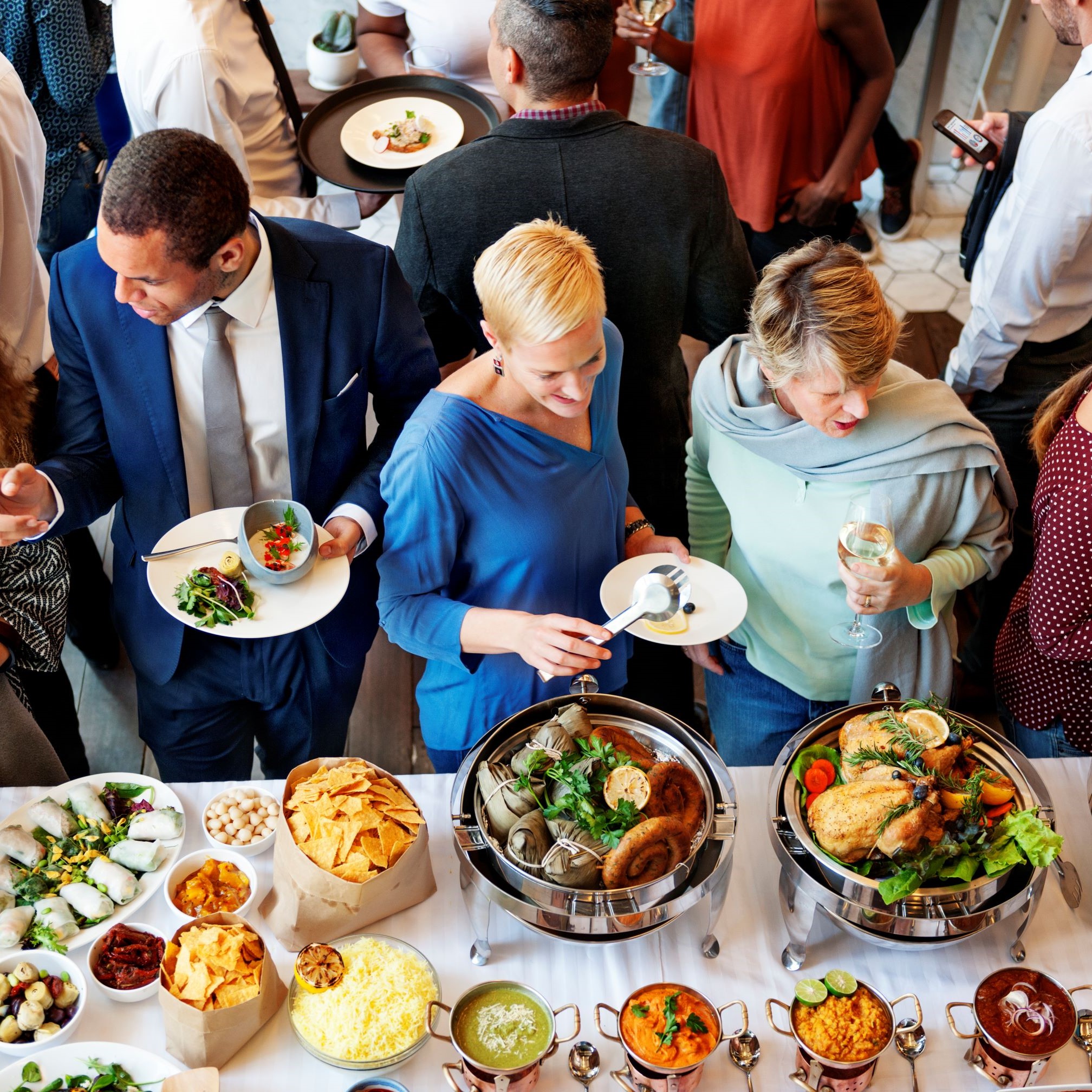
Wedding catering menu styles define how food is served, experienced, and remembered at your reception, making the choice one of the most consequential decisions in your entire event plan. The five core service styles — plated sit-down, family-style, buffet, food stations, and cocktail-style — each shape your wedding’s atmosphere, pacing, and budget in distinct ways. As hybrid menu formats gain traction in 2026, couples and planners have more options than ever to craft a reception that feels personal, polished, and genuinely memorable.
1. What are the main wedding catering menu styles?
Service styles create varying atmospheres, guest movement patterns, and floor-plan requirements, which is why selecting the right format matters before you book a venue or finalize a guest list. Here is a clear breakdown of the five primary styles:
- Plated sit-down dinner. Guests are seated and served multi-course meals by waitstaff. This format signals formality and elegance, and works best for weddings of 50 to 200 guests where a structured timeline is a priority.
- Family-style dinner. Large platters are placed at each table and passed among guests. The communal energy encourages conversation and feels warm without sacrificing a seated structure.
- Buffet-style dinner. Guests serve themselves from a spread of dishes displayed along a dedicated station area. Buffets offer variety and flexibility, and they tend to cost less per head than plated service.
- Food stations. Thematic stations — think taco bars, carving stations, or live pasta preparation — are staffed by attendants and scattered throughout the venue. Stations work exceptionally well for cocktail hours and larger guest counts.
- Cocktail-style receptions. Passed hors d’oeuvres, grazing tables, and small bites replace a traditional seated meal entirely. Cocktail receptions favor socializing and an informal atmosphere but require careful layout planning to keep older guests comfortable.
Each style carries a distinct cost profile, staffing requirement, and guest experience. Understanding those differences is the foundation of every smart catering decision.
2. How do wedding catering styles impact budget and logistics?

The catering style you choose is the single largest driver of your food and beverage labor costs. Plated dinners typically run $85 to $150 per guest, reflecting the higher server-to-guest ratio required to deliver sequential courses. Buffets and food stations can run 25% to 40% less per person, because guests do the movement themselves and fewer servers are needed at the table level. That cost gap is significant at a 150-person wedding.
| Catering Style | Approx. Cost Per Guest | Key Logistical Factor |
|---|---|---|
| Plated sit-down | $85–$150 | High server ratio, sequential timing |
| Family-style | $75–$130 | Moderate staffing, large platter logistics |
| Buffet | $55–$100 | Space and traffic flow management |
| Food stations | $60–$110 | Multiple staffed areas, thematic setup |
| Cocktail-style | $45–$85 | Passed service, grazing table replenishment |
Timing is the other major variable. Plated dinners require more coordination as courses are served sequentially, while buffets and stations allow faster guest movement but demand careful flow management to prevent bottlenecks. A 200-person buffet with a single linear table will create a 20-minute line. That is not a guest experience anyone plans for intentionally.
Buffet and station layouts need ample space and linear design to keep traffic moving efficiently. Venue square footage is not just an aesthetic consideration. It is a logistics requirement.
Pro Tip: Ask your venue coordinator for a scaled floor plan before finalizing your catering style. A room that seats 150 for a plated dinner may only comfortably accommodate 120 with a full buffet setup and adequate traffic lanes.
3. What hybrid wedding catering formats combine the best of multiple styles?
Hybrid catering formats are increasingly popular in 2026, combining passed hors d’oeuvres or food stations during cocktail hour with plated or buffet mains during the reception dinner. This approach balances structure with interaction, giving guests the energy of a social cocktail hour followed by the comfort of a seated meal. It is the format that most consistently satisfies both the couple’s vision and the guests’ comfort.
The most common hybrid combinations include:
- Cocktail hour with passed appetizers and a charcuterie or grazing station, followed by a plated three-course dinner
- Food stations during cocktail hour (oyster bar, bruschetta station) transitioning to family-style platters at dinner tables
- Buffet mains paired with a dessert station and late-night passed bites to close the evening
Flexible hybrid service with menu “chapters” is emerging as a leading trend, enabling dynamic guest experiences that evolve throughout the evening. Think of it as a curated progression rather than a single static format. Each chapter of the meal tells a different story and keeps guests engaged from arrival through the last dance.
Hybrid formats also address dietary diversity more naturally. When multiple stations or formats are active simultaneously, guests with restrictions can find options without drawing attention to themselves or disrupting service flow.
Pro Tip: Plan your hybrid transitions on paper before your tasting. Map out exactly when each format begins and ends, and share that timeline with your catering captain so the kitchen and floor staff are synchronized from the first toast.
4. How to choose the right wedding catering menu style for your event
Choosing the right style comes down to five concrete factors. Work through each one before your first caterer consultation.
- Guest count. Plated service works best for weddings under 200 guests. Above that threshold, buffets and stations become more practical because sequential plated service slows dramatically at scale.
- Venue layout. A long, narrow ballroom favors plated or family-style service. An open courtyard or outdoor desert venue, like many in the Greater Palm Springs area, supports stations and cocktail-style formats beautifully.
- Guest demographics. A guest list with many elderly attendees or mobility considerations favors seated formats. Younger, social crowds often prefer the freedom of stations and cocktail-style receptions.
- Dietary restrictions. Collecting dietary data via your RSVP and communicating it to your caterer at least one week before the event reduces kitchen errors and service delays. Buffets and stations make it easier to label and separate allergen-sensitive dishes visibly.
- Wedding theme and formality. A black-tie ceremony calls for plated service. A bohemian garden wedding pairs naturally with family-style or station formats. Your catering presentation style should feel like a natural extension of your overall aesthetic, not a separate decision.
Budget planning is the final filter. Labor costs are the key cost driver in service style selection, so if you are working within a tight per-head budget, buffet or cocktail formats give you the most flexibility without sacrificing quality. Consult your caterer early. The best caterers will tell you honestly which format serves your guest count and venue best, even if it is not the most expensive option.
Key takeaways
The best wedding catering menu style is the one that aligns your guest count, venue layout, budget, and wedding theme into a single, coherent guest experience.
| Point | Details |
|---|---|
| Style drives the entire evening | Catering format shapes pacing, interaction, and staffing from start to finish. |
| Plated costs more, buffets cost less | Plated dinners run $85–$150 per guest; buffets can be 25–40% less expensive. |
| Hybrid formats are the 2026 trend | Combining cocktail-hour stations with plated mains optimizes variety and flow. |
| Venue space determines feasibility | Buffets and stations require linear layouts and ample square footage to prevent bottlenecks. |
| Dietary planning starts at the RSVP | Collect restrictions early and share a master list with your caterer at least one week out. |
What I’ve learned after years of watching catering choices make or break receptions
The dining style sets the evening’s entire mood, including pace, guest interaction, and staffing needs. That is not a marketing claim. It is the most consistent observation I have made across hundreds of events.
The most common mistake I see is couples choosing a catering style based on aesthetics alone. They want the look of a plated dinner but have a 250-person guest list and a venue with one kitchen pass. The result is cold food, frustrated servers, and guests who waited 45 minutes between courses. Formality and logistics have to work together, or neither works at all.
The second mistake is underestimating the power of a well-executed hybrid. Couples who commit to a single format sometimes miss the opportunity to create genuine variety throughout the evening. A cocktail hour with live-action stations followed by family-style platters at dinner is not a compromise. It is often the most memorable format of all, because guests experience two distinct moods in one night.
My honest advice: bring your venue floor plan to your first caterer meeting. Talk through traffic flow before you talk about menu items. The role of your catering captain in coordinating that flow is as important as the food itself. And if your caterer does not ask about your guest demographics or dietary needs in the first conversation, find a different caterer.
— James
Plan your perfect wedding menu with Desertdine
Desertdine brings over a decade of high-end wedding catering experience to the Greater Palm Springs area, with customizable wedding menus built around your style, guest count, and vision. Whether you are drawn to an intimate plated dinner under the desert stars or a vibrant multi-station reception, the Desertdine team will match the format to your event with precision and care.

Every couple deserves a catering experience that feels personal, not templated. Desertdine offers expert consultations to help you select the right service style, manage dietary needs, and coordinate every detail from cocktail hour through the final course. Book your event today and start building a reception your guests will talk about for years.
FAQ
What is the most popular wedding catering style?
Plated sit-down dinners remain the most traditional choice, but hybrid formats combining cocktail-hour stations with plated or family-style mains are the fastest-growing trend in 2026.
How does catering style affect my wedding budget?
Plated dinners typically cost $85 to $150 per guest due to higher staffing needs, while buffets and cocktail-style receptions can run 25% to 40% less per person.
What catering style works best for large weddings?
Buffets and food stations are the most practical formats for guest counts above 200, as sequential plated service becomes logistically difficult to execute without significant delays.
How do I manage dietary restrictions across different catering styles?
Collect dietary information through your RSVP process and share a complete guest spreadsheet with your caterer at least one week before the event to prevent service errors.
Can I mix catering styles at my wedding reception?
Yes. Hybrid formats, such as passed appetizers during cocktail hour followed by a plated dinner, are a proven way to balance variety, pacing, and guest comfort throughout the evening.
Recommended
- Desert Dine Catering |How Catering Trends Shape Hospitality Menus in 2026• Palm Springs & Coachella Valley
- Desert Dine Catering |What’s in a wedding catering package? Your guide• Palm Springs & Coachella Valley
- Desert Dine Catering |Your Wedding Rehearsal Dinner Catering Guide• Palm Springs & Coachella Valley