


Catering for a VIP hospitality suite is defined as a bespoke, full-service food and beverage program designed to deliver a luxury guest experience within an exclusive event space. Unlike standard hospitality catering, this service combines personalized menus, dedicated staffing, and precise timing to remove every point of friction for elite guests. Food and beverage minimums at most major venues range from $1,000 to $5,000 or more per event. That spending floor reflects the true scope of what VIP hospitality suite catering requires. For event organizers and corporate planners, understanding this distinction is the first step toward delivering an experience guests remember.
What is catering for a VIP hospitality suite?
VIP hospitality suite catering is the industry term for a fully managed culinary service that treats food, beverage, and service as one coordinated production. It goes far beyond placing a buffet in a luxury box. The goal is to make every guest feel attended to without ever noticing the effort behind it.
The clearest way to understand the scope is to compare it with standard suite catering:
- Standard suite catering offers set menus, pre-packaged options, and general service staff shared across multiple suites. Guests choose from a fixed selection, and service follows a predictable, volume-driven schedule.
- VIP suite catering assigns a dedicated production team that manages all culinary logistics specifically for your group. Menus are built around your guests, not around venue convenience.
- VVIP catering takes this further with exclusive chef access, private sommelier service, and real-time menu adjustments based on guest preferences during the event.
The defining feature of true VIP catering is frictionless execution. Experienced teams anticipate timing so that service happens invisibly. Guests never navigate logistics, wait for refills, or notice a gap in attention. That invisibility is the product.
Pro Tip: When evaluating a caterer for a VIP suite, ask specifically how they handle service timing during peak event moments, such as halftime or a keynote break. A strong answer will describe a pre-planned sequence, not a reactive approach.
Understanding how catering reflects executive hospitality standards helps planners set the right expectations before signing any contract.
How to plan and execute VIP suite catering effectively
Effective VIP suite catering starts with logistics, not menus. Most planners make the mistake of selecting food first and solving operational details later. The sequence should be reversed.
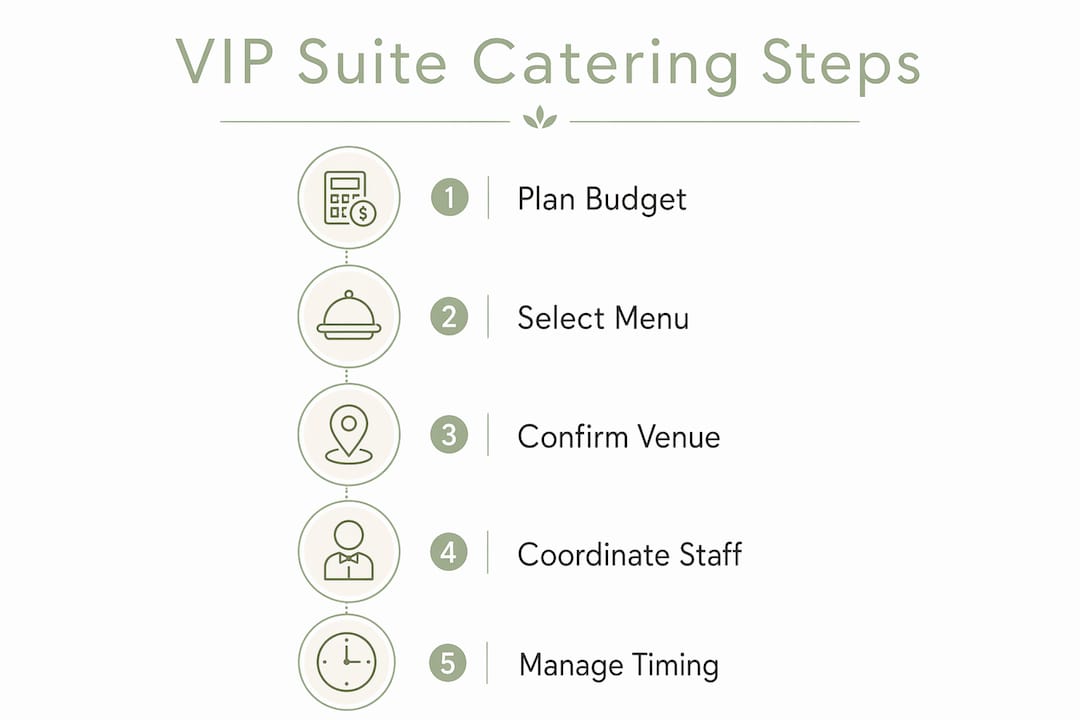
Follow this planning sequence to keep execution on track:
- Confirm venue ordering requirements early. Food and beverage orders must be finalized through online portals or suite administrators, often with mandatory pre-ordering windows. Missing a deadline can eliminate entire menu categories.
- Map the suite footprint before selecting service formats. Limited suite space requires rapid-deployment modular serving furniture to achieve restaurant-quality aesthetics without cluttering the room. Measure the space and plan traffic flow before committing to a buffet versus plated service.
- Build the menu around dietary profiles, not trends. Collect dietary restrictions and preferences from your guest list at least two weeks out. A bespoke menu that accommodates every guest signals genuine care. A menu that leaves one guest without options signals the opposite.
- Assign dedicated staff roles before the event day. Each staff member should own a specific function: one person manages beverage refills, another handles plate clearance, and a third manages guest requests. Overlapping responsibilities create gaps.
- Schedule a pre-event walkthrough with your catering team. Walk the suite together, confirm equipment placement, and rehearse the service sequence. This step eliminates most day-of surprises.
Understanding how private catering menus are built for specific events gives planners a practical framework for this customization process.
Pro Tip: Order 15–20% more food than your confirmed guest count. VIP guests often bring last-minute additions, and running short on food in a luxury suite is a reputational risk no planner wants to take.
What luxury catering options enhance a VIP suite experience?
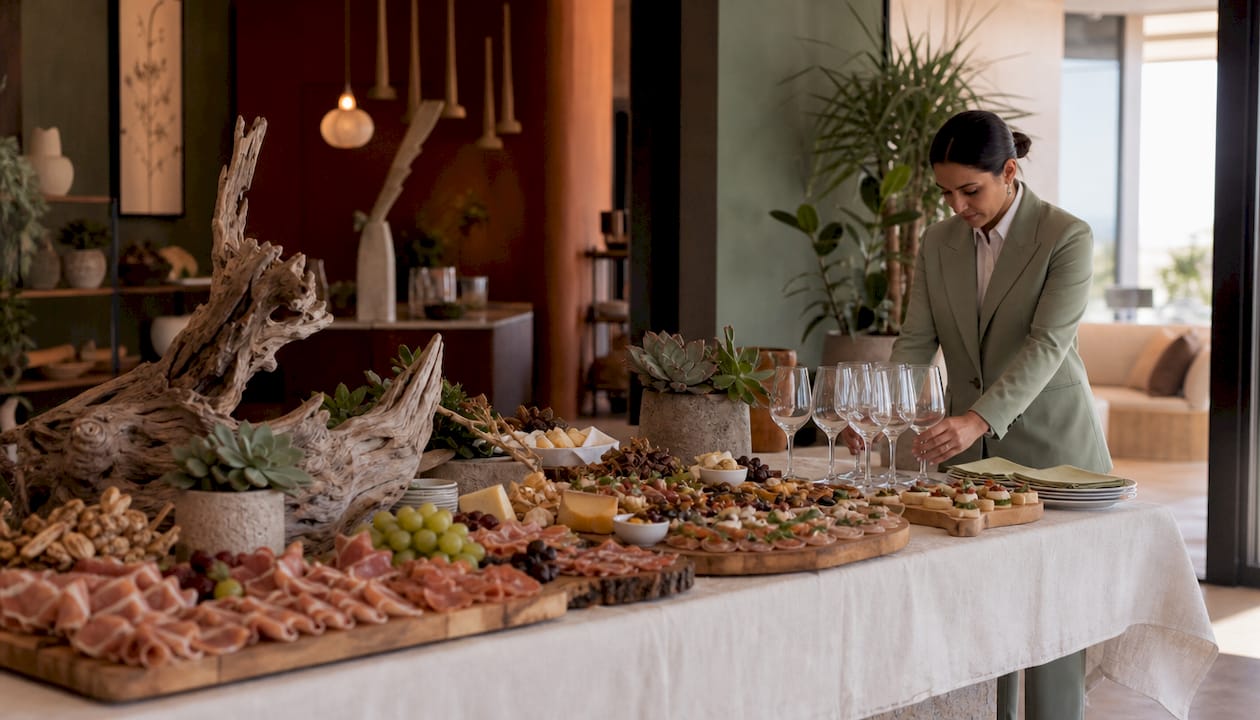
The menu is the most visible part of VIP hospitality suite catering, and presentation is as important as flavor. Successful suite catering functions as a comprehensive sensory experience that combines room aesthetics, professional staff, and timing, not just food provision.
The most effective luxury catering formats for VIP suites include:
- Gourmet hors d’oeuvres and small plates passed by uniformed staff during arrival. This format creates immediate engagement and sets the tone without requiring guests to queue.
- Multi-course plated meals for suites with seated dining configurations. These work best for corporate dinners or private events where the meal is the centerpiece, not a side experience.
- Live interactive stations such as made-to-order cocktails, fresh oyster shucking, or carved prime rib. Interactive stations bridge the gap between volume-optimized venue catering and the boutique VIP experience guests expect.
- Premium beverage programs featuring curated wine selections, champagne service, and specialty cocktails. Beverage quality is often the detail guests remember most clearly.
Full hospitality packages that include gourmet dining by recognized chefs, dedicated waitstaff, and premium beverages differ significantly from basic VIP ticket upgrades. The difference is not just food quality. It is the entire structure of attention around the guest.
Presentation standards matter at every level. Uniformed staff, coordinated serveware, and intentional plating all contribute to the perception of exclusivity. A guest who receives a beautifully plated dish from a composed, professional server experiences something qualitatively different from a buffet line, even if the ingredients are identical.
Exploring high-end catering presentations gives planners a clear picture of which formats work best for different suite configurations and guest counts.
What budget and venue policies affect VIP suite catering?
Budget planning for VIP hospitality suite catering requires accounting for more than food costs. Venue policies add layers of complexity that catch planners off guard when left unaddressed.
The table below summarizes the most common cost and policy elements planners encounter:
| Category | Typical Range or Requirement |
|---|---|
| Food and beverage minimum | $1,000–$5,000+ per event |
| Service charge | 18%–24% added to food and beverage total |
| Gratuity | Often separate from service charge; 15%–20% |
| Advance ordering deadline | Commonly 48–72 hours before event |
| Outside food and beverage | Prohibited at most major venues |
| Cancellation fee | Varies; often 50%–100% of minimum within 48 hours |
Venue catering policies typically include advance ordering deadlines, restrictions on outside food and beverage, and cancellation fees that directly affect planning timelines. These are not negotiable at most facilities.
Budget allocation also shapes the guest experience in direct ways. A planner who spends the minimum on food but invests in professional staffing will often produce a better result than one who spends heavily on food with inadequate service. The ratio of food spend to service spend matters as much as the total figure.
Knowing why catering experience matters for hosts helps planners prioritize where to put budget when trade-offs are necessary.
Aligning food quality with the luxury environment is non-negotiable. Serving reheated stadium-grade food in a premium suite creates an immediate disconnect that no amount of decor can fix. The food must match the room.
Key Takeaways
VIP hospitality suite catering succeeds when planners treat it as a coordinated production, not a food order.
| Point | Details |
|---|---|
| Define the service level early | Clarify whether you need standard, VIP, or VVIP catering before contacting venues or caterers. |
| Plan logistics before menus | Confirm ordering deadlines, suite dimensions, and staffing ratios before selecting food formats. |
| Budget beyond food costs | Add 18%–24% service charges, gratuity, and potential cancellation fees to your total projection. |
| Use live stations for engagement | Interactive food and beverage stations create memorable moments that plated service alone cannot deliver. |
| Match food quality to the environment | Premium suite settings require premium food standards; any mismatch undermines the entire guest experience. |
What I’ve learned about VIP catering that most guides won’t tell you
After working closely with event planners across corporate and private hospitality events, the pattern I see most often is this: planners over-invest in menu selection and under-invest in service choreography. A stunning menu delivered with hesitant, uncoordinated staff produces a worse impression than a simpler menu delivered with confidence and precision.
The guests who leave a VIP suite talking about the experience almost never mention a specific dish. They describe how they felt. They say the staff “just knew” when to refill a glass or clear a plate. That feeling is the product of rehearsal and clear role assignment, not talent alone.
The other mistake I see regularly is treating venue-imposed catering as the ceiling rather than the floor. Venue menus are built for volume and compliance, not for distinction. The best planners use the venue’s base offering as a starting point and layer in external elements, such as a specialty cocktail program or a live station, to create something guests have not seen before.
Early relationship building with your venue’s catering coordinator also pays dividends that no amount of last-minute negotiation can replicate. Coordinators who know you prioritize quality will flag menu additions, staff upgrades, and timing adjustments before you think to ask. That proactive communication is what separates a good event from one guests recommend to their colleagues.
— James
Desertdine’s approach to VIP hospitality suite catering
Planning a VIP hospitality suite event in the Palm Springs or Coachella Valley area? Desertdine specializes in corporate event catering designed specifically for high-end hospitality environments. Every menu is built from scratch around your guest list, dietary requirements, and event format.
Desertdine’s team handles custom menu design, live interactive stations, premium beverage pairings, and full staffing coordination. The result is a catering program that feels effortless to your guests because every detail has been planned in advance. You can also view custom event menus or book your event directly to start building your VIP suite experience today.
FAQ
What does VIP hospitality suite catering include?
VIP hospitality suite catering includes bespoke menus, dedicated service staff, premium beverage programs, and precise timing coordination. The goal is a frictionless guest experience where every detail is managed behind the scenes.
How far in advance should I order catering for a VIP suite?
Most venues require food and beverage orders to be finalized 48–72 hours before the event. Missing this window can limit your menu options significantly.
What is the typical minimum spend for VIP suite catering?
Food and beverage minimums at major venues typically range from $1,000 to $5,000 or more per event, not including service charges and gratuity.
Can I bring outside food and beverages into a VIP hospitality suite?
Most major venues prohibit outside food and beverages in hospitality suites. Check your venue contract before planning any supplemental catering.
How do live stations improve a VIP suite catering experience?
Live interactive stations, such as made-to-order cocktails or fresh oyster shucking, create guest engagement that standard plated or buffet service cannot replicate. They also signal a level of investment and personalization that guests associate with genuine luxury.
Recommended
- Desert Dine Catering |How Catering Proposals Work: A Planner’s Guide• Palm Springs & Coachella Valley
- Desert Dine Catering |How Catering Proposals Work: A Planner’s Guide• Palm Springs & Coachella Valley
- Desert Dine Catering |Why Catering Walkthroughs Matter for Planners• Palm Springs & Coachella Valley
- Desert Dine Catering |Catering’s role in planning a great conference• Palm Springs & Coachella Valley


