


International menu corporate catering is the professional practice of integrating authentic, diverse global cuisines into business meal programs to enhance employee satisfaction and cultural inclusivity. The industry now spans cuisines from Japanese to Mediterranean, Indian to Latin American, all tailored to the specific demographics of a corporate audience. For event planners and hospitality professionals, this service goes well beyond ordering food. It requires cultural fluency, dietary compliance, and precise logistics. Desertdine works with corporate clients across the Greater Palm Springs area to deliver exactly this kind of thoughtful, multi-cuisine experience at business events of every scale.
What is international menu corporate catering?
International menu corporate catering is the industry term for curating business meal programs that draw from multiple global culinary traditions rather than a single regional style. Standard corporate catering typically defaults to familiar American fare: sandwiches, salads, and pasta. International corporate catering replaces or supplements that with culturally resonant dishes prepared using authentic techniques and ingredients.
The distinction matters because food functions as more than sustenance at a business event. Food serves as a tool for cross-cultural communication, signaling respect for the backgrounds and preferences of every attendee. That signal lands especially hard when a company hosts international clients or operates with a multicultural workforce.
What separates this service from standard catering comes down to three core requirements:
- Culinary authenticity: Dishes must reflect genuine preparation methods, not watered-down approximations. A Japanese bento spread, for example, requires proper dashi stock and knife technique, not a generic Asian stir-fry.
- Dietary law compliance: Global food safety standards and religious dietary laws, including halal, kosher, gluten-free, and vegan requirements, must be built into the menu from the start, not added as an afterthought.
- Supply chain management: Sourcing specialty ingredients such as Japanese yuzu, Indian ghee, or North African harissa often requires vendors outside standard local supply chains.
Pro Tip: Request a written ingredient sourcing plan from your caterer before signing any contract. This confirms they can actually deliver authentic ingredients, not substitutes.
Providers who manage complex supply chains for large-scale international events demonstrate that authenticity at volume is achievable. The operational discipline required is significant, and it separates experienced international caterers from generalists.
How do you plan and execute an international corporate menu?
Successful execution starts with knowing your audience before you design a single dish. Planners who skip the demographic assessment phase routinely end up with menus that miss the mark for a significant portion of attendees.
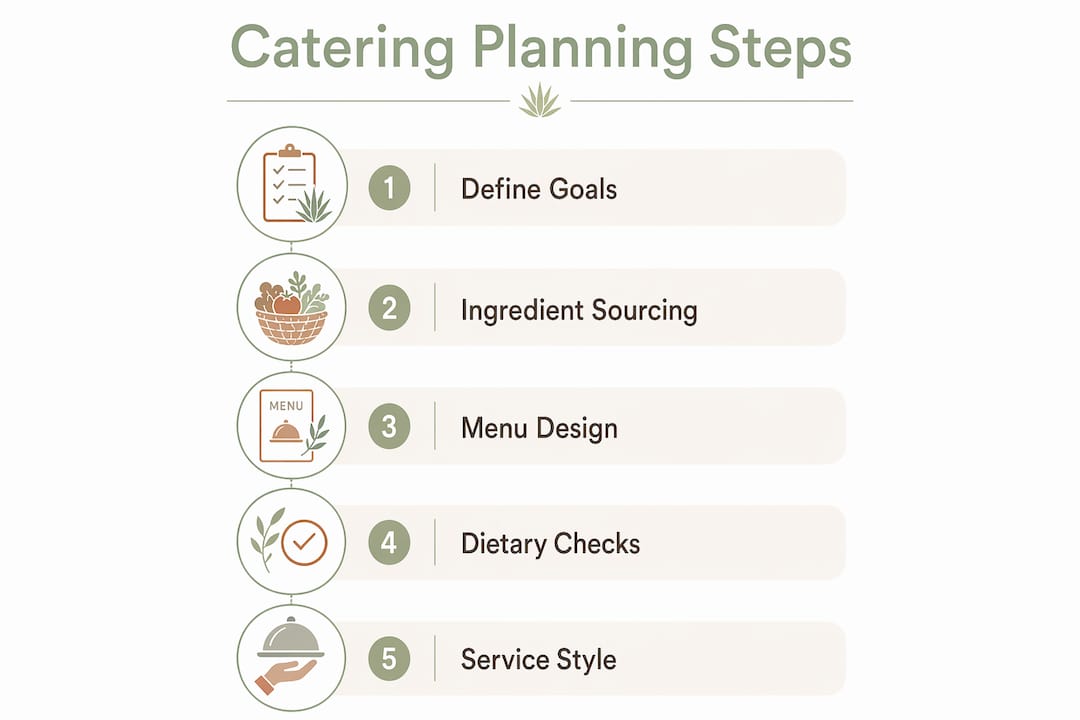
Follow this sequence for reliable results:
- Survey attendee demographics. Collect data on nationalities, religious affiliations, and dietary restrictions at least two weeks before the event. A quick digital form sent with the event invitation works well.
- Map dietary requirements. Separate hard restrictions (halal, kosher, severe allergies) from preferences (vegetarian, low-carb). Hard restrictions require dedicated preparation areas and labeled serving vessels.
- Select a service style. Buffets work well for large groups with varied preferences. Chef stations create engagement and allow customization on the spot. Boxed meals suit hybrid or off-site events where temperature control is critical.
- Confirm dietary safety timelines. Dietary safety confirmation should happen 48 hours to one week before the event. This window allows the kitchen to adjust quantities and preparation protocols.
- Brief your culinary team. Share the demographic data with your caterer so they can adjust spice levels, portion sizes, and presentation styles to match the audience.
- Label every dish clearly. Menu cards should list key allergens, dietary categories (vegan, gluten-free, halal), and the dish’s country of origin. Clear labeling reduces confusion and prevents cross-contamination incidents.
Lead times for international menus often exceed 48 hours because specialty ingredients require advance sourcing. For bespoke menus featuring rare or imported items, plan for a minimum of one week of lead time.
Pro Tip: Build a one-page cultural dietary reference sheet for your catering team. It should list the key restrictions for each represented nationality or religion. This prevents last-minute scrambles and protects guests with serious dietary needs.
Cost factors scale with ingredient complexity and service style. Chef stations cost more than buffets due to staffing. Imported specialty ingredients add to food costs. Budget accordingly, and ask your caterer for a tiered pricing breakdown so you can adjust without sacrificing quality.
How do global fusion menus improve corporate dining?
Global fusion is the practice of blending familiar flavor profiles with international culinary techniques to create dishes that feel both new and approachable. For corporate planners, fusion menus reduce the alienation risk that can come with fully authentic international offerings, particularly for attendees with limited exposure to certain cuisines.
The concept works because it meets people where they are. A Korean BBQ taco combines the smoky, savory familiarity of a taco with the bold, fermented depth of Korean gochujang. A Mediterranean grain bowl layers quinoa, a grain many Americans already eat, with za’atar-spiced roasted vegetables and labneh. Neither dish requires a culinary education to enjoy.
Fusion menus also solve the menu fatigue problem that plagues recurring corporate events. When the same Caesar salad and pasta station appears at every quarterly meeting, engagement drops. Rotating fusion concepts keep the dining experience fresh without requiring attendees to step too far outside their comfort zone.
Key benefits of global fusion for corporate events include:
- Broader appeal: Fusion dishes attract attendees who might avoid fully authentic international options.
- Reduced dietary conflict: Blended dishes can be engineered to accommodate multiple dietary restrictions simultaneously.
- Conversation starter: Unusual but approachable dishes generate table conversation, which supports networking goals.
- Flexibility: Fusion concepts adapt easily to buffet, station, or plated formats.
Modern employees treat workplace food as part of their professional experience. Global fusion menus have become a preferred way to add variety without creating discomfort. For planners managing recurring events, rotating fusion themes by region each quarter keeps the program dynamic.
What are the biggest challenges in international corporate catering?
The operational complexity of international catering exceeds what most planners anticipate. Managing temperature, texture, and timing across multiple dish types simultaneously is the most common logistical challenge. A Japanese miso soup must stay hot while a Vietnamese bánh mì spread stays at room temperature and a Mediterranean mezze platter stays chilled.
The most critical mistake planners make is choosing a one-size-fits-all menu that ignores dietary inclusivity. That choice jeopardizes satisfaction for a meaningful portion of attendees and signals a lack of cultural awareness. The fix is straightforward: balance crowd-pleasers with clearly labeled inclusive options.
Practical challenges to address before your event:
- Cross-contamination prevention: Halal and kosher requirements prohibit contact with non-compliant ingredients. Dedicated prep surfaces, utensils, and serving vessels are non-negotiable.
- Ingredient sourcing timelines: Non-local specialty ingredients require advance ordering. Build sourcing lead time into your planning calendar from day one.
- Cultural dietary law communication: Menu cards must clearly communicate preparation methods, not just ingredients. “Grilled chicken” is insufficient if the guest needs to know whether it was prepared on a shared surface with pork.
- Staff training: Culinary staff must understand the cultural significance of the dishes they serve. A team trained in authentic culinary techniques handles these requirements with confidence.
- Portion planning: International menus often include more dishes than standard catering. Plan portion sizes carefully to avoid waste and ensure every station has adequate supply through the event.
Pro Tip: Ask your caterer to walk you through their cross-contamination prevention protocol before the event. If they cannot describe it clearly, that is a red flag.
Selecting a caterer with documented global expertise matters more than price. A provider who has executed catering for international events at scale understands these challenges and has systems in place to manage them. Pairing your food program with a thoughtful corporate wine program that complements global cuisine adds another layer of hospitality that international guests notice.
Key Takeaways
International menu corporate catering succeeds when cultural authenticity, dietary inclusivity, and precise logistics work together from the planning stage forward.
| Point | Details |
|---|---|
| Define the service correctly | International corporate catering integrates authentic global cuisines, not generic multi-ethnic food, into business meal programs. |
| Survey demographics first | Collect dietary and cultural data at least two weeks before the event to build an accurate menu brief. |
| Confirm safety timelines | Lock in dietary safety confirmations 48 hours to one week before the event to allow kitchen adjustments. |
| Use fusion strategically | Global fusion menus reduce alienation risk while keeping recurring corporate dining programs fresh and engaging. |
| Choose experienced caterers | Providers with documented global expertise and cross-contamination protocols protect guests and protect your event. |
Why food is the most underrated tool in your event planning kit
I have worked with planners who spend months on venue selection, AV setup, and speaker logistics, then treat catering as a line item to finalize the week before the event. That sequence is backwards. Food is the one element every attendee interacts with personally. It shapes how they feel about the event, the company, and the people around them.
The planners who get international catering right treat the menu as a communication strategy. When a Japanese client sees a properly prepared bento, or a Muslim attendee finds clearly labeled halal options, the message is clear: this organization paid attention. That impression outlasts any keynote.
What I have also seen is that fusion menus work best when they are curated with intention, not assembled from a generic “global” template. The best fusion dishes I have encountered at corporate events share one quality: they tell a story about where two culinary traditions meet. That specificity is what generates conversation and makes the dining experience memorable.
My strongest advice for planners is to involve your culinary team in the event brief from the start. Share the attendee demographics, the event objectives, and the cultural context. A skilled catering team will use that information to build a menu that serves the event’s goals, not just the guests’ appetites. Explore menu customization options early in the planning process. The earlier you start, the better the result.
— James
Desertdine’s approach to international corporate catering
Desertdine brings the same attention to cultural detail and culinary craft to corporate events that it applies to weddings and private dining in the Greater Palm Springs area.
Corporate planners working with Desertdine can choose from customizable international menus spanning Mediterranean, Asian, Latin American, and fusion cuisine categories. Service styles include chef stations, buffets, and boxed meals, each adapted to the scale and format of your event. Every menu is built around your attendee demographics, dietary requirements, and event objectives. Desertdine’s culinary team handles ingredient sourcing, dietary compliance, and on-site execution so you can focus on the event itself. Explore corporate catering options or visit Desertdine’s full menu catalog to start building your international menu today.
FAQ
What does international menu corporate catering include?
International menu corporate catering includes dishes from multiple global culinary traditions, such as Japanese, Indian, Mediterranean, and Latin American cuisines, tailored to the dietary and cultural needs of a corporate audience. It also covers service style selection, dietary compliance, and ingredient sourcing.
How far in advance should I plan an international corporate menu?
Plan at least one to two weeks in advance for international menus, since specialty ingredient sourcing often requires longer lead times than standard corporate catering. Confirm dietary safety requirements 48 hours to one week before the event.
What service styles work best for international corporate catering?
Chef stations work well for engagement and customization, buffets suit large groups with varied preferences, and boxed meals are best for off-site or hybrid events where temperature control matters.
How do I handle halal and kosher requirements at a corporate event?
Halal and kosher compliance requires dedicated preparation surfaces, separate utensils, and clearly labeled serving vessels to prevent cross-contamination. Confirm these protocols with your caterer in writing before the event.
What is global fusion catering and when should I use it?
Global fusion catering blends familiar flavor profiles with international culinary techniques to create approachable dishes that appeal to a broad audience. Use it for recurring corporate events where menu variety matters, or when your attendee group has limited exposure to fully authentic international cuisines.
Recommended
- Desert Dine Catering |Corporate Event Catering Best Practices for Planners• Palm Springs & Coachella Valley
- Desert Dine Catering |How Menu Customization Works in Catering for Events• Palm Springs & Coachella Valley
- Desert Dine Catering |What Is Corporate Catering Service? A Business Guide• Palm Springs & Coachella Valley
- Desert Dine Catering |How Catering Proposals Work: A Planner’s Guide• Palm Springs & Coachella Valley


