


Wedding catering is the deliberate use of culturally significant foods and service styles to honor heritage and express identity at a wedding. How wedding catering reflects cultural heritage goes far beyond menu selection. It is a living expression of who you are, where your family comes from, and what you want guests to feel at your table. From the symbolic weight of a single dish to the communal energy of shared platters, every catering decision tells a story. Couples working with caterers like Desertdine in Palm Springs are increasingly treating their wedding menus as a culinary autobiography, one that connects generations and crosses borders.
How wedding catering reflects cultural heritage through food and service
Wedding food functions as a symbolic language, expressing blessings like fertility, prosperity, and family unity through specific dishes and ingredients. This is not decoration. It is meaning made edible. A plate of red dates and peanuts at a Chinese wedding signals a wish for children. A whole roasted lamb at a Middle Eastern celebration signals abundance and generosity. These choices carry weight that a generic plated dinner simply cannot replicate.
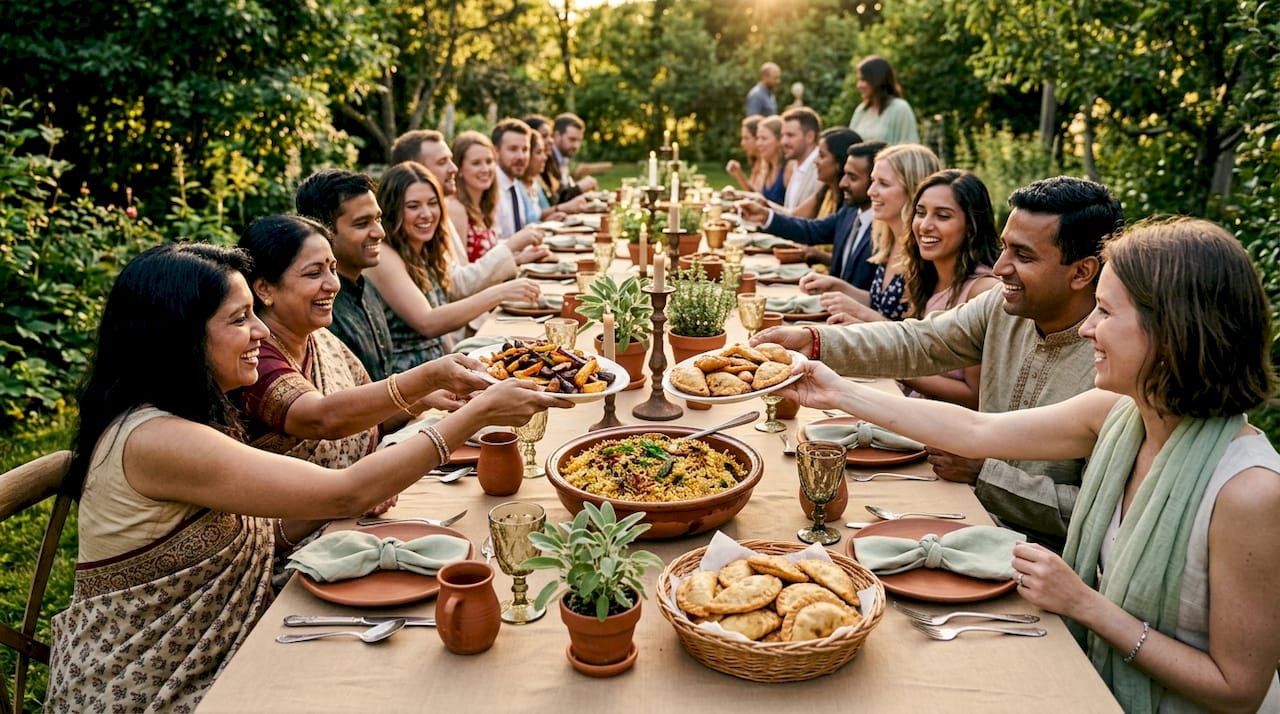
Food serves as a visible cultural marker, signaling the couple’s identity and connection to heritage. This matters most to extended family and community members who traveled far to be there. When they see a familiar dish on the table, they feel seen and honored.
The primary ways catering expresses cultural heritage include:
- Traditional family recipes. Grandmother’s mole, a great-aunt’s pierogi recipe, or a family lamb stew carry emotional weight no restaurant dish can match. These recipes are anchors that ground the celebration in real family history.
- Symbolic dishes. Specific foods carry cultural meaning. Saffron rice in Persian weddings signals wealth. Sticky rice in Laotian ceremonies represents unity. Choosing these dishes intentionally communicates values without a single spoken word.
- Service style as cultural expression. Sikh wedding traditions use langar, an egalitarian communal service where everyone eats together regardless of status. Shifting from a formal plated dinner to family-style shared platters can instantly change the cultural tone of a reception.
- Fusion dishes honoring both families. A couple from Mexican and Japanese backgrounds might serve a yuzu-marinated ceviche or a miso-braised short rib taco. These dishes honor both sides without forcing a choice between them.
Pro Tip: Ask each family to name one dish that is non-negotiable. Build the rest of the menu around those anchors rather than starting from scratch.
How to blend multiple cultures in your wedding menu
The biggest mistake couples make with multicultural menus is treating them like a buffet of unrelated dishes. A Greek salad next to jerk chicken next to sushi rolls feels like a food court, not a celebration. The goal is a cohesive culinary story that connects every course through shared flavors, textures, or ingredients.
Identifying bridging ingredients creates culinary cohesion in multicultural weddings. This approach is underused by most couples. A bridging ingredient is a flavor or staple that appears in both culinary traditions. Cumin appears in both Indian and Mexican cooking. Rice is central to Japanese, West African, and Caribbean cuisines. Citrus threads through Mediterranean and Southeast Asian dishes. Building your menu around these shared elements makes the whole table feel intentional.
Here is a practical framework for multicultural menu design:
| Course | Strategy | Example |
|---|---|---|
| Appetizers | Use shared spices or ingredients | Cumin-spiced lamb flatbreads (Middle Eastern meets Mexican) |
| Main course | Feature one dish per culture, plated together | Jerk chicken alongside Persian saffron rice |
| Dessert table | Combine sweets from both traditions | Baklava alongside gulab jamun, churros with mochi |
| Beverages | Offer culturally significant drinks | Hibiscus agua fresca and masala chai side by side |
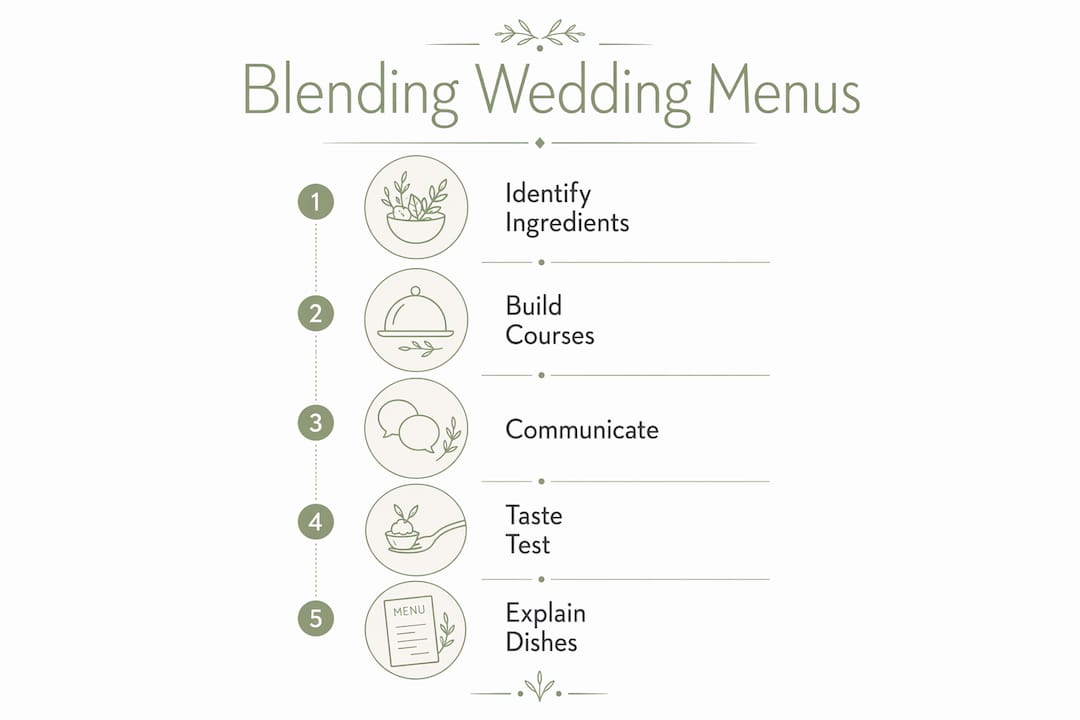
Communication with your caterer is the most critical step. Share family recipes, cultural context, and any dietary restrictions tied to religious practice. A caterer experienced in cultural cuisine catering will know how to adapt traditional recipes to large-scale service without losing authenticity.
Printed menu cards explaining dish origins turn food into a story for guests. A small card describing why a dish was chosen, its cultural origin, and what it symbolizes transforms a meal into a shared experience. Guests who do not share your background leave with genuine understanding. Guests who do share it feel deeply respected.
Pro Tip: Ask your caterer to do a tasting that includes one dish from each culture side by side. If the flavors clash, adjust the seasoning profile of one dish before the wedding day.
Why food preparation rituals matter as much as the meal itself
The cultural significance of wedding food does not begin when guests sit down. It begins days or weeks before, in the kitchen, with family. Pre-wedding food preparation rituals serve as bonding activities and blessings, enriching the wedding narrative with emotional weight that the meal alone cannot carry.
Four preparation traditions worth incorporating into your wedding story:
- Mole-making ceremonies. In many Mexican families, making mole for a wedding takes two days and involves multiple generations. The act of grinding chiles and toasting spices together is itself a blessing for the couple. Sharing this story with guests, through a printed card or a brief toast, adds profound meaning.
- Dumpling assembly gatherings. In Chinese and Korean traditions, family members gather to fold dumplings together before the wedding. Each dumpling folded is a wish made. Couples can recreate this as a live station at the reception, inviting guests to fold and share.
- Bread baking rituals. In Eastern European and Middle Eastern cultures, ceremonial breads are baked by female relatives as a blessing. Serving this bread at the reception connects the meal directly to family love and intention.
- Interactive food stations honoring heritage. A live taco station, a ramen bar, or a made-to-order injera station does more than feed guests. It recreates the communal, hands-on energy of how food is actually eaten in many cultures, which a formal plated service cannot replicate.
Including the narrative of food preparation rituals in the wedding adds emotional weight and meaningful storytelling beyond the meal itself. Couples who share these stories, even briefly, give guests a reason to remember the food long after the night ends.
Modern trends in wedding catering personalization
Modern couples choose hyper-personalized, fusion-based menus as culinary adventures rather than standard plated meals. This shift is the defining catering trend of 2026. Couples are no longer selecting from a caterer’s fixed menu. They are co-creating menus that reflect their hometowns, travel history, and family stories.
Current personalization trends shaping wedding menus and cultural identity include:
- Life story menus. Couples design each course around a chapter of their relationship. The appetizer reflects where they met. The main course honors both family backgrounds. Dessert celebrates a shared travel memory.
- Heritage ingredient sourcing. Couples request specific regional ingredients, such as Oaxacan chocolate, Calabrian chiles, or Kashmiri saffron, to ensure authenticity rather than approximation.
- Fusion signature cocktails. A couple with Vietnamese and Italian roots might serve a lychee Aperol spritz. Beverages are increasingly part of the cultural catering story. Pairing culturally inspired drinks with your menu is a detail worth exploring with resources like event beverage ideas that complement heritage-focused catering.
- Storytelling through plating. Presentation styles drawn from cultural traditions, such as banana leaf service in South Indian cuisine or wooden board service in Scandinavian tradition, add visual cultural identity to every plate.
Luxury catering firms help plan innovative fusion menus with onsite service and full coordination. This matters because executing a complex multicultural menu at scale requires professional experience. A caterer who understands both the culinary and logistical demands of a heritage-focused menu is not optional. It is the difference between a memorable celebration and a chaotic one.
A thoughtfully designed multicultural menu becomes a narrative that guests remember and talk about long after the wedding. That is the real measure of success.
Key takeaways
Wedding catering reflects cultural heritage most powerfully when symbolic dishes, service style, and preparation rituals are chosen with intention and communicated clearly to guests.
| Point | Details |
|---|---|
| Symbolic food carries meaning | Choose dishes that express cultural values like fertility, prosperity, or unity rather than defaulting to crowd-pleasers. |
| Service style signals culture | Communal or family-style service reflects many traditions more authentically than formal plated dining. |
| Bridging ingredients unify menus | Identify shared spices or staples between two cultures to build a cohesive multicultural menu. |
| Preparation rituals add depth | Pre-wedding cooking traditions like mole-making or dumpling folding enrich the wedding story beyond the meal. |
| Printed menu cards educate guests | Explaining dish origins and meanings turns dinner into a shared cultural experience for every guest. |
What I have learned from planning culturally reflective wedding menus
The couples who get this right share one habit. They start with family conversations, not caterer meetings. Before you discuss pricing or portion sizes, sit down with both families and ask a simple question: what dish would make this feel like home? The answers will surprise you. A grandmother’s specific spice blend. A regional bread no one outside the family has heard of. A dessert tied to a religious holiday. These are the non-negotiables. Build everything else around them.
Service style is where most couples leave cultural authenticity on the table. A formal plated dinner is a Western convention. If your heritage involves communal eating, shared platters, or hands-on food, a plated service will feel wrong to your family even if no one says it out loud. Ask your caterer about pairing catering with your wedding theme and service style options before you sign anything.
The hardest part of multicultural menu planning is resisting the urge to please everyone equally. You cannot honor six cultures in twelve courses without losing coherence. Pick two or three cultural threads and follow them deeply. Depth beats breadth every time. A menu that tells one clear story is far more moving than a menu that tries to represent everything and ends up representing nothing.
Work closely with your caterer throughout the process. Share recipes, photos, and family context. A great caterer does not just execute a menu. They protect the meaning behind it.
— James
Desertdine can bring your cultural wedding vision to life
Planning a wedding menu that genuinely reflects your heritage takes more than good intentions. It takes a catering partner who listens, adapts, and executes with care.
Desertdine specializes in custom wedding catering across the Greater Palm Springs area, building menus around your family traditions, cultural recipes, and service preferences. Whether you are honoring one heritage or weaving two together, the team at Desertdine works directly with you to design a menu that feels personal, authentic, and exceptional. From farm-to-table ingredients to multi-course meals built around your story, every detail is tailored to your celebration. Book your event with Desertdine and start building a menu your guests will talk about for years.
FAQ
What does wedding catering say about a couple’s culture?
Wedding catering reflects couple values and heritage through the specific dishes chosen, the service style used, and the symbolic meaning behind each food. These choices communicate identity more directly than almost any other wedding element.
How do you blend two cultures in a wedding menu?
Identify bridging ingredients shared by both culinary traditions, such as rice, citrus, or cumin, and build courses around those connections to create a unified menu rather than a fragmented one.
Why does service style matter in culturally reflective catering?
Service style carries cultural significance. Communal or family-style service reflects traditions like the Sikh langar model, where shared eating signals equality and hospitality, which a formal plated dinner cannot convey.
What are the best ways to explain cultural dishes to wedding guests?
Printed menu cards describing each dish’s origin, cultural meaning, and family significance turn the meal into a shared story. Guests unfamiliar with your heritage leave with genuine appreciation rather than confusion.
Can pre-wedding food rituals be part of the reception?
Yes. Interactive stations that recreate traditional preparation, such as live dumpling folding or a made-to-order flatbread station, bring the cultural significance of pre-wedding food rituals directly into the reception experience.
Recommended
- Desert Dine Catering |Cultural Cuisine Catering Options for Memorable Events• Palm Springs & Coachella Valley
- Desert Dine Catering |How to Pair Catering with Your Wedding Theme• Palm Springs & Coachella Valley
- Desert Dine Catering |Wedding Catering Menu Styles: Your 2026 Planning Guide• Palm Springs & Coachella Valley
- Desert Dine Catering |Wedding Catering Menu Styles: Your 2026 Planning Guide• Palm Springs & Coachella Valley


