


Dietary labeling in wedding catering is the structured process of collecting guest food requirements, building allergen matrices, and communicating that information through standardized symbols and trained staff at every service point. Understanding how wedding caterers manage dietary labeling matters because 15%–25% of guests at an average 100-person wedding have some form of dietary need, ranging from life-threatening allergies to lifestyle choices like veganism. That figure means a 150-person reception could include up to 37 guests who need specific accommodations. Caterers who treat labeling as an afterthought put guests at risk and couples in an uncomfortable position. The industry term for this full workflow is allergen management, and it covers everything from the RSVP card to the buffet station sign.
How do caterers collect and organize dietary requirements before the wedding?

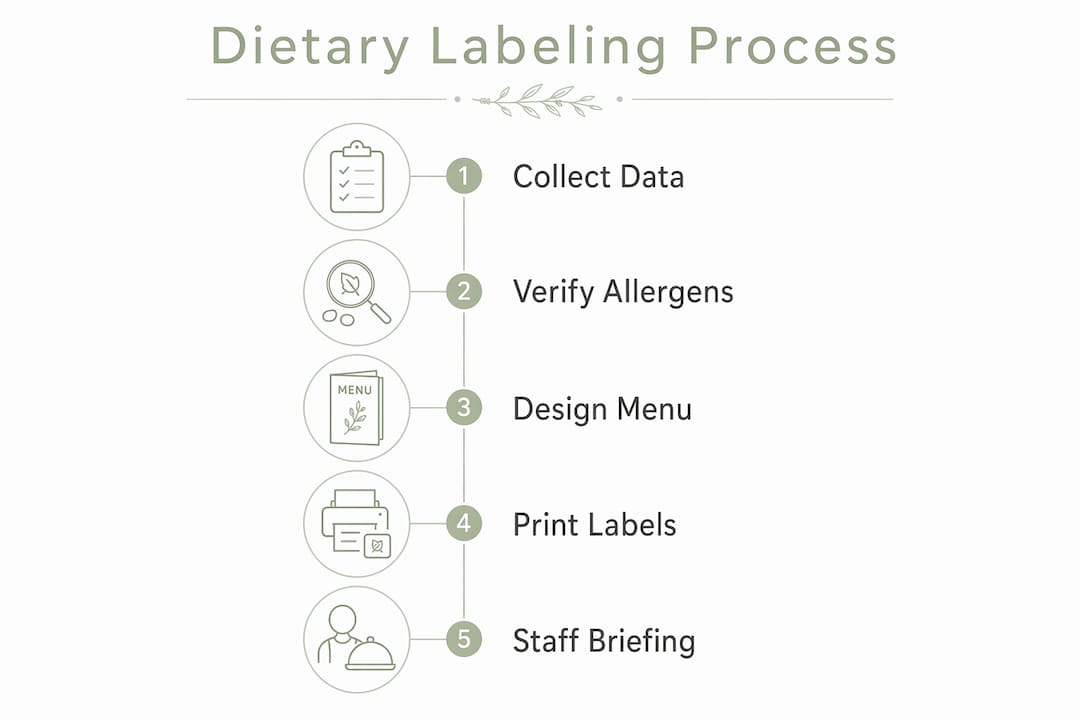
Accurate labeling starts with accurate data. Caterers and couples should finalize and share a master dietary spreadsheet 7–14 days before the event to allow time for ingredient procurement, kitchen prep, and allergen matrix generation. Waiting until the week of the wedding leaves no room to source specialty ingredients or adjust kitchen workflows.
The collection process works best in three stages:
- Initial RSVP inquiry. Include a dietary field on every RSVP card or wedding website form. Open-ended questions about “dietary needs” outperform checkbox lists because they capture nuanced information, such as a guest who avoids shellfish but is not formally allergic.
- Follow-up clarification. Guests often use shorthand inconsistently. A guest who writes “GF” may mean celiac disease or a personal preference. Caterers must translate guest input into standardized, kitchen-friendly categories before any prep begins.
- Master spreadsheet build. Organize confirmed data into a single document that separates true allergies from preferences, flags severity levels, and maps each guest to their assigned seat or meal ticket.
Common mistakes at this stage include treating all dietary notes as equal, ignoring drink and late-night snack requirements, and failing to share the final list with the venue coordinator. Dietary needs extend beyond meals to cocktail hour bites and dessert stations, where labeling is often thinner and risks are higher.
Pro Tip: Add a free-text field to your RSVP form and follow up personally with any guest who lists a severe allergy. A two-minute phone call prevents a serious incident at the reception.
What menu design and allergen control measures support accurate dietary labeling?
Menu design is where dietary data becomes a safety system. The goal is to create dishes that naturally overlap across common dietary categories, reducing the number of entirely separate plates the kitchen must track.
Key allergen control measures include:
- Building an allergen matrix. Map every dish against the 14 major allergens recognized by food safety regulators, including gluten, dairy, eggs, nuts, shellfish, and soy. This matrix becomes the reference document for both kitchen staff and front-of-house teams.
- Auditing hidden allergens. Pre-made sauces, spice blends, and packaged garnishes often contain undisclosed allergens. Caterers must read every ingredient label on purchased goods, not just house-made items.
- Cross-contamination protocols. Dedicated prep surfaces, separate utensils, and color-coded cutting boards for allergen-free dishes are standard practice. A gluten-free dish prepared on a shared surface is no longer gluten-free.
- Religious and lifestyle diet accommodation. Halal, kosher, vegan, and vegetarian requirements each carry specific preparation rules beyond ingredient substitution. Caterers who specialize in customizable wedding menus build these protocols into their standard kitchen workflow.
The table below shows how common dietary categories map to menu planning decisions:
| Dietary category | Key restriction | Menu design response |
|---|---|---|
| Gluten-free | Wheat, barley, rye | Dedicated prep area, certified GF ingredients |
| Vegan | All animal products | Plant-based protein centerpiece dish |
| Nut allergy | Tree nuts, peanuts | Nut-free kitchen zone for affected dishes |
| Halal | Non-halal meat, alcohol | Certified halal sourcing, separate service |
| Dairy-free | Milk, cream, butter | Plant-based fat substitutes throughout |
Pro Tip: If the menu changes within two weeks of the event, update the allergen matrix immediately and re-brief the kitchen team. A last-minute ingredient swap is one of the most common causes of allergen incidents at catered events.
How do caterers label food at weddings to ensure guest safety and clarity?
Standardized symbols are the foundation of effective food labeling for weddings. Caterers use a consistent set of icons, including V for vegetarian, VG for vegan, GF for gluten-free, DF for dairy-free, and N for contains nuts, paired with a printed legend on every menu card or buffet station sign. Standardized symbols with a full key meet both regulatory expectations and practical guest needs.
Label placement varies by service style:
- Plated meals. Labels can be discreet. A small symbol on the place card or a color-coded dot on the plate cover communicates the meal type without drawing attention to the guest’s dietary need.
- Buffet stations. Every dish requires a visible tent card listing the dish name, key ingredients, and applicable symbols. Buffets require rigorous station signage and continuous monitoring because guests serve themselves and cross-contamination risk increases.
- Food stations and grazing tables. These require the same rigor as buffets, with the added challenge of irregular replenishment. Staff must re-label dishes when they are refreshed.
A fail-safe labeling system goes beyond symbols. Color-coded systems with dedicated exception leads assign a specific team member to handle special dietary requests in real time, reducing errors and giving guests a clear point of contact. For pre-packed items, such as favor boxes with food or individually wrapped desserts, caterers operating under Natasha’s Law standards must include a full ingredient list and allergen declaration on the packaging itself.
Readability matters as much as accuracy. Labels printed in a font smaller than 12pt are difficult to read in typical reception lighting. High-contrast color combinations and bold allergen text improve accessibility for all guests.
What roles do catering staff play in managing dietary labeling successfully?
Visible signage provides a baseline, but well-trained staff are the real safety net. A guest with a severe allergy will ask a server before trusting a label. If that server cannot answer confidently, the guest either skips the dish or takes an unnecessary risk.
Effective staff preparation includes:
- Pre-service briefings. Every team member receives a verbal rundown of the dietary guests, their seat assignments, and which dishes are cleared for them. This briefing happens on the day of the event, not the day before.
- Allergen question training. Staff learn to answer specific questions about ingredients, preparation methods, and cross-contamination risk. They also know when to escalate to the catering manager rather than guess.
- Designated exception leads. One senior staff member owns all special dietary requests during service. This person carries the master dietary list and coordinates directly with the kitchen for any last-minute changes.
- Coordination with the wedding planner. Sharing the dietary spreadsheet with the planner and venue coordinator creates a second layer of verification. Planners who understand wellness-focused catering practices often catch gaps that caterers miss during the planning phase.
Pro Tip: Place allergen information cards at each table alongside the menu. Guests with dietary needs can review the full dish list privately without needing to flag a server, which many guests prefer.
How can couples and planners partner with caterers on dietary labeling?
Couples and planners who treat dietary labeling as a shared responsibility get better outcomes than those who delegate it entirely to the caterer. The partnership works best when both sides follow a clear process.
- Set a firm dietary submission deadline. Communicate to guests that dietary information must be submitted at least 14 days before the wedding. Build this deadline into your RSVP timeline.
- Maintain a living dietary list. Update the guest dietary spreadsheet as new information arrives and share each updated version with the caterer immediately. Do not batch updates.
- Attend tasting sessions with dietary labeling in mind. Use the catering tasting session to review the allergen matrix, confirm symbol accuracy on printed menus, and taste dishes designated for guests with restrictions.
- Confirm the caterer’s allergen control policies in writing. Ask specifically about cross-contamination prevention, staff training protocols, and how the caterer handles last-minute menu changes.
- Plan for day-of changes. A guest may arrive with a dietary need not on the list. Confirm with your caterer in advance how they handle unplanned requests, and designate one person on your team to relay that information quickly.
Couples who follow this process give their caterer the information and lead time needed to label food accurately and serve every guest with confidence.
Key Takeaways
Effective wedding dietary labeling requires early data collection, a verified allergen matrix, standardized symbols, and trained staff working from a shared master list.
| Point | Details |
|---|---|
| Collect data early | Share the final dietary spreadsheet with your caterer 7–14 days before the event. |
| Use standardized symbols | Apply V, VG, GF, DF, and N with a printed legend on every menu card and buffet sign. |
| Build an allergen matrix | Map every dish to major allergens and audit all purchased ingredients for hidden risks. |
| Train staff, not just signs | Designate an exception lead and brief all staff on dietary guests before each service. |
| Extend labeling beyond meals | Label cocktail hour bites, late-night snacks, and drinks with the same rigor as main courses. |
What I’ve learned from watching dietary labeling go wrong at weddings
After watching dozens of wedding receptions unfold, the pattern I see most often is not malice. It is assumption. A caterer assumes the couple shared the full dietary list. The couple assumes the caterer updated the labels after a menu change. The planner assumes someone else confirmed the buffet signs. Nobody checks, and a guest with a nut allergy ends up staring at an unlabeled dish.
The shift I have seen in recent years is encouraging. Couples now arrive at planning meetings with detailed dietary spreadsheets already drafted. Planners ask for allergen matrices as a standard deliverable, not an afterthought. That change in expectation has pushed caterers to build better internal systems.
What still lags behind is the extension of labeling to drinks and late-night snacks. Guests with allergies face real risk during cocktail hour when passed appetizers arrive without labels and servers cannot name every ingredient. The fix is simple: apply the same labeling discipline to every food and drink touchpoint, not just the dinner table.
Technology is starting to help. QR codes on buffet cards that link to full ingredient lists give guests with complex needs a level of detail no tent card can match. I expect that practice to become standard at upscale weddings within the next few years.
The couples and planners who get this right share one trait. They start the dietary conversation early, keep it open throughout planning, and treat it as a guest experience priority, not a compliance checkbox.
— James
Desertdine’s approach to wedding dietary labeling
Desertdine brings a structured, detail-oriented approach to every wedding it caters in the Greater Palm Springs area. The team collects and organizes guest dietary data early, builds a verified allergen matrix for every menu, and applies standardized symbol labeling across all service styles, from plated dinners to open buffet stations.
Every Desertdine server receives a pre-service briefing on dietary guests and a designated exception lead manages special requests throughout the event. The custom wedding menus are designed to accommodate vegetarian, vegan, gluten-free, dairy-free, and religious diet requirements without sacrificing the elevated culinary experience every couple deserves. Ready to plan a wedding where every guest eats with confidence? Book your event with Desertdine today.
FAQ
How far in advance should couples share dietary info with their caterer?
Couples should submit the final guest dietary list to their caterer at least 7–14 days before the wedding. This window gives the kitchen time to source specialty ingredients and update the allergen matrix.
What symbols do caterers use for food labeling at weddings?
Standard symbols include V for vegetarian, VG for vegan, GF for gluten-free, DF for dairy-free, and N for nut-containing dishes. Each symbol set requires a printed legend on menu cards and buffet signage so guests can interpret them without asking staff.
How does service style affect dietary labeling at weddings?
Plated meals allow discreet per-plate markers, while buffets require visible tent cards at every station and continuous monitoring to prevent cross-contamination. The labeling strategy must match the service format to remain effective.
What is an allergen matrix and why does a caterer need one?
An allergen matrix is a document that maps every dish on the menu to the major allergens it contains. Caterers use it to brief kitchen staff, verify label accuracy, and quickly answer guest questions during service.
Should dietary labeling cover drinks and late-night snacks?
Yes. Guests with allergies face heightened risk during cocktail hour and late-night snack service, when labeling is often absent. Extending the same symbol system and staff awareness to all food and drink touchpoints reduces that risk significantly.
Recommended
- Desert Dine Catering |How Menu Customization Works in Catering for Events• Palm Springs & Coachella Valley
- Desert Dine Catering |Wedding Catering Menu Styles: Your 2026 Planning Guide• Palm Springs & Coachella Valley
- Desert Dine Catering |Wedding Catering Menu Styles: Your 2026 Planning Guide• Palm Springs & Coachella Valley
- Desert Dine Catering |How to Pair Catering with Your Wedding Theme• Palm Springs & Coachella Valley


