


Selecting catering for a micro wedding means choosing a personalized, narrative-driven dining experience designed for 8 to 50 guests that goes far beyond scaling down a traditional banquet. The industry term for this approach is boutique event catering, and it covers everything from private chef experiences to multi-course tasting menus built around your story. Unlike conventional wedding catering, the best catering for small weddings treats every dish as part of the celebration itself. In 2026, interactive culinary stations, farm-to-table menus, and bespoke chef collaborations are defining what intimate micro-wedding catering ideas look like at the highest level.
How to select catering for a micro wedding: your options explained
Micro wedding catering options split into three distinct styles, each suited to a different guest count and culinary vision.
| Catering Style | Best Guest Count | Key Features |
|---|---|---|
| Private chef experience | 8–20 guests | Custom menus, onsite cooking, full personalization |
| Boutique tasting menu | 20–50 guests | Multi-course service, high staff ratios, curated pairings |
| Interactive culinary stations | Any size | Live cooking, guest participation, flexible timing |
The private chef model works best for the most intimate gatherings. A chef cooks in your venue’s existing kitchen, eliminating the need for a full catering infrastructure. Traditional caterers often decline small weddings due to high volume minimums, and private chefs fill this gap with scalable, in-home cooking approaches. This means couples with 10 or 12 guests are no longer forced into packages designed for 100.
Boutique catering services for 20 to 50 guests operate differently. These teams deliver restaurant-quality hospitality at a 1:5 staff-to-guest ratio, meaning attentive, unhurried service that a large-scale caterer simply cannot replicate. A five-course tasting menu with wine pairings becomes genuinely personal when one server is dedicated to every five guests.
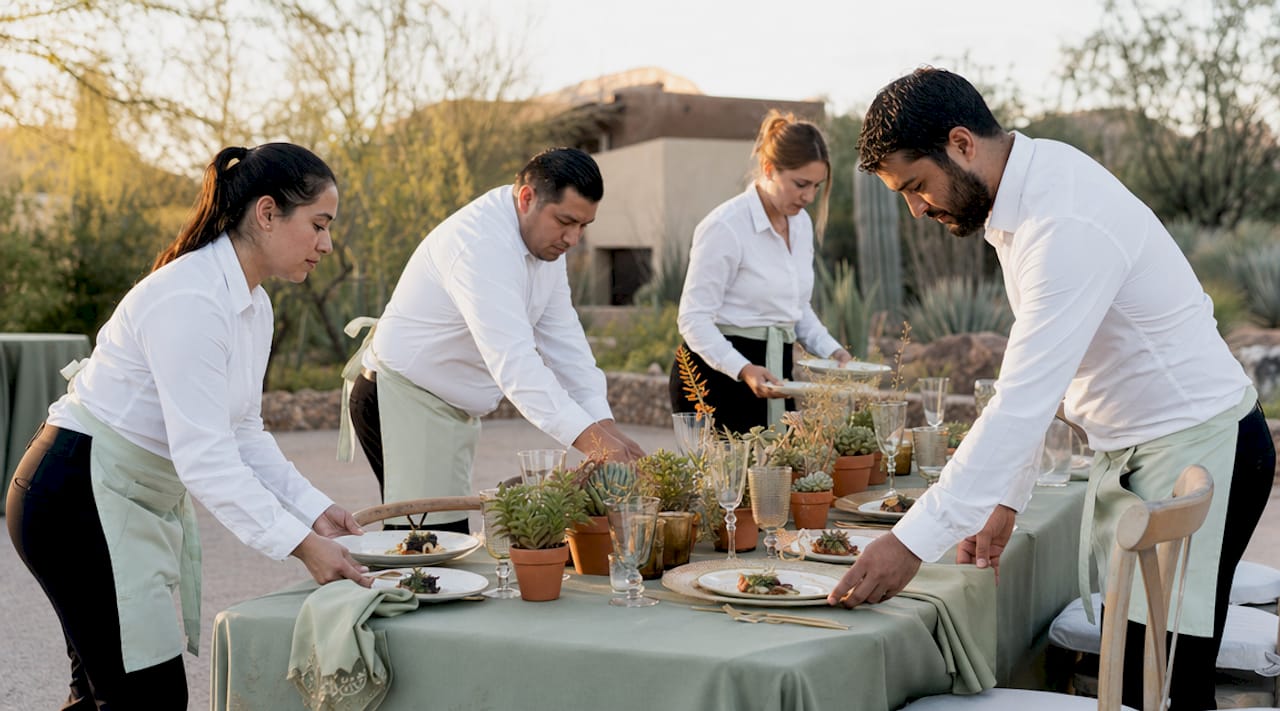
Interactive culinary stations are the fastest-growing format in 2026. Think live pasta-making, build-your-own charcuterie boards, and artisanal taco bars. These stations work best during cocktail hours or late-night segments rather than during the main meal, so they add energy without disrupting the ceremony flow. Understanding the difference between private chef and catering models helps you decide which format fits your vision before you contact a single vendor.
One more distinction worth knowing: in-house venue catering offers convenience but typically limits menu creativity, while external boutique caterers offer bespoke menus but require you to manage more logistics. Neither is wrong. The right choice depends on how much culinary storytelling matters to your day.
How does your venue and guest count shape your catering choice?
Your venue is not a neutral backdrop. It actively determines which catering styles are even possible.
Start with these questions before you contact any caterer:
- Kitchen access: Does the venue have a commercial kitchen, a residential kitchen, or no kitchen at all? Private chef experiences require at least a functional residential setup.
- Power supply: Interactive stations with live cooking equipment need dedicated circuits. Outdoor or off-site venues may require generator rentals.
- Space layout: Compact, portable catering stations preserve venue space and support smooth service flow at intimate weddings. A 600-square-foot loft and a vineyard terrace need completely different layouts.
- Ancillary logistics: Off-site micro wedding catering teams often manage tablescapes, mobile bars, power rentals, and waste removal for venues lacking infrastructure. Confirm whether your caterer handles these or whether you need separate vendors.
- Seasonal availability: Peak wedding season in most U.S. markets runs from May through October. Boutique caterers and private chefs book out faster during these months.
Guest count drives the staffing model. The 8 to 20 range suits a private chef experience with one or two support staff. The 20 to 50 range calls for a boutique catering team with dedicated service staff, a bar team, and a coordinator on-site. Trying to apply a private chef model to 45 guests creates service gaps that undermine the entire experience.
Pro Tip: Schedule a venue walkthrough with your shortlisted caterer before signing any contract. A 30-minute site visit reveals logistical issues that no amount of email exchange will catch.
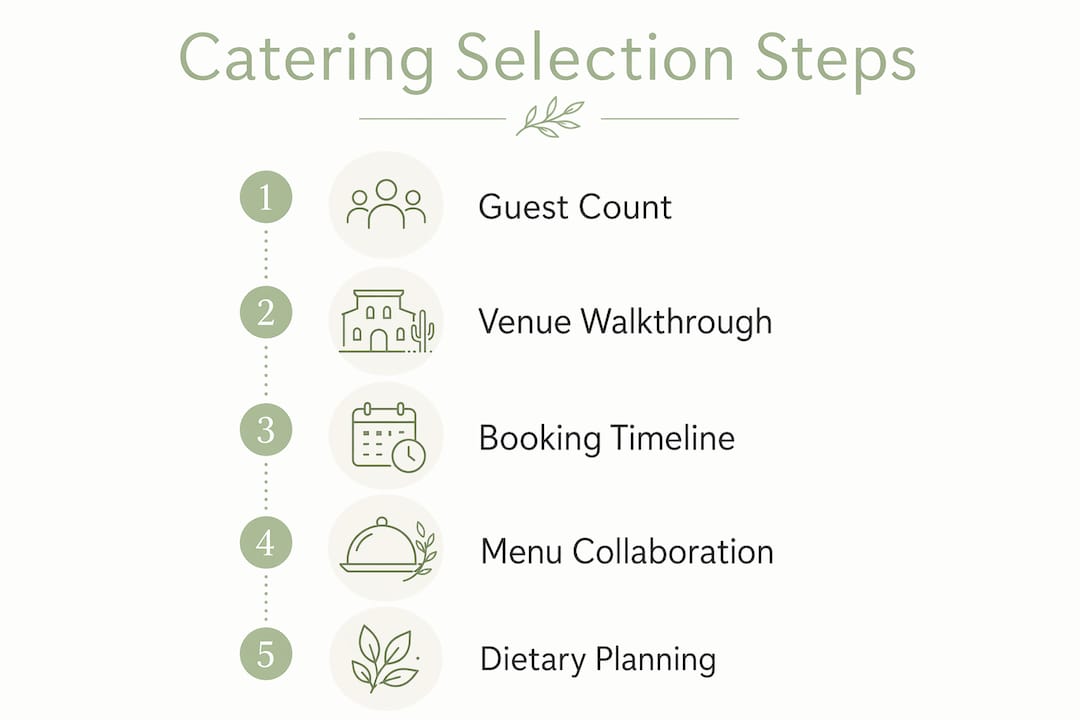
Booking timelines matter more than most couples realize. Book 8 to 12 weeks ahead in the off-season and 12 to 16 weeks ahead during peak periods to secure your preferred caterer. The best boutique teams in any market fill their calendars fast, and micro weddings are not exempt from that pressure.
What are the steps to booking the right caterer for your intimate wedding?
Choosing menu options for a micro wedding follows a clear process when you break it down into deliberate steps.
-
Define your culinary vision and budget. Before you research a single vendor, write down three words that describe the food experience you want. “Rustic and seasonal,” “modern and theatrical,” or “comfort-driven and nostalgic” each point to completely different caterers. Your budget per head for micro wedding catering is typically higher than for large weddings because you are paying for quality and personalization, not volume.
-
Research and shortlist specialists. Look specifically for caterers who list micro weddings, intimate events, or private chef services on their websites. A caterer whose portfolio is full of 200-person galas is not optimized for your 22-person dinner, regardless of how good their food is. Understanding how to choose a caterer for an event helps you evaluate the right criteria from the start.
-
Schedule tastings and consultations. Many boutique caterers offer a Curator’s Consult or equivalent session where they develop a custom menu concept with you. Initial catering proposals for micro weddings typically arrive within 48 hours of inquiry, focused on bespoke menus rather than standard packages. Use this session to assess both the food and the rapport. You will be collaborating closely with this team for months.
-
Confirm logistics and certifications. Ask directly about food handler certifications, liability insurance, and whether the team has worked at your specific venue type before. An outdoor desert venue in Palm Springs has different demands than a downtown loft in Chicago.
-
Negotiate contract details. Confirm staff ratios, overtime policies, menu customization scope, and what happens if a key ingredient becomes unavailable. Review a catering menu checklist before signing to make sure nothing is left to assumption.
-
Finalize and secure your date. Pay your deposit and get every agreed detail in writing. Verbal agreements dissolve under wedding-day pressure.
Pro Tip: Ask your caterer to walk you through how they handle a dietary restriction discovered the week of the event. Their answer tells you everything about how they operate under pressure.
Dietary restrictions can be elegantly accommodated in micro wedding catering through menu customization and close collaboration with chefs. The small guest count actually makes this easier, not harder. A chef cooking for 18 people can prepare a gluten-free variation of every course without disrupting the kitchen.
What mistakes do couples make when choosing micro wedding catering?
The most common error is hiring a caterer built for scale. A company whose standard package starts at 75 guests will not suddenly become attentive and personal for your 30-person celebration. Their systems, staffing models, and kitchen prep are all calibrated for volume.
Watch for these specific pitfalls:
- Ignoring interactive station timing. Live cooking stations placed during the ceremony or main meal create noise, movement, and distraction. Interactive stations belong in cocktail hours or late-night segments to maintain the intimate flow of your event.
- Defaulting to “safe” menus. Couples sometimes ask for a generic chicken-and-fish menu to avoid dietary complaints. This wastes the biggest advantage of micro wedding catering, which is the ability to build a menu that actually reflects who you are.
- Choosing venue catering for the wrong reasons. In-house venue catering is convenient, but couples often must choose between that convenience and the creative freedom of a specialized boutique caterer. If the food is central to your vision, the extra logistics of an external team are worth it.
- Underestimating off-site complexity. A backyard, a desert overlook, or a private estate requires your catering team to bring everything. Confirm that your caterer handles power, water, waste, and setup independently or that you have separate vendors locked in for each.
Catering at micro weddings should be viewed as a narrative performance rather than a simple meal service. The food is not the backdrop. It is part of the story.
The couples who have the best micro wedding catering experiences are the ones who treat the menu as a creative collaboration, not a logistical checkbox. Menu customization is the mechanism that turns a good meal into a memorable one.
Key takeaways
Selecting catering for a micro wedding requires matching your guest count, venue infrastructure, and culinary vision to the right catering style before you contact a single vendor.
| Point | Details |
|---|---|
| Match style to guest count | Private chef suits 8 to 20 guests; boutique catering suits 20 to 50 with a 1:5 staff ratio. |
| Assess venue infrastructure first | Kitchen access, power supply, and space layout determine which catering formats are viable. |
| Book well in advance | Secure your caterer 8 to 12 weeks out in off-season and 12 to 16 weeks out during peak periods. |
| Avoid over-scaled caterers | Caterers built for large events cannot deliver the attentive, personalized service micro weddings require. |
| Treat the menu as storytelling | Bespoke menus built around your story and seasonal ingredients define the best intimate wedding catering. |
Why micro wedding catering is the most creative work I do
I have worked on hundreds of events across the Greater Palm Springs area, and nothing produces more genuinely original food than a micro wedding. When you are cooking for 16 people who all know each other, the pressure to perform is real, and the opportunity to be specific is extraordinary.
Most couples underestimate how much a small guest count frees the chef. I have built menus around a couple’s first trip to Oaxaca, around a grandmother’s recipe for braised short rib, and around a shared obsession with Japanese street food. None of those menus would have been possible at 150 guests. The intimacy is the ingredient.
What I tell every couple I work with: the food at your micro wedding will be remembered in a way that food at a large wedding rarely is. Your guests are close to the kitchen, close to the chef, and close to each other. That proximity creates a dining experience that feels like a private restaurant, not a catered event.
The one mistake I see most often is couples who spend months perfecting the florals and the music and then treat catering as the last decision. The caterer shapes the entire rhythm of your day. Get that relationship right early, and everything else falls into place.
— James
Plan your micro wedding menu with Desertdine
Desertdine specializes in personalized wedding catering for intimate celebrations across Palm Springs and the surrounding desert communities. Every menu is built from scratch around your story, your guests, and the season, using locally sourced ingredients and a culinary team that treats your event as the only event on the calendar.
Whether you are planning a 10-person private chef dinner or a 45-person boutique tasting menu, Desertdine’s team handles every detail from menu design to on-site service. Explore private event catering options or go straight to booking your consultation to start building the menu your micro wedding deserves.
FAQ
What is micro wedding catering?
Micro wedding catering is a specialized form of boutique event catering designed for intimate celebrations of 8 to 50 guests, featuring bespoke menus, high staff-to-guest ratios, and personalized culinary experiences rather than standard large-scale packages.
How far in advance should I book a caterer for a micro wedding?
Book 8 to 12 weeks ahead during the off-season and 12 to 16 weeks ahead during peak wedding season to secure your preferred caterer and allow time for menu development.
What catering style works best for under 20 guests?
A private chef experience is the best catering option for 8 to 20 guests, offering fully custom menus, onsite cooking, and attentive service without the high minimums that traditional caterers require.
How do I handle dietary restrictions at a micro wedding?
Close collaboration with your chef before the event allows every dietary restriction to be addressed through menu customization. Small guest counts make this straightforward since a chef cooking for 15 to 20 people can prepare tailored variations of each course.
Are interactive food stations a good idea for micro weddings?
Yes, but timing is critical. Place live cooking stations such as pasta bars or charcuterie builds during the cocktail hour or late-night portion of the event to add energy without interrupting the ceremony or main dining experience.
Recommended
- Desert Dine Catering |How to Choose A Caterer For An Event - What to Know• Palm Springs & Coachella Valley
- Desert Dine Catering |Checklist of Things to Know Before Confirming a Catered Menu• Palm Springs & Coachella Valley
- Desert Dine Catering |What’s in a wedding catering package? Your guide• Palm Springs & Coachella Valley
- Desert Dine Catering |Why You Need Catering for Your Next Event - Our Reasons• Palm Springs & Coachella Valley


