


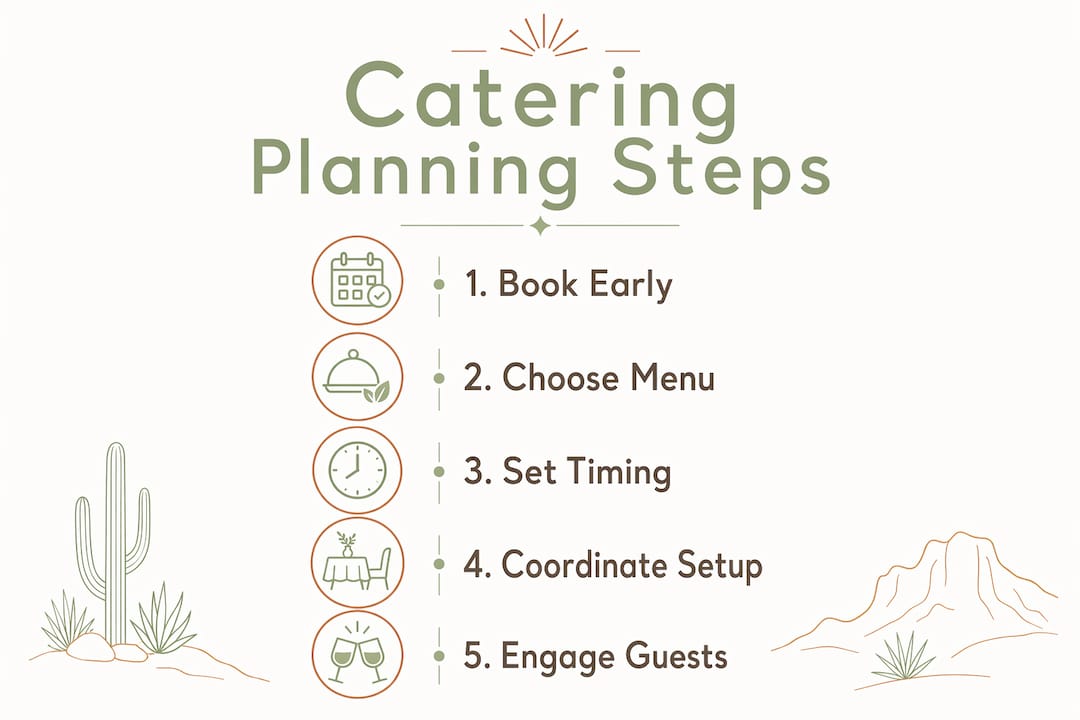
Late evening catering service is supplemental food service timed to re-energize guests after the main dinner ends, and it is one of the most underused tools in an event planner’s kit. When you plan late evening catering service correctly, you give guests a reason to stay on the dance floor, linger at tables, and keep the energy high through the final hour. The difference between a forgettable reception and a truly memorable night often comes down to one well-timed plate of comfort food. Booking early, choosing the right menu, and coordinating logistics with your venue are the three pillars that make it work.
How far in advance should you book a late evening catering service?
Booking timelines are the first thing most hosts underestimate. Standard lead times run 6–8 weeks for regular event dates. That window gives your caterer time to confirm staffing, source ingredients, and finalize your menu without rushing. For high-demand periods like summer Fridays, holiday weekends, or peak wedding season, book at least 3 months ahead to secure your preferred provider and pricing.
Early booking also protects you from last-minute price increases. Caterers often lock in ingredient costs and staffing rates at the time of contract. Waiting until four weeks out can mean paying a premium or settling for a reduced menu. For corporate event planners, the corporate catering booking process follows the same logic: the earlier you confirm, the more control you keep over quality and cost.
Before you contact a caterer, confirm these details:
- Estimated guest count (within 10–15% accuracy is enough at the booking stage)
- Event end time and venue curfew
- Venue restrictions on outside vendors, kitchen access, or open flames
- Dietary requirements for vegetarian, vegan, gluten-free, or allergy-sensitive guests
- Service style preference: staffed station, drop-off, or self-serve
Pro Tip: Ask your venue coordinator for the vendor exit deadline before you book any caterer. That single detail shapes every other logistical decision you will make.
How to choose the right late evening menu to fit your event vibe
Menu selection is where most planners either win or lose the late-night moment. Late-night catering menus work best when they lean into interactive, comfort-driven stations that give guests a second wind rather than a second dinner. The goal is not to feed people again. The goal is to delight them with something familiar, satisfying, and easy to eat while standing.

Guests strongly prefer no-utensil options at late-night stations. Handheld foods like mini tacos, sliders, flatbreads, and loaded fries match the energy of a late-night event far better than plated dishes. They are faster to serve, easier to eat on the move, and far less likely to go to waste.
Match your menu style to your event tone:
- Casual events (birthday parties, outdoor receptions, company celebrations): street food carts, taco stations, loaded fries, or BBQ sliders
- Formal events (black-tie galas, upscale weddings, corporate dinners): elevated comfort options like mini gourmet burgers, artisan flatbreads, or charcuterie bites
- Mixed-format events: a single anchor item with two accompaniments keeps things simple and crowd-pleasing
Limit your menu to 2–3 items. Complex stations with five or more choices slow service and overwhelm tired guests. Two strong options served hot and fast will always outperform a sprawling spread. Review the catering menu checklist before finalizing your selections to make sure nothing critical gets missed.
Always include at least one vegetarian and one vegan option. These are not afterthoughts. They are baseline expectations at any professional event in 2026.
Pro Tip: Pick one hero item that photographs well and tastes great at room temperature. Guests who miss the first wave will still enjoy it, and it will show up all over social media by midnight.
Coordinating timing and logistics for late-night food delivery and setup
Timing is the most technical part of planning nighttime catering, and it is where the most costly mistakes happen. Follow this sequence to keep everything on track:
- Set your service window. Serve late-night food 90–120 minutes after the main dinner ends. This timing aligns with natural energy dips and the point when guests are most receptive to a food moment.
- Schedule setup 30 minutes before service. Your catering team needs time to arrange the station, heat food, and position signage before guests arrive. Rushing setup leads to cold food and disorganized presentation.
- Confirm your delivery window with the caterer. Build in a 15-minute buffer for traffic, parking, or venue access delays. Late delivery is the single most common cause of service timing failures.
- Coordinate with your DJ or host. The announcement that food is ready is not optional. It is the activation signal that turns a quiet station into a social focal point.
- Plan your vendor exit. Venue curfews require a clear exit strategy for all vendors. Confirm the exact time your catering team must be packed and off the property to avoid overtime fees.
- Assign a point of contact on-site. One person on your team should own communication with the catering crew throughout the evening. This prevents confusion during the transition from dinner to late-night service.
Pro Tip: Build your catering timeline backward from the venue curfew, not forward from the dinner end time. Working backward forces you to account for cleanup and exit before you commit to a service window.
How do you drive guest engagement and reduce food waste at late-night stations?
Guest engagement at late-night catering stations does not happen automatically. A public announcement by the DJ or host is the single most effective tool for drawing guests to the food area. Without it, many guests simply do not notice the station has opened, especially in large venues or loud environments.
Station design matters as much as the food itself. Position your catering station in a high-traffic area, not tucked in a corner. Use lighting, signage, and visual height to make it visible from across the room. A well-lit station with clear labels and an inviting layout becomes a social gathering point rather than a background service.
“Late-night catering is best viewed as a way to re-energize guests and create social moments, not just as food service.” The stations that work best are the ones guests gravitate toward naturally because they look and smell irresistible.
Common mistakes that kill late-night catering engagement:
- Serving too early or too late. Timing outside the 90–120 minute window reduces guest uptake and increases waste.
- Ignoring dietary needs. Guests with dietary restrictions who find nothing to eat will remember that experience.
- No announcement. Skipping the DJ callout leaves the station empty for the first 20 minutes.
- Overcrowded queues. Plan your station layout for flow. Two service points for groups over 100 guests prevents bottlenecks.
- Menu complexity. Too many choices slow service and frustrate guests who are tired and hungry.
The role of catering in social engagement is well documented for networking events, and the same principles apply at any late-night station. Food creates conversation. Conversation keeps guests at your event longer.
What do late evening catering services typically cost?
Cost structures for late-night catering follow a predictable pattern, but the details vary by provider and market. Understanding the fee categories upfront prevents budget surprises.
| Cost Category | Typical Range | Notes |
|---|---|---|
| Minimum food order | $750 or more | Most providers enforce a floor regardless of guest count |
| Late-night delivery fee | Starting around $200 for up to 20 miles | Flat fee; longer distances add more |
| Staffed service surcharge | Varies by provider | Applies when you need on-site catering staff |
| Late-hour surcharge | Varies by provider | Some caterers charge extra for service after 10 p.m. |
| Setup and cleanup | Often bundled or separate | Confirm in writing before signing |
The minimum food order threshold is the most common budget shock for first-time hosts. A group of 30 guests ordering two items may not reach $750 in food alone. Factor in delivery, staffing, and any late-hour fees before comparing quotes. Always ask for an itemized estimate, not a single total, so you can see exactly where your money goes.
Pro Tip: Ask your caterer to confirm all surcharges in writing before you sign. Verbal assurances about “no extra fees” are not enforceable. A signed contract with itemized costs is your only protection.
Negotiating is reasonable and expected. If your guest count is firm and your date is flexible, moving your event to a non-peak night can reduce both delivery fees and minimum order requirements. Providers in competitive markets often have more flexibility on weeknights than on Saturdays.
Key Takeaways
Successful late evening catering requires early booking, a focused menu of 2–3 handheld items, precise timing at 90–120 minutes after dinner, and a public announcement to activate guest participation.
| Point | Details |
|---|---|
| Book early | Secure your caterer 6–8 weeks out for standard dates, 3+ months for peak periods. |
| Keep the menu focused | Limit options to 2–3 handheld comfort items to speed service and reduce waste. |
| Time service precisely | Serve 90–120 minutes after dinner ends to match natural energy patterns. |
| Use announcements | A DJ or host callout turns a quiet station into the event’s social center. |
| Confirm all fees in writing | Get itemized costs including delivery, staffing, and late-hour surcharges before signing. |
Why the small details make or break late-night catering
After years of working with event planners across the Coachella Valley and Greater Palm Springs area, I have seen the same pattern repeat itself. Hosts spend months perfecting the dinner menu and then treat the late-night service as an afterthought. That is the wrong order of priorities.
The late-night moment is when guests are most relaxed, most social, and most likely to form lasting memories of your event. A perfectly timed plate of comfort food at 11 p.m. lands harder than the most elaborate appetizer at 6 p.m. The emotional payoff is disproportionate to the cost.
What I have learned is that communication does more work than the food itself. A DJ announcement, a well-lit station, and two great items served hot will outperform a complex spread that nobody notices. Hosts who overcomplicate the late-night menu are usually trying to impress. Tired guests do not want to be impressed. They want something warm, familiar, and easy to grab.
The venue coordination piece is where I see the most expensive mistakes. Planners who do not confirm vendor exit times in writing end up paying overtime fees that wipe out their catering budget savings. Call your venue coordinator before you book any caterer. Get the curfew in writing. Then build your entire catering timeline around that number.
Late-night catering done right is not just food service. It is the moment your guests remember when they talk about your event the following week.
— James
Desertdine makes late evening event catering simple
Planning a late-night food service that actually lands takes experience, the right menu, and a catering partner who understands event flow. Desertdine brings all three to every event across Palm Springs and the Coachella Valley.
Desertdine specializes in custom event menus built around your event’s tone, guest count, and timing. Whether you are hosting a private celebration or a corporate gathering, the team handles menu consultation, delivery logistics, and on-site setup so nothing falls through the cracks. For private celebrations, personalized event catering is available with tailored menu options and full-service support. Ready to lock in your date? Book your event directly and get a quote built around your specific needs.
FAQ
How far in advance should I book late-night catering?
Book at least 6–8 weeks ahead for standard event dates. For peak periods like summer weekends or holidays, book 3 or more months in advance to secure availability and pricing.
What foods work best for late evening catering?
Handheld, no-utensil comfort foods work best. Mini sliders, tacos, flatbreads, and loaded fries are top choices because they are fast to serve and easy to eat while standing.
When should late-night food be served at an event?
Serve late-night food 90–120 minutes after the main dinner ends. This timing aligns with natural energy dips and maximizes guest participation at the station.
How much does late evening catering typically cost?
Expect a minimum food order of $750 or more, plus a delivery fee starting around $200 for distances up to 20 miles. Late-hour surcharges and staffing fees may apply depending on your provider.
How do I get guests to actually use the late-night catering station?
Have your DJ or host make a public announcement the moment the station opens. Pair that with strong lighting and a visible location to turn the station into the event’s social focal point.
Recommended
- Desert Dine Catering |Why Catering Supports Outdoor Sunset Parties• Palm Springs & Coachella Valley
- Desert Dine Catering |Corporate Event Catering Best Practices for Planners• Palm Springs & Coachella Valley
- Desert Dine Catering |How to Impress Clients at an Executive Catering Event• Palm Springs & Coachella Valley
- Desert Dine Catering |How Private Catering Menus Are Built for Any Event• Palm Springs & Coachella Valley


