


A catering portfolio review is the structured process couples use to evaluate a vendor’s food quality, service history, menu flexibility, and pricing transparency before signing a contract. Most couples focus on food photos and stop there. That is a costly mistake. The most effective portfolio reviews cross-reference visual presentation with client testimonials, written proposals, and logistical details to confirm a caterer can deliver on your wedding day. This guide gives you a practical, couples-focused framework for evaluating catering portfolios in 2026, with specific red flags to avoid and questions that reveal true service quality.
How couples review catering portfolios: what to look for first
The first thing a thorough portfolio review reveals is whether a caterer has real, diverse event experience. Food photography is easy to polish. Proof of consistent execution across different venues, guest counts, and event formats is much harder to fake.

Start by building a shortlist. Interviewing more than 8 caterers increases planning time without producing better outcomes. Three to five vendors is the right number. It keeps your comparisons focused and your decision clear.
Once you have your shortlist, look for these specific portfolio elements:
- Menu variety and flexibility. A strong portfolio shows multiple cuisine styles, multi-course meal formats, and clear options for dietary accommodations. Menu customization is a hallmark of premium catering, and the portfolio should reflect that directly.
- Visual proof beyond food close-ups. Look for images of full table setups, buffet stations, plated service in progress, and outdoor or tented events. These show real execution, not just studio-quality dish shots.
- Team action photos. A portfolio lacking team photos or event type variety may indicate limited real event experience despite high food photo quality. You want to see staff in motion at actual events.
- Venue diversity. Has the caterer worked at ballrooms, private estates, desert venues, and outdoor spaces? A caterer experienced across venue types handles surprises better.
- Service style documentation. Does the portfolio specify staffing ratios, service formats (plated, buffet, family style), and setup timelines? Vague portfolios signal vague execution.
Pro Tip: Ask the caterer to show you photos from their last three weddings, not their best three. That gap in quality tells you more than a curated highlight reel ever will.
Pairing your portfolio review with a look at their wedding catering menu styles helps you confirm whether their offerings genuinely match your vision or just look good on a screen.
How do client reviews reveal a caterer’s true reliability?
Client reviews are the most underused tool in the catering selection process. Most couples scan star ratings and move on. The real signal is in the written detail.
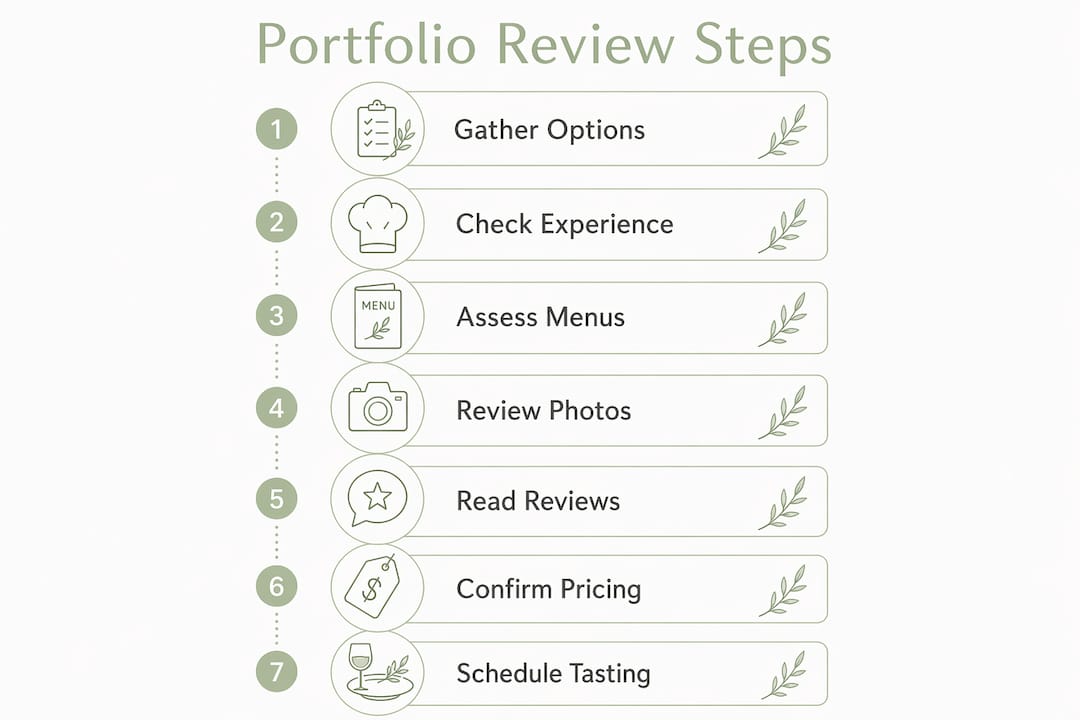
Trustworthy reviews describe specific service interactions rather than generic praise. A review that says “the team handled a last-minute gluten-free request for six guests without missing a beat” tells you far more than “food was amazing.” Look for that level of specificity.
Here is a step-by-step process for reading catering reviews effectively:
- Filter for volume and recency. Caterers with 100 or more reviews tend to have more reliable performance metrics. A caterer with 12 reviews and a perfect score is statistically less trustworthy than one with 150 reviews and a 4.9.
- Look for service-specific language. Reviews that mention staff responsiveness, timing, dietary handling, and communication quality are gold. Excellent service and responsiveness are the top factors behind positive recommendations, beyond food quality alone.
- Check how the caterer responds to negative reviews. Defensive or dismissive responses are a red flag. Professional, solution-focused replies signal a vendor who takes accountability seriously.
- Identify patterns across reviews. One complaint about slow service could be an outlier. Three complaints about the same issue in the past year is a pattern you cannot ignore.
- Cross-reference platforms. Check Google, WeddingWire, and The Knot separately. Caterers who manage their reputation carefully maintain consistency across all three.
“The reviews that helped us most were the ones where couples described exactly what went wrong and how the team fixed it. That told us the caterer could handle pressure.” — Satisfied client, WeddingWire
Detail-specific reviews reveal true service quality in ways that no portfolio photo can match. Treat them as your most reliable source of pre-contract intelligence.
What pricing and contract details should couples scrutinize?
Transparent pricing is the clearest sign of a professional caterer. Vague quotes and verbal-only agreements are where wedding budgets quietly fall apart.
Service charges typically range from 18% to 24% and cover administrative costs and insurance. Cake cutting fees can add $3–$7 per guest. Corkage fees range $15–$45 per bottle if not negotiated upfront. These numbers add up fast at a 150-person wedding.
The table below shows common catering cost categories and what to watch for in each:
| Cost category | Typical range | What to verify |
|---|---|---|
| Service charge | 18%–24% of food total | Confirm what it covers: admin, insurance, gratuity |
| Cake cutting fee | $3–$7 per guest | Ask if it is waived with a dessert package |
| Corkage fee | $15–$45 per bottle | Negotiate upfront or ask for a flat cap |
| Rental management fee | 10%–15% on top of rental costs | Compare with third-party rental vendors |
| Staffing overtime | Varies by hour | Confirm cutoff time and hourly rate in writing |
Renting through a caterer can include a 10%–15% management fee on top of rental costs. Sourcing linens, chairs, or tableware directly from a rental company often costs less. Always compare both options before agreeing to a bundled package.
Well-screened caterers provide detailed written proposals and clear contract terms. Any caterer who resists putting specifics in writing is not a vendor you want managing your wedding day. Review the full wedding catering package breakdown before you sign anything.
Pro Tip: Request an itemized proposal, not a single per-head price. Line-by-line pricing shows you exactly where your money goes and gives you room to negotiate specific line items.
How do tastings and logistics work together in portfolio reviews?
A tasting tells you what the food tastes like on a Tuesday afternoon in a test kitchen. Your wedding is a different environment entirely. The real question is whether the caterer can execute that same food quality for 120 guests under time pressure at an outdoor venue in July.
Couples who prioritize logistical execution questions report higher satisfaction than those who focus solely on food flavor. Execution under pressure is the true differentiator between an average caterer and an exceptional one.
When you attend a tasting, bring these logistical questions with you:
- What is your staff-to-guest ratio for a plated dinner service?
- How do you handle dietary accommodations confirmed after the final headcount?
- What is your plating timeline for a 100-person seated dinner?
- How do you manage service at venues without a commercial kitchen?
- What happens if a key team member is sick on the wedding day?
The answers reveal operational depth. A caterer who answers these questions with specifics, timelines, and backup plans has real experience. A caterer who gives vague reassurances does not.
Look at the portfolio again after your tasting with fresh eyes. Do the event photos show the same food quality you tasted? Do the setup images reflect the staffing levels they described? Portfolios missing images of the catering team and diverse event types suggest limited real-world experience despite polished food photography.
Pairing your tasting impressions with a pre-confirmation menu checklist gives you a complete picture before you commit.
Key takeaways
The most effective catering portfolio review combines visual evidence, verified client feedback, transparent pricing, and direct logistical questioning to confirm a caterer can deliver on your wedding day.
| Point | Details |
|---|---|
| Build a focused shortlist | Limit vendor reviews to 3–5 caterers to improve decision quality without adding stress. |
| Read reviews for specifics | Look for detailed service interactions, not star ratings, to assess true reliability. |
| Scrutinize every fee | Service charges, cake cutting, and rental markups can significantly inflate your final bill. |
| Ask logistics questions at tastings | Staffing ratios and plating timelines predict execution quality better than flavor alone. |
| Verify portfolio diversity | Team photos and varied event types confirm real-world experience beyond food photography. |
What I have learned from watching couples choose caterers
The most common mistake I see couples make is treating the catering selection as a transaction. They collect quotes, compare per-head prices, and pick the lowest number that still has good photos. That approach almost always leads to regret.
The couples who end up genuinely thrilled with their catering choice are the ones who treated the caterer as a collaborator. They asked hard questions early. They pushed for written answers. They checked whether the caterer’s communication style matched their own. A caterer who responds to your emails within 24 hours during the sales process will likely do the same on the week of your wedding. One who takes four days to reply to a simple question is showing you exactly how they operate under pressure.
I also think couples underestimate how much the relationship matters. Viewing caterers as collaborators who accommodate your needs strengthens the entire vendor relationship. When you approach the process with that mindset, caterers respond differently. They offer solutions instead of limitations. They flag potential issues before they become problems.
My honest advice: spend less time on food photos and more time on the proposal. A detailed, itemized written proposal is the single best predictor of a professional catering experience. If a caterer cannot produce one before you sign, walk away.
— James
See how Desertdine approaches every wedding portfolio
Desertdine builds every client relationship on transparency, culinary excellence, and genuine collaboration. From locally sourced ingredients to fully customizable multi-course menus, the portfolio showcases real events across Palm Springs, Temecula, and the greater desert region.
Every couple receives a detailed, itemized proposal before any commitment is made. You can explore Temecula wedding catering options with a full menu showcase, real event photography, and clear pricing built in. For a personalized experience tailored to your vision, visit Desertdine’s private events page or book your event directly to start the conversation.
FAQ
What should couples look for in a catering portfolio?
Couples should look for menu variety, team action photos, venue diversity, and documented service formats. A portfolio lacking team photos or diverse event types may indicate limited real experience.
How many caterers should couples interview?
Interviewing 3–5 caterers produces the best outcomes. Reviewing more than 8 vendors increases planning time without improving decision quality.
What hidden fees appear most often in catering contracts?
Service charges (18%–24%), cake cutting fees ($3–$7 per guest), corkage fees ($15–$45 per bottle), and rental management fees (10%–15%) are the most common costs couples miss before signing.
Are client reviews more reliable than portfolio photos?
Reviews that describe specific service interactions are more reliable than portfolio photos. Detail-specific feedback about dietary handling, timing, and staff responsiveness reveals true service quality.
What logistical questions should couples ask at a tasting?
Ask about staffing ratios, plating timelines, dietary accommodation processes, and backup plans for key staff absences. Caterers who answer with specifics have the operational depth to handle a real wedding day.
Recommended
- Desert Dine Catering |How to Pair Catering with Your Wedding Theme• Palm Springs & Coachella Valley
- Desert Dine Catering |Wedding Catering Menu Styles: Your 2026 Planning Guide• Palm Springs & Coachella Valley
- Desert Dine Catering |Wedding Catering Menu Styles: Your 2026 Planning Guide• Palm Springs & Coachella Valley
- Desert Dine Catering |What’s in a wedding catering package? Your guide• Palm Springs & Coachella Valley


