


Professional catering is the single most important operational support system for surprise party logistics. It controls timing, manages secrecy, and delivers food service without disrupting the reveal. Hosts who underestimate how catering supports surprise party logistics often face the most common failure point: a delivery van in the driveway or a cooking smell that gives everything away. The good news is that a well-briefed catering team turns those risks into non-issues. This guide covers every logistics layer, from delivery windows to decoy drivers, so your party lands exactly as planned.
How catering supports surprise party logistics
Catering does far more than deliver food to a party. It acts as a choreography system that manages venue access, loading zones, and timing windows in sync with the guest of honor’s arrival. When that coordination breaks down, the surprise breaks down with it.
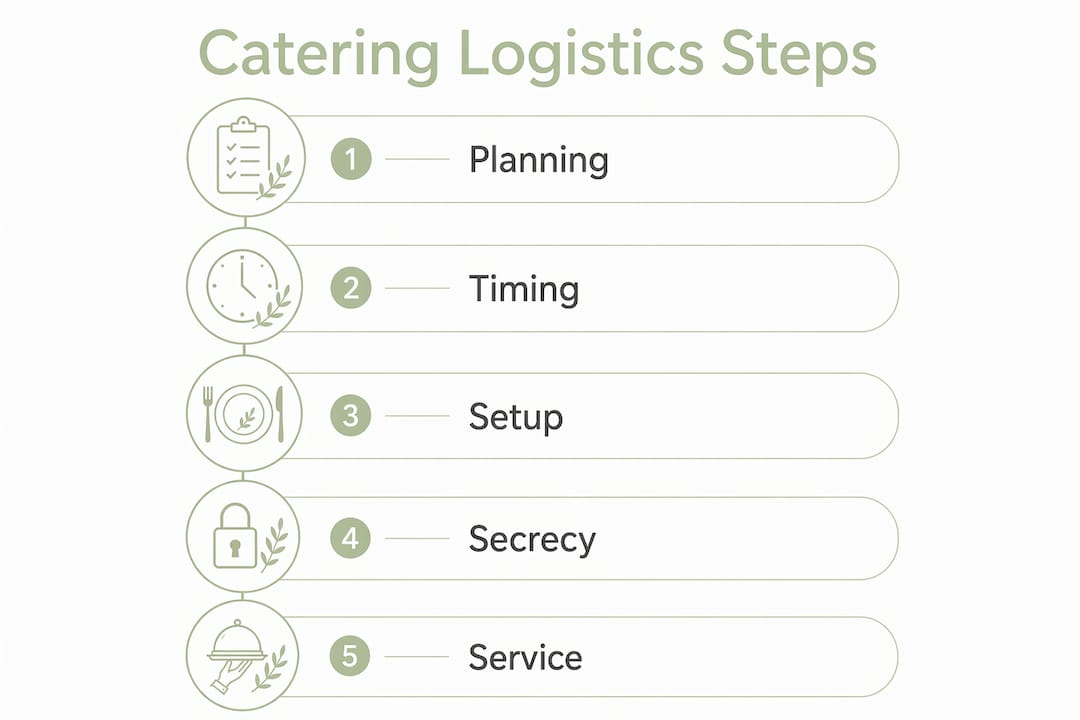
Hosts often underestimate catering’s role in preserving secrecy beyond just providing food. A professional catering team that understands the event’s surprise element will adjust its behavior, its communication, and its setup process to protect the moment. One that hasn’t been briefed will call the front door, park a branded truck out front, and ask the neighbor where to plug in the chafing dishes.

The three pillars of catering logistics support for surprise parties are timing precision, discreet operations, and flexible coordination. Each one depends on clear communication between the host and the catering team before the event day.
What are the key logistics challenges in surprise party catering?
Surprise party catering introduces constraints that standard event catering does not face. Every decision, from delivery time to staff parking, carries a secrecy risk. Understanding these challenges upfront lets you plan around them rather than react to them.
The most common obstacles include:
- Timing sensitivity. Catering deliveries must land inside a narrow window. Setup should begin at least 90 minutes before the guest of honor arrives, giving the team time to complete work before guests need to be silent and in position.
- Secrecy around deliveries. A catering van parked outside or a staff member asking questions at the door can expose the event. Vendors must be briefed to use rear entrances, avoid branded vehicles when possible, and stay off the main approach path.
- Venue access and layout. Professional teams must integrate with venue constraints like elevator schedules, loading dock hours, and parking restrictions. Ignoring these details creates noise and visible activity at the wrong moment.
- Coordinating multiple vendors. When a DJ, florist, and caterer all arrive within the same hour, the risk of visible activity multiplies. A single point of contact on the host’s side keeps all vendors aligned.
- Guest arrival timing. Guests who arrive late or the honoree who arrives early can collapse the entire timeline. Catering must be able to pause, hold, or adjust service on short notice.
Pro Tip: Assign one trusted person as the catering point of contact on the day of the event. That person handles all vendor communication so you stay free to manage guests and the reveal.
How to coordinate catering delivery and setup without spoiling the surprise
Coordinating catering delivery for a surprise party requires a specific sequence of steps. Follow this order to protect the reveal and keep service on track.
- Set the delivery window early. Schedule catering arrival 15–20 minutes before the first guests arrive for food trucks, or up to 2 hours before the reveal for full-service setups requiring kitchen prep and table arrangement.
- Brief the catering team in writing. Caterers must be briefed explicitly on noise levels, entry points, and what to say if the guest of honor appears unexpectedly. Do not assume they will prioritize secrecy without written instructions.
- Use neutral communication language. Avoid subject lines or group chat names that reveal the party’s purpose, especially on shared devices or family accounts. Label threads something generic like “Saturday event logistics.”
- Assign a decoy driver. A decoy driver with a direct line to the catering team can signal a pause or reroute if the guest of honor leaves early or changes plans. This person monitors the honoree’s location and relays real-time updates.
- Create a cover story for vendors. Give the catering team a simple, consistent explanation for what the event is, such as a family dinner or a small birthday gathering, so staff can answer casual questions without revealing details.
- Confirm a silent signal protocol. Agree on a text code or hand signal that tells catering staff to stop all visible activity immediately. This is the fastest way to freeze operations if the honoree appears ahead of schedule.
Pro Tip: Ask your caterer whether they offer off-site prep with finish-only on-site cooking. Cooking odors from on-site food preparation are one of the most overlooked ways a surprise gets revealed before the moment arrives.
Catering options for surprise parties: DIY, food trucks, and full-service
Choosing the right catering style affects both your budget and your logistics complexity. Each option carries different tradeoffs for secrecy, timing, and flexibility.
| Catering style | Cost range | Logistics complexity | Secrecy risk | Best for |
|---|---|---|---|---|
| DIY catering | $150–$350 | Low | High (host manages all) | Small, intimate gatherings |
| Food truck | Varies by vendor | Medium | Medium (visible vehicle) | Outdoor venues with parking |
| Full-service catering | $800–$1,500+ | High | Low (professional team) | Larger events needing full coordination |
DIY catering gives you full control but puts all logistics pressure on you. You are cooking, setting up, and managing guests at the same time. That split attention is where surprises get ruined.
Food trucks offer a fun, casual experience, but the vehicle itself is a visibility problem. A branded truck parked outside the venue is a clear signal that something is happening. If you go this route, ask the operator to arrive after guests are inside and position the truck away from the main entrance.
Full-service catering, like the private event options available from experienced providers, offers the lowest secrecy risk because a professional team handles all logistics. Staff arrive, set up, and operate discreetly when properly briefed. The higher cost reflects that level of coordination and expertise.
Key factors to weigh when choosing your catering style:
- Venue type. Outdoor spaces favor food trucks. Indoor venues with kitchens support full-service prep.
- Guest count. DIY works for 10–15 guests. Full-service becomes necessary at 30 or more.
- Your bandwidth. If you are also managing the decoy, the guest list, and the reveal, you need a catering team that operates independently.
Practical tips for integrating catering into your surprise party timeline
A surprise party without a written timeline is a party waiting to fail. Catering milestones must anchor the schedule from the first planning call to the moment the guest of honor walks in.
- Start planning 3–4 weeks out. Surprise party planning requires a minimum 3–4 week lead time. Book your caterer in this window to secure your preferred menu and confirm logistics details before the date fills up.
- Confirm venue access 1 week before. Check loading dock hours, elevator availability, and parking restrictions with the venue. Share this information with your catering team so they can plan their approach route and arrival sequence.
- Set the day-of catering arrival time. Catering setup should be complete at least 30 minutes before the first guests arrive. That buffer lets staff clear equipment, tidy the space, and take their positions before the room fills.
- Build in a 20-minute buffer before the reveal. All food should be plated, chafing dishes filled, and staff positioned before the guest of honor is due. This is not the moment for last-minute adjustments.
- Plan for odor and noise control. Ask your caterer to use closed-system equipment and finish-only prep techniques on-site. Cooking smells and equipment noise are common reveal risks that most hosts do not consider until it is too late.
- Have a backup plan for early arrivals. If the guest of honor arrives ahead of schedule, the decoy driver signals the catering team to pause. Agree on this protocol in advance so no one freezes in the moment.
A well-structured catered event timeline also accounts for service transitions, such as moving from appetizers to a main course, so guests are fed and comfortable throughout the event without the host managing every detail.
Key Takeaways
Professional catering supports surprise party logistics by controlling timing, maintaining secrecy, and managing setup so the host can focus on the reveal.
| Point | Details |
|---|---|
| Brief caterers in writing | Give explicit instructions on entry points, noise levels, and secrecy expectations before the event day. |
| Use a 90-minute setup window | Schedule catering arrival at least 90 minutes before the guest of honor to allow full setup and cleanup. |
| Assign a decoy driver | A dedicated contact monitors the honoree’s location and signals the catering team to pause if needed. |
| Match catering style to scale | DIY works for small groups; full-service catering is the lower-risk choice for 30 or more guests. |
| Control odors and noise | Request off-site prep and closed-system equipment to prevent cooking smells from revealing the surprise. |
What I have learned from watching surprise parties succeed and fail
The parties that go wrong almost always share one pattern: the host treated catering as a food delivery task rather than a logistics operation. I have seen a beautifully planned event unravel because a caterer called the front door to confirm the address, and the guest of honor picked up. I have seen another saved because the catering team had been given a cover story and used it without hesitation.
The detail most hosts skip is the written briefing. A verbal conversation with a catering coordinator is not enough. Staff who show up on the day may not have been in that conversation. A written document, even a short one, that covers entry points, the cover story, the signal protocol, and the timing sequence gives every team member the same information. That consistency is what protects the surprise.
The other thing I would push back on is the idea that a semi-surprise approach is a failure. If total secrecy is genuinely at risk, telling the guest of honor that a small gathering is planned, without revealing the full scale, is a smarter call than gambling on a reveal that might fall flat. The goal is a memorable experience, not a perfect secret.
Full-service catering, when chosen and briefed correctly, is the single biggest upgrade you can make to surprise party logistics. It removes the host from the food equation entirely and lets you be present for the moment that matters.
— James
Desertdine makes surprise party catering straightforward
Planning a surprise party is already a high-stakes coordination effort. The food should not add to that pressure.

Desertdine specializes in personalized private event catering across the Greater Palm Springs area, with experience managing discreet setups, flexible timing, and customizable menus for gatherings of every size. The team works directly with hosts to build a catering plan that fits the party’s timeline and secrecy requirements, from locally sourced appetizers to full multi-course service. Whether you need a simple spread for 15 guests or a complete dining experience for 60, Desertdine handles the logistics so you can focus on the reveal. Book your event and get a personalized quote today.
FAQ
How far in advance should I book catering for a surprise party?
Book your caterer at least 3–4 weeks before the event. That lead time secures your preferred menu and gives the team enough time to plan discreet logistics around your venue and timeline.
What is the best catering style for a surprise party?
Full-service catering carries the lowest secrecy risk because a professional team manages all setup and service independently. DIY works for small groups of 10–15 guests when the host can manage food and logistics simultaneously.
How do I stop catering staff from accidentally revealing the surprise?
Provide a written briefing that covers entry points, a cover story, noise expectations, and a signal protocol for pausing service. Caterers must receive explicit instructions on secrecy; they will not prioritize it without clear guidance.
Can cooking smells give away a surprise party?
Yes. On-site food preparation produces odors that can alert the guest of honor before the reveal. Ask your caterer to use off-site prep with finish-only on-site cooking and closed-system equipment to reduce this risk.
What is a decoy driver and why does it matter for catering?
A decoy driver is a trusted person who monitors the guest of honor’s location and maintains a direct line to the catering team. If the honoree arrives early, the decoy driver signals the caterers to pause or relocate, protecting both the surprise and the service timeline.
Recommended
- Desert Dine Catering |Why Catering Supports Outdoor Sunset Parties• Palm Springs & Coachella Valley
- Desert Dine Catering |How Catering Proposals Work: A Planner’s Guide• Palm Springs & Coachella Valley
- Desert Dine Catering |How Catering Proposals Work: A Planner’s Guide• Palm Springs & Coachella Valley
- Desert Dine Catering |How Catering Supports Networking Events That Connect• Palm Springs & Coachella Valley


