


Executive boardroom catering standards are the professional criteria that define quality, timing, presentation, dietary management, and service conduct in high-level corporate meetings. These standards are not optional courtesies. They are visible signals of how an organization values its board members, clients, and guests. Poor catering in a boardroom communicates carelessness just as clearly as a disorganized agenda. This article covers the 10 essential standards that corporate executives and administrative professionals must apply to deliver catering that reinforces trust, professionalism, and respect at every meeting.
1. Executive boardroom catering standards start with precise scheduling
Timing is the foundation of every successful boardroom catering program. Small group bookings of 10–20 guests require at least 5–7 business days of advance notice. Larger or more complex events need 1–2 months of lead time to secure preferred vendors and menu options. Booking late forces compromises on quality, variety, and service.
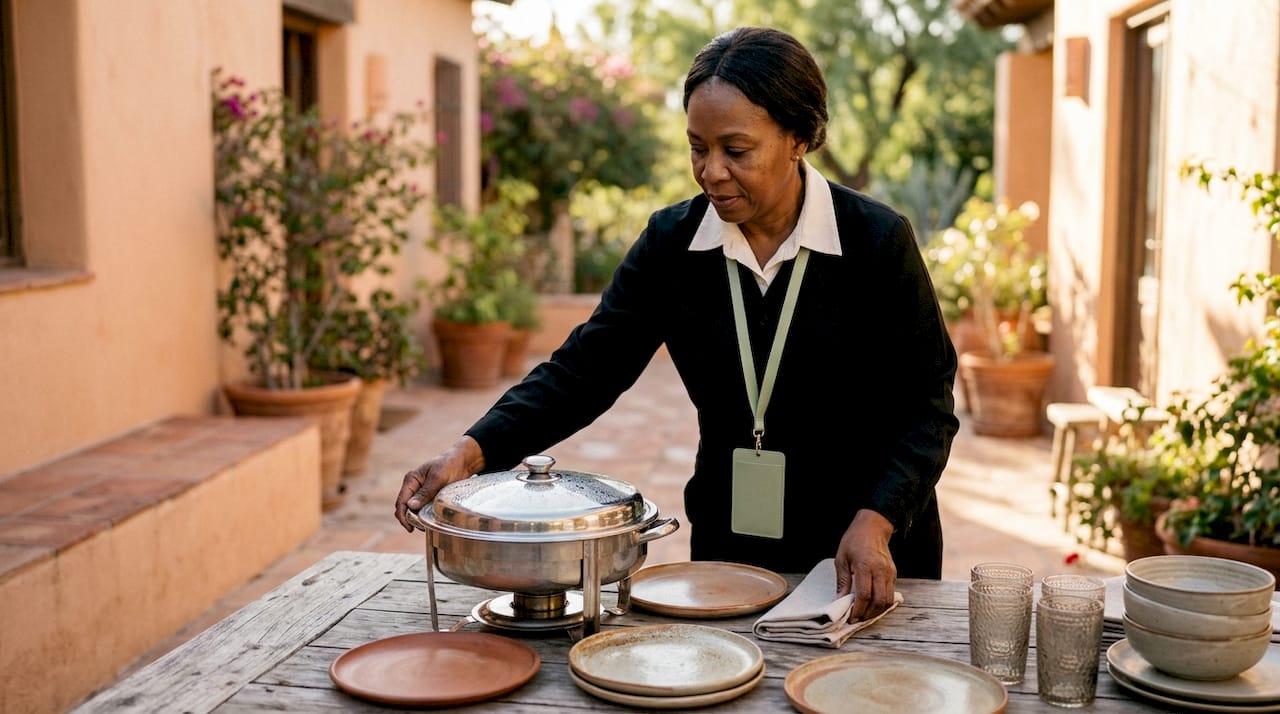
Catering staff should arrive and complete setup 30–45 minutes before the meeting begins. This window allows for quiet arrangement, temperature checks, and any last-minute adjustments without rushing. Confirm the final headcount no later than 48 hours before the event. Build in a 10–15% attendance buffer to avoid running short.
Pro Tip: Use a one-page vendor brief template that includes event date, headcount, dietary requirements, budget, and key contacts. This single document cuts days of back-and-forth communication and reduces errors before the event.
2. Menu selection: quality over quantity in every course
The best boardroom meal options prioritize what industry professionals call “micro-luxury.” This means attention to minute details rather than volume: chef-curated selections, fresh locally sourced ingredients, and polished presentation on every plate. A smaller, well-executed menu outperforms an oversized spread every time.
Suitable formats for executive settings include individually plated meals, pre-set trays, and light bite arrangements. Avoid heavy carbohydrates that cause energy dips mid-meeting. Avoid messy or noisy foods such as whole crabs, ribs, or anything requiring significant utensil effort. The goal is food that sustains focus, not food that distracts from it.
- Plated meals: best for formal, seated boardroom sessions
- Individually packaged trays: ideal for hybrid or socially conscious settings
- Light bites and grazing boards: suited to working lunches and shorter sessions
- Continuous refreshment stations: coffee, water, and light snacks for all-day meetings
Pro Tip: For catering menu planning, always include at least one vegan and one gluten-free option per 10 attendees. This ratio covers most dietary needs without making any guest feel singled out.
3. Dietary accommodation: privacy and inclusivity together
Dietary management is one of the most overlooked areas in corporate catering guidelines. The standard practice is to send a digital dietary survey 2–3 weeks before the event. This gives the catering team enough time to source specialty ingredients and plan allergen-safe preparation.
Label every dish discreetly using elegant tent cards with abbreviations such as GF (gluten-free), V (vegan), and DF (dairy-free). This approach respects guest privacy while giving everyone the information they need. Always confirm that allergen-sensitive options, including nut-free and halal-certified items, come from certified kitchens. One mislabeled dish in a boardroom can create a medical emergency and a lasting reputational problem.
4. Presentation standards: what the table says before anyone speaks
Catering in executive settings is a visible extension of organizational standards. The quality of your tableware, the arrangement of food, and the cleanliness of the setup all communicate how seriously your organization takes its guests. Use real plates or high-quality disposables with a premium finish. Cloth-feel napkins and proper glassware are non-negotiable at the executive level.
Food should never sit on the main conference table during active discussion. Place it on a side credenza or a dedicated service station. This keeps the meeting surface clear and prevents the catering from competing with the agenda. Presentation details like cutlery weight and plate temperature are what separate standard catering from true executive dining service.
“True luxury catering focuses on micro-luxury details. Every element is meticulously planned and executed without compromising the meeting’s tone. The goal is an experience that feels effortless to the guest and invisible in its execution.”
5. Service conduct: the invisibility standard
The best catering staff at an executive event are barely noticed. Discreet entry, quiet setup, no announcements, and silent cleanup protect the integrity of the meeting. Staff should never interrupt a presentation, speak loudly, or draw attention to themselves during active discussion.
This “invisibility standard” is a defining feature of professional executive dining service. It requires briefing your catering team in advance on the meeting schedule, the room layout, and the expected flow of the session. Staff should know exactly when to enter, when to clear, and when to step back. For guidance on high-end service formats, matching the service style to the meeting type is equally important.
- Plated service: best for formal, structured board sessions
- Staffed buffet: appropriate for working lunches with breaks built in
- Continuous refreshment stations: suited to all-day strategy sessions
- Pre-set and cleared: ideal when no staff presence during the meeting is preferred
6. Portion planning: the right quantities every time
Ordering the wrong quantity is one of the most common and avoidable mistakes in business event catering. The standard attendance assumption for board meetings is 95% of confirmed guests. For buffet formats, order for 90% of headcount. For plated meals, build in a 10–15% over-preparation margin to cover last-minute additions.
Running out of food in a boardroom is not a minor inconvenience. It signals poor planning and reflects directly on the host organization. Ordering too much creates unnecessary cost and waste. The 95/90 rule gives you a reliable starting point that balances both risks without requiring guesswork.
7. Budgeting: building a realistic cost framework
Standard executive catering costs range from $25 to $75 per person depending on service level. Premium plated service with full staffing typically starts at $65 per person. Drop-off or lightly staffed options fall at the lower end of that range.
| Service Level | Estimated Cost Per Person | Best For |
|---|---|---|
| Drop-off catering | $25–$40 | Working lunches, small teams |
| Staffed buffet | $40–$60 | Mid-size board meetings |
| Plated full service | $65–$75+ | Formal executive sessions |
| Premium chef-led | $75+ | C-suite and investor meetings |
Always add 20–25% over food cost to cover delivery fees, taxes, and gratuity. These operational costs are predictable but frequently overlooked until the invoice arrives.
Pro Tip: Build a separate 10–15% financial buffer on top of operational fees for last-minute headcount changes, upgraded items, or emergency substitutions. This buffer prevents budget overruns without requiring approval at the last minute.
8. Avoiding buffet lines inside the boardroom
Buffet lines disrupt board meetings by pulling attendees away from the table and creating congestion near the food. This format works in break rooms and conference halls with dedicated dining areas. It does not work inside an active boardroom. Pre-set spreads on a side table or individually plated meals keep the meeting moving without interruption.
If a buffet-style layout is the only option, station it outside the main meeting room and schedule a formal break for guests to serve themselves. Never allow a self-service line to form along the wall of a room where a presentation or vote is in progress. The meeting always takes priority over the meal.
9. Communication with vendors: clarity prevents failure
Clear communication with your catering provider is the single most reliable way to prevent day-of problems. A standardized vendor brief that includes event date, start time, headcount, dietary requirements, budget ceiling, and venue contact information removes ambiguity from every interaction. This document becomes the single source of truth for both your team and the vendor.
Confirm all details in writing at least 48 hours before the event. Follow up with a phone call the morning of the meeting to verify arrival time and any last-minute changes. For corporate event catering best practices, a written confirmation protocol is the difference between a smooth setup and a preventable crisis.
10. Matching catering format to meeting type
Not every boardroom meeting calls for the same catering approach. A two-hour investor briefing has different needs than a full-day strategy retreat. Matching the format to the meeting type is a core part of meeting catering standards that many planners overlook.
For short meetings under 90 minutes, light refreshments and beverages are sufficient. For half-day sessions, a working lunch with individually plated options maintains energy without a formal break. Full-day meetings benefit from continuous refreshment stations supplemented by a structured lunch. Aligning food service to the meeting rhythm keeps attendees focused and prevents catering from becoming a distraction. Reviewing how catering trends are evolving in 2026 can help you anticipate what executive guests now expect as standard.
Key Takeaways
Executive boardroom catering standards require precise scheduling, discreet service, quality-focused menus, and accurate budgeting to protect meeting integrity and reflect organizational professionalism.
| Point | Details |
|---|---|
| Book early and confirm late | Place orders 5–7 days out for small groups; confirm headcount 48 hours before. |
| Apply the invisibility standard | Staff must set up quietly, serve without interruption, and clear without announcement. |
| Prioritize dietary management | Send digital surveys 2–3 weeks ahead and label dishes discreetly with tent cards. |
| Budget beyond food cost | Add 20–25% for fees and taxes, plus a 10–15% buffer for last-minute changes. |
| Match format to meeting type | Short meetings need light refreshments; full-day sessions need structured meal breaks. |
What I’ve learned about catering and corporate trust
Catering is one of the few physical elements in a boardroom that every attendee notices and remembers. I’ve seen organizations spend weeks preparing a presentation and then undermine the entire impression with cold coffee and generic boxed lunches. The food does not need to be extravagant. It needs to be correct.
The shift I’ve observed in executive catering expectations is not toward more food or more elaborate menus. It’s toward greater precision and greater inclusivity. Executives now expect that their dietary preferences are known before they walk into the room. They expect the service to be invisible. They expect the table to look like someone cared.
The organizations that get this right treat catering as an operational discipline, not an afterthought. They use standardized briefs, they confirm details twice, and they partner with caterers who understand the difference between feeding people and hosting them. That distinction is where the real standard lives.
— James
Desertdine brings executive catering standards to your next meeting
Desertdine delivers corporate event catering across the Greater Palm Springs area with the precision and quality that executive meetings demand. Every service includes tailored menu options, locally sourced ingredients, and staff trained to operate with full discretion inside boardroom environments.
Whether you need a working lunch for a small leadership team or a full-service plated experience for a formal board session, Desertdine builds the menu and the service around your meeting, not the other way around. Explore the full range of custom event menus or book your event directly online for a fast, personalized quote.
FAQ
What are executive boardroom catering standards?
Executive boardroom catering standards are the professional criteria governing food quality, timing, presentation, dietary management, and service conduct in corporate meetings. They exist to protect meeting integrity and reflect organizational professionalism.
How far in advance should I book boardroom catering?
Book at least 5–7 business days ahead for groups of 10–20 guests. Larger or more complex events require 1–2 months of lead time to secure preferred vendors and menu options.
What foods should be avoided in a boardroom setting?
Avoid messy, noisy, or heavy foods such as ribs, whole shellfish, and large carbohydrate-heavy dishes. These disrupt focus and create an unprofessional atmosphere during active meetings.
How much does executive boardroom catering cost per person?
Costs range from $25 to $75 per person depending on service level. Always add 20–25% over the food cost to cover delivery fees, taxes, and gratuity.
How should dietary restrictions be handled in boardroom catering?
Send a digital dietary survey 2–3 weeks before the event. Label dishes discreetly with tent cards using abbreviations like GF, V, and DF to respect guest privacy while communicating clearly.
Recommended
- Desert Dine Catering |How to Set Catering Standards at a Luxury Property• Palm Springs & Coachella Valley
- Desert Dine Catering |How Catering Reflects Executive Hospitality Standards• Palm Springs & Coachella Valley
- Desert Dine Catering |How to Impress Clients at an Executive Catering Event• Palm Springs & Coachella Valley
- Desert Dine Catering |Checklist of Things to Know Before Confirming a Catered Menu• Palm Springs & Coachella Valley


