


Cultural cuisine catering options are specialized catering services that deliver authentic international menus tailored to weddings, corporate gatherings, and private events. The industry term for this category is multicultural event catering, and it covers everything from Filipino kamayan spreads to Persian rice dishes to Afro-fusion tasting menus. When done right, these options do more than feed guests. They create a dining narrative that makes your event genuinely unforgettable. This guide identifies the top choices, explains how to compare providers, and gives you the practical tools to execute without surprises.
1. Filipino cuisine catering
Filipino catering is one of the most guest-friendly ethnic food catering formats available for events. Dishes like lechon, pancit, and adobo are rich, familiar enough for first-timers, and naturally suited to communal dining. Half-tray servings feed 12 to 15 guests generously, which makes portion planning straightforward for intimate gatherings or breakout tables at larger events. That tray-based model also means pricing is tied to volume rather than per-head charges, so you can scale up or down without renegotiating the entire contract.

2. Afro-fusion catering
Afro-fusion is one of the fastest-growing categories in international cuisine services, blending West African, East African, and Caribbean influences into menus that feel both distinctive and approachable. Providers like Elite Afro-Fusion deliberately limit their bookings to finish food on-site, preserving the texture and aroma that reheating destroys. That commitment to freshness is a direct signal of quality. For corporate events or upscale weddings where presentation matters, Afro-fusion caterers who cook on location deliver a noticeably different result than those who transport pre-cooked trays.
3. Persian and Middle Eastern catering
Persian catering brings slow-cooked rice dishes, herb-forward stews like ghormeh sabzi, and grilled kebabs that photograph beautifully and satisfy guests with varied dietary preferences. Professional coordination between the kitchen and event floor is what separates a polished Persian spread from a chaotic buffet. Halal-certified Persian caterers also serve a broader guest demographic, which matters at multicultural weddings or corporate events with international attendees. The cuisine’s natural abundance, large platters and layered flavors, signals hospitality in a way that resonates across cultures.
4. African fusion catering
African fusion catering, distinct from Afro-fusion, focuses on presenting traditional recipes with a modern sensibility. The best providers approach the menu the way a family Sunday dinner feels: warm, generous, and culturally respectful rather than commercially sanitized. Providers like Nyumbani African Delicacies in Winnipeg demonstrate that balancing authentic flavors with guest accessibility is the defining skill in this category. For event planners, this means looking for caterers who can explain each dish’s origin and adjust heat levels without stripping the recipe of its character.
5. International buffet catering for large events
When your guest list exceeds 150 people, buffet-format international cuisine services become the most practical choice. Buffet catering setups typically require a minimum of 100 guests and can accommodate up to 500, with event durations around four hours. That scale requires a caterer with dedicated logistics staff, not just kitchen talent. The cuisine variety in a well-executed international buffet, spanning Asian, Mediterranean, and Latin stations, gives every guest at least two or three dishes they connect with personally.
6. Latin and Mexican catering
Latin catering is a natural fit for outdoor events, casual corporate lunches, and wedding cocktail hours in warm-weather venues like Palm Springs. Taco stations, ceviche bars, and slow-roasted meats allow for interactive service that keeps guests engaged between program segments. The format is also cost-efficient: tray-based Latin catering scales well, and the ingredients travel and hold temperature better than many other ethnic food catering styles. For menu customization, Latin cuisine offers more flexibility than most, with easy substitutions for vegetarian, vegan, and gluten-free guests.
7. South Asian and Indian catering
Indian catering delivers one of the highest flavor-per-dollar ratios in specialty food catering. A well-planned Indian menu covers vegetarian, vegan, and meat-based dishes simultaneously, which simplifies dietary accommodation at large events. The challenge is portion estimation: curries and biryanis are dense, and guests often serve themselves more than a standard per-head calculation assumes. Booking at least two weeks in advance is the standard recommendation for cultural caterers, and Indian catering specifically benefits from that lead time to source fresh spices and marinate proteins properly.
Pro Tip: For Indian catering at corporate events, request a tasting session that includes both the mild and spiced versions of key dishes. Many caterers default to a milder profile for mixed audiences, but you want to confirm the flavor still reads as authentic rather than generic.
8. Japanese and East Asian catering
Japanese catering, whether sushi stations, bento-style plated meals, or ramen bars, brings a visual precision that elevates the overall event aesthetic. The presentation standards in Japanese cuisine are among the highest of any traditional cuisine catering style, which makes it a strong choice for executive dinners and high-end corporate events. East Asian catering more broadly, including Chinese dim sum and Korean BBQ stations, works well for interactive formats where guests move between stations. Impressing clients at executive gatherings often comes down to the visual impact of the food as much as the taste.
How to compare cultural cuisine catering options effectively
Choosing between providers requires evaluating more than the menu. The table below outlines the key comparison criteria for multicultural event catering.
| Criteria | What to look for |
|---|---|
| Pricing model | Per-person vs. tray-based; tiered pricing typically runs $32.95 to $36.95 per person depending on entree count |
| Portion sizing | Half-trays for 12 to 15 guests; full-tray standardization avoids underestimation at larger tables |
| Booking lead time | Minimum two weeks for most cultural caterers; longer for on-site cooking formats |
| Authenticity standards | Caterers who maintain recipe integrity avoid over-seasoning or diluting traditional flavors |
| Guest capacity | Buffet formats require minimum 100 guests; smaller setups suit intimate private events |
Beyond the table, three factors consistently separate good cultural catering from exceptional catering. First, ask whether the caterer cooks on-site or transports pre-made food. On-site finishing preserves texture and aroma in ways that reheating cannot replicate. Second, confirm the caterer’s policy on menu customization. The ability to build a private menu around your guest profile, dietary needs, and event theme is what distinguishes a specialist from a generalist. Third, review the caterer’s coordination process. Professional logistics between kitchen and event floor determines whether food arrives at the right temperature and on schedule.
Common challenges and expert tips for cultural event catering
Even experienced planners run into predictable problems with diverse catering options. Here are the most common pitfalls and how to avoid them.
- Underestimating portions. Guests at cultural events tend to serve themselves generously, especially with dishes they find novel. Build in a 15 to 20 percent buffer above your confirmed headcount when ordering tray-based catering.
- Flavor imbalance across stations. A menu that runs from very mild to very spicy without transition dishes can leave guests stranded. Ask your caterer to sequence dishes by intensity so guests can build their palate through the meal.
- Timing gaps between courses. On-site cooking formats require precise scheduling. Confirm the caterer’s setup timeline and identify which dishes need the longest finish time so they are not rushed.
- Overlooking dietary needs. Multicultural menus often contain hidden allergens, including tree nuts in West African sauces or shellfish in Southeast Asian broths. Request a full ingredient list for every dish before finalizing the menu.
- Choosing scale over quality. High-end cultural caterers often reject mass-market scaling to preserve food quality. If a provider can cater 2,000 guests with no change in process, that is worth scrutinizing.
Pro Tip: For events with multicultural guest lists, ask your caterer to include one or two universally familiar dishes alongside the specialty items. This gives hesitant guests an entry point while the more adventurous diners explore the full menu.
Hosts should prioritize caterers that respect cultural origin without simplification or sensationalism. A caterer who treats a cuisine as a novelty rather than a tradition will show that attitude in the food. Look for providers who can speak knowledgeably about the history of each dish and who source ingredients with the same care they apply to technique.
How cultural catering enhances weddings, corporate events, and private gatherings
The right catering format depends on the event type. Here is how multicultural catering choices translate across contexts.
Weddings: Cultural cuisine adds thematic depth that generic banquet menus cannot. A couple incorporating their heritage into the menu creates a personal story guests carry home. Filipino lechon at a reception, Persian rice at a ceremony dinner, or a Latin dessert station at a cocktail hour all signal intentionality. For wedding catering, the cuisine becomes part of the event’s identity rather than a logistical checkbox.
Corporate events: International cuisine services at corporate gatherings signal sophistication and cultural awareness to clients and colleagues alike. A well-executed Afro-fusion or Japanese station at a product launch or client dinner communicates that the host pays attention to detail. Corporate event catering that incorporates diverse options also supports team-building by giving attendees a shared, memorable experience around the table.
Private events: Family-style cultural dining is the format that works best for private gatherings of 20 to 80 guests. Large shared platters encourage conversation, reduce service complexity, and honor the communal spirit that most cultural cuisines are built around. The chef’s role at these events often extends to cultural ambassador, explaining dish histories and ingredients to guests who are encountering the cuisine for the first time.
Key takeaways
Exceptional multicultural event catering requires matching cuisine authenticity, portion logistics, and professional coordination to your specific event type and guest profile.
| Point | Details |
|---|---|
| Book early and confirm logistics | Reserve cultural caterers at least two weeks out and confirm on-site cooking vs. transport policies. |
| Use tray-based sizing carefully | Half-trays serve 12 to 15 guests; always add a 15 to 20 percent buffer for cultural dining events. |
| Prioritize recipe integrity | Choose caterers who maintain traditional flavors rather than diluting dishes for mass appeal. |
| Match cuisine to event format | Filipino and Latin formats suit communal dining; Japanese and Persian work best for plated or executive settings. |
| Vet cultural knowledge, not just food | Caterers who educate guests on dish history create a richer, more memorable event experience. |
What I’ve learned about choosing cultural cuisine catering that most planners miss
After working with dozens of caterers across event types, the single biggest mistake I see planners make is treating cultural cuisine as a theme rather than a discipline. They pick a cuisine for its visual appeal or novelty factor, then book the first provider who shows up in a search result. The result is food that looks right but tastes like a compromise.
The caterers worth hiring are the ones who push back. They ask about your guest demographics before they quote you. They tell you which dishes do not travel well and suggest alternatives. They limit their bookings not because they are exclusive, but because they know that cooking on-site is the only way to deliver the texture and aroma the cuisine demands. That kind of professional honesty is rare, and it is the clearest signal that a caterer respects both the food and your event.
I also think planners underestimate the value of the cultural education component. When a chef or service staff member can explain what a dish is, where it comes from, and why it matters, guests engage differently. They slow down. They ask questions. The meal becomes a conversation rather than a transaction. For corporate events especially, that shift in guest behavior is worth more than any floral arrangement or lighting upgrade.
The practical checklist I use before confirming any cultural caterer: verify on-site cooking capability, request a full allergen list, confirm tray sizing against your headcount plus a buffer, and ask one direct question about the cuisine’s origin. How a caterer answers that last question tells you everything about whether they are a specialist or a generalist with an ethnic menu.
— James
Elevate your next event with Desertdine’s cultural catering expertise
Desertdine brings bespoke multicultural catering to weddings, corporate events, and private gatherings across the Greater Palm Springs area and neighboring regions. Every menu is built around your guest profile, with locally sourced ingredients and a culinary team that treats authenticity as a non-negotiable standard.
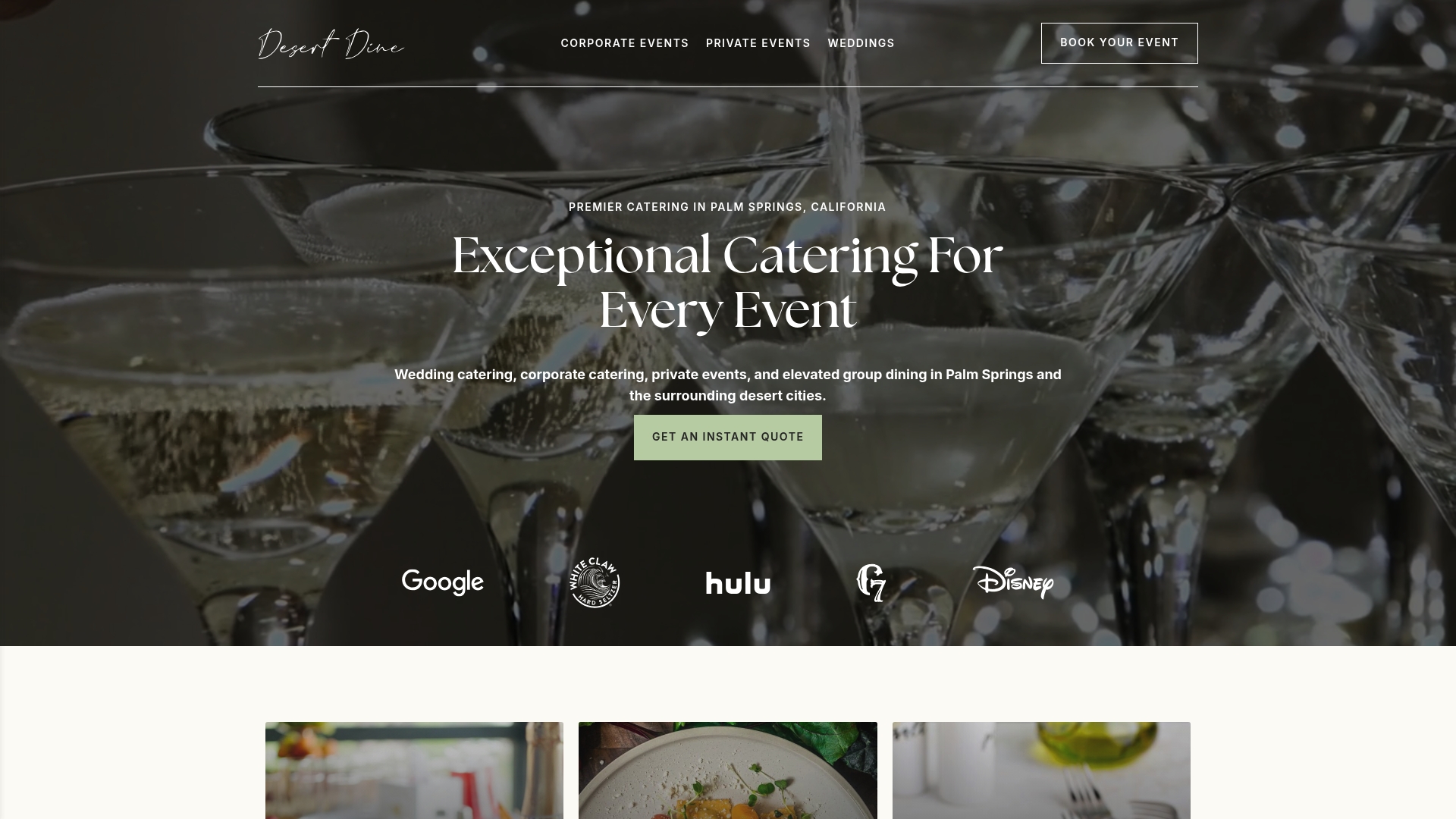
Whether you are planning an intimate private dinner or a large-scale corporate event for clients and colleagues, Desertdine’s team handles every detail from menu design to on-site execution. Explore the full range of curated event menus or go straight to booking. Your guests deserve a dining experience that is genuinely memorable, and Desertdine delivers exactly that.
Book your event today and receive a personalized quote within 24 hours.
FAQ
What are cultural cuisine catering options?
Cultural cuisine catering options are specialized catering services that offer authentic international menus, including Filipino, Persian, Indian, Afro-fusion, and Latin cuisines, tailored to weddings, corporate events, and private gatherings.
How far in advance should I book ethnic food catering?
Most cultural caterers require a minimum booking lead time of two weeks, with tiered pricing typically ranging from $32.95 to $36.95 per person depending on the number of entrees selected.
How do I estimate portions for cultural catering?
Half-trays in ethnic catering serve 12 to 15 guests generously. Add a 15 to 20 percent buffer above your confirmed headcount to account for the larger servings typical of cultural dining events.
What makes a cultural caterer authentic vs. generic?
Authentic caterers maintain recipe integrity by avoiding over-seasoning or diluting traditional flavors, cook on-site where possible, and can explain the cultural history of each dish on the menu.
Can cultural cuisine catering work for large corporate events?
Yes. Buffet-format international cuisine services accommodate 100 to 500 guests and are well-suited to corporate gatherings, provided the caterer has dedicated logistics staff to manage timing and presentation across the event floor.


