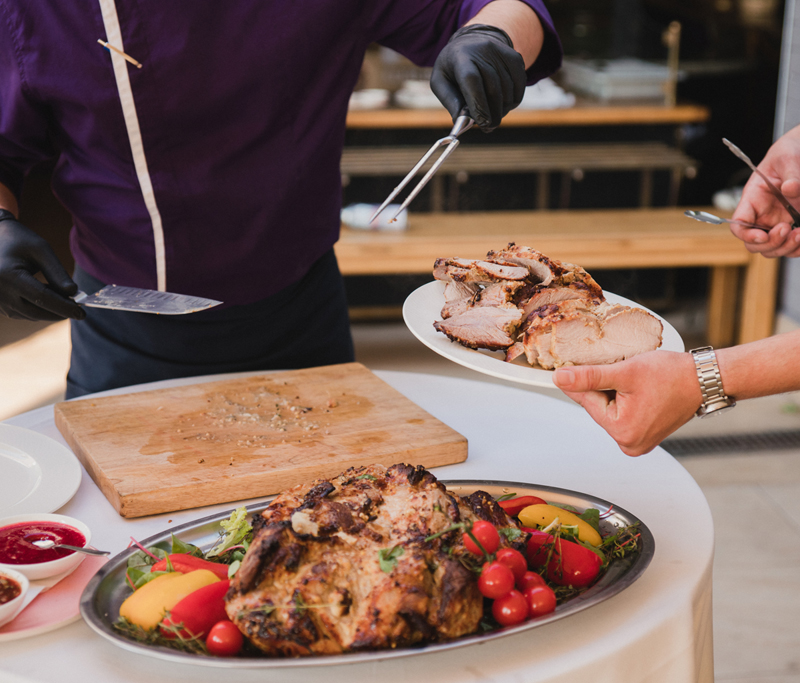
Corporate event catering best practices are defined as the documented standards and operational protocols that govern food selection, service delivery, dietary accommodation, and sustainability compliance for professional events. Applied correctly, they directly determine whether attendees leave satisfied or frustrated, and whether clients renew contracts or look elsewhere. From ServSafe-certified vendors to Scope 3 emissions reporting, the gap between a forgettable lunch and a genuinely impressive corporate dining experience comes down to the decisions made before the first dish is plated.
1. Choosing the right catering style for your event
The catering format you select sets the tone for the entire event experience. Each style carries distinct operational requirements, cost implications, and guest experience outcomes. Matching format to event type is the first and most consequential decision in planning corporate catering.
The five most common formats for corporate functions are:
- Buffet service: Ideal for large groups, networking events, and multi-session conferences. Guests control their pace, portions, and preferences. Buffet also reduces plastic waste compared to individually packaged meals, making it the stronger choice for sustainability-focused clients.
- Plated service: Best for formal dinners, award ceremonies, and executive lunches. Plated meals signal prestige and allow precise portion control, but require more staff and tighter timing coordination.
- Food stations: Work well for cocktail receptions and creative brand events. Stations encourage movement and conversation, which supports networking goals.
- Drop-off catering: Suited for smaller internal meetings and working lunches where setup time is limited. Lower cost, but no on-site service staff means you absorb all logistics.
- Boxed meals: Practical for outdoor events, off-site training days, or hybrid events with remote attendees receiving physical packages. Labeling individual boxes for dietary needs is straightforward.
Pro Tip: For events above 75 guests, full service catering consistently delivers higher value through professional staffing and on-site risk management, even when the upfront cost is higher than drop-off alternatives.
2. Menu planning for diverse dietary needs

Inclusive menu planning is not a courtesy. It is a professional standard that directly affects guest satisfaction scores and repeat business. The process starts well before the event date.
Follow these steps to build a menu that works for every attendee:
- Collect dietary requirements at registration. Include fields for vegan, vegetarian, gluten-free, nut-free, halal, kosher, and other common restrictions. Make this mandatory, not optional.
- Design special diet dishes as full menu items. A vegan plate should be as considered and appealing as the standard entrée. Afterthought alternatives signal poor planning and alienate guests.
- Order above your RSVP count for restricted meals. Experienced planners order 10% extra vegan and gluten-free meals above confirmed numbers to cover last-minute changes and unreported needs.
- Label every dish clearly. Use standardized tent cards that list the dish name, key allergens, and dietary category. This prevents confusion at service and reduces liability.
- Brief service staff on dietary items. Every server should know which dishes are allergen-sensitive and be able to answer guest questions without guessing.
- Confirm with the caterer 48 hours before the event. Verify that special meal counts match your final list and that packaging or plating distinguishes restricted items from standard dishes.
For menu customization strategies that go beyond basic dietary accommodation, working with a caterer who builds bespoke menus from the start produces far better results than modifying a standard package.
3. Logistics and timing for smooth catering delivery
Timing failures are the most common and most preventable source of catering complaints at corporate events. The fix is a structured pre-event coordination process, not luck.
The industry standard is clear: catering should arrive 30 to 45 minutes before food service begins. This window allows the team to set up stations, verify temperatures, arrange signage, and resolve any delivery discrepancies before guests approach the food.
Key logistics coordination checklist
- Confirm delivery access with the venue at least one week out. Loading dock hours, elevator reservations, and parking restrictions can derail even the best-organized caterer.
- Share a detailed floor plan with your caterer showing table placement, power access for warming equipment, and traffic flow paths.
- Conduct a tabletop run with your caterer before the event. This walkthrough aligns everyone on layout, staffing positions, and service sequence, preventing bottlenecks during peak service.
- Cross-check the delivery against your Banquet Event Order (BEO) on arrival. Verify item counts, serving equipment, and condiment supplies before signing off.
- Assign one point of contact on your team to manage caterer communication on the day. Split communication creates confusion and delays.
Pro Tip: Digital catering platforms that offer order tracking and 24/7 support give you real-time visibility into delivery status and a direct escalation path if something goes wrong on the day.
Timing comparison by event format
| Event type | Recommended setup window | Service style |
|---|---|---|
| Conference lunch (100+ guests) | 45 minutes before service | Buffet or stations |
| Executive plated dinner | 60 minutes before service | Plated, full service |
| Working breakfast meeting | 20 to 30 minutes before service | Drop-off or light buffet |
| Cocktail reception | 30 minutes before first guest arrival | Stations and passed appetizers |
4. Incorporating sustainability into corporate catering
Sustainability in corporate event catering has moved from a preference to a procurement requirement. Clients operating under Environmental, Social, and Governance (ESG) frameworks now expect caterers to provide verified environmental data, not just vague claims about local sourcing.
The most pressing requirement in 2026 is Scope 3 emissions reporting. Corporate Sustainability Reporting Directive compliance requires companies to account for food and beverage emissions within their supply chain. This means your caterer needs to provide ingredient-level emissions data, not just a general sustainability statement. Caterers who supply verified emissions data hold a measurable competitive advantage in corporate procurement processes.
Practical steps to meet sustainable catering corporate event standards include:
- Prioritize seasonal, locally sourced ingredients. In the Greater Palm Springs area, this means working with Coachella Valley farms and regional suppliers who can document provenance.
- Choose buffet or family-style service over individually packaged meals. The waste reduction is significant and the guest experience is often better.
- Request compostable serviceware from your caterer if single-use items are unavoidable.
- Build plant-forward menu options as primary dishes, not side items. Lower-emission proteins and vegetable-centered plates reduce the carbon footprint of the meal without sacrificing quality.
- Ask caterers directly whether they track food waste by weight per event. Those who do can provide post-event reporting that supports your client’s sustainability documentation.
5. Getting headcount right for food quantity planning
Ordering the wrong amount of food is the most expensive mistake in event catering. Too little creates a poor guest experience. Too much wastes budget and generates unnecessary food waste.
For buffet-style events, the practical standard is to order for 90 to 95% of your confirmed RSVP count. Corporate events consistently see 5 to 10% no-show rates, and ordering for every confirmed guest results in significant surplus. This adjustment alone can reduce food costs meaningfully on large events without any risk to guest satisfaction.
For cocktail receptions, the portion standard is 3 to 5 appetizer pieces per guest per hour. This benchmark keeps service flowing without over-producing food that goes uneaten. Apply it to each hour of the reception separately rather than calculating a flat total.
Accurate headcount data is the foundation of all quantity decisions. For practical methods to estimate your guest count before final orders are placed, building in a structured RSVP process with a hard deadline is the single most effective tool available to planners.
6. Vetting caterer credentials and avoiding common mistakes
Vendor due diligence is not optional for corporate events. A caterer who cannot produce proof of insurance, food safety certifications, and a Hazard Analysis Critical Control Points (HACCP) plan should not be on your shortlist regardless of price.
Verifying caterer credentials including ServSafe certifications, general liability insurance, and documented HACCP plans is the baseline for risk management at any corporate function. These checks protect your client, your attendees, and your professional reputation if something goes wrong.
Beyond credentials, watch for these common planning errors:
- Menu fatigue at recurring events. Rotating menus across quarterly or monthly corporate functions keeps the experience fresh and signals attention to detail.
- Dish suitability for the setting. Finger foods at a formal board dinner or heavy entrées at a standing networking event both create friction. Match the food to the physical and social context.
- Ignoring flexibility clauses in contracts. Caterers who cannot adjust headcount or menu items within 48 hours of the event create unnecessary risk. Build flexibility requirements into your vendor agreements.
- Skipping a post-event debrief. A 15-minute call with your caterer after the event captures what worked and what to adjust, which is invaluable for recurring clients.
Pro Tip: Establishing a preferred vendor relationship with a single full-service caterer for recurring corporate accounts gives you priority scheduling, consistent quality, and faster response times compared to sourcing a new vendor for each event.
Key takeaways
Successful corporate event catering requires matching service format to event goals, building inclusive menus with verified dietary accommodations, and coordinating logistics with precision from delivery to service.
| Point | Details |
|---|---|
| Match format to event type | Buffet suits large groups; plated service fits formal dinners; stations support networking events. |
| Order strategically for buffets | Plan for 90 to 95% of RSVP count to account for typical no-show rates without waste. |
| Add 10% for restricted meals | Order extra vegan and gluten-free portions above confirmed numbers to cover last-minute needs. |
| Require sustainability data | Ask caterers for ingredient-level emissions reporting to meet ESG and CSRD compliance needs. |
| Vet credentials before booking | Confirm ServSafe certification, liability insurance, and HACCP plans as non-negotiable minimums. |
What I’ve learned about corporate catering that most guides skip
After working across dozens of corporate events in the desert Southwest, the insight that consistently separates good catering from genuinely memorable catering is this: the food is rarely the problem. The problem is almost always the process that surrounds it.
Planners who treat catering as a procurement checkbox rather than a guest experience investment tend to make the same mistakes repeatedly. They under-brief the caterer on event flow, skip the tabletop run because the schedule feels tight, and then wonder why service stalls during the first 20 minutes of a buffet. The walkthrough is not a formality. It is the single highest-return hour you can spend before an event.
On sustainability, I have seen corporate clients go from treating it as a nice-to-have to making it a contract requirement within two years. Planners who are not already asking caterers for emissions data are going to be caught off guard when their next RFP includes it as a mandatory field. Get ahead of this now by building it into your vendor evaluation criteria.
The other shift worth noting is how catering is being used as a branding and networking tool rather than just a meal break. Thoughtfully designed food stations with local provenance stories, or a signature dish tied to the event theme, give attendees something to talk about. That conversation is free marketing for your client. The benefits of hiring a professional caterer for flagship events extend well beyond the food itself.
— James
Desertdine’s tailored corporate catering for Palm Springs events
Planning a corporate event in the Greater Palm Springs area? Desertdine brings full-service catering expertise, locally sourced menus, and dedicated account management to every corporate function, from executive retreats to large-scale conferences.

Desertdine’s corporate event catering packages are built around your event goals, not a fixed template. Every menu is customizable, every dietary requirement is accommodated from the start, and every service team is professionally trained and certified. Explore custom menu options or book your event directly to receive an instant quote and connect with a dedicated event specialist.
FAQ
What is the standard arrival time for corporate catering delivery?
Catering should arrive 30 to 45 minutes before food service begins. This buffer allows the team to complete setup, verify orders, and resolve any issues before guests arrive.
How much food should I order for a corporate buffet?
Order for approximately 90 to 95% of your confirmed RSVP count. Corporate events typically see 5 to 10% no-show rates, so ordering for every confirmed guest generates unnecessary surplus.
What credentials should I verify before hiring a caterer?
Confirm that the caterer holds general liability insurance, ServSafe food safety certification, and a documented HACCP plan. These are the baseline requirements for any corporate function.
How do I handle dietary restrictions for large corporate events?
Collect dietary requirements at registration, design restricted-diet dishes as full menu items rather than substitutions, and order 10% extra vegan and gluten-free meals above your confirmed count to cover last-minute changes.
What does sustainable catering mean for corporate events?
Sustainable catering for corporate events includes selecting caterers who provide Scope 3 emissions data, prioritizing seasonal and locally sourced ingredients, choosing buffet service over individually packaged meals, and using compostable serviceware where single-use items are required.
Recommended
- Desert Dine Catering |How to Impress Clients at an Executive Catering Event• Palm Springs & Coachella Valley
- Desert Dine Catering |4 Benefits of Hiring a Caterer for Your Corporate Event - What to Know• Palm Springs & Coachella Valley
- Desert Dine Catering |How Catering Proposals Work: A Planner’s Guide• Palm Springs & Coachella Valley
- Desert Dine Catering |What Is a Catering Event Brief? A Planner’s Guide• Palm Springs & Coachella Valley