


Corporate award dinner catering elements are the core components that define the quality, flow, and brand impression of a formal recognition event. From menu structure to staffing protocols, every detail shapes how guests experience the evening. Catering costs for a formal awards dinner range from $150 to $300 per person in major markets, with planning recommended to start 10–12 months out. That investment only pays off when each catering element is planned with precision and purpose. This guide covers the essential factors every corporate event organizer needs to deliver an awards dinner that feels polished, professional, and genuinely memorable.
1. What are the best menu structures for a corporate award dinner?
The 3-course plated dinner is the gold standard for black-tie corporate recognition events. It gives organizers full control over pacing, portion consistency, and presentation quality. For events with 150 or more guests, a hybrid model works well: a cocktail reception followed by a plated dinner maintains sophistication while managing service speed.
Buffet stations with live carving or action stations suit very large crowds but require more floor space and staffing. Each style carries trade-offs:
- Plated dinner: Highest formality, controlled pacing, requires more waitstaff per table
- Hybrid cocktail plus plated: Flexible arrival flow, strong first impression, higher coordination demand
- Upscale buffet with stations: Faster service for large groups, less formal, harder to synchronize with award presentations
- Family-style service: Creates a communal feel, works well for smaller tables of 8–10 guests
Pro Tip: Schedule service pauses of 3–5 minutes before each major award category. Brief your floor manager and waitstaff in advance so plates are cleared and glasses are filled before the spotlight shifts to the stage.
2. How to manage guest dietary requirements for award dinners
Dietary requirements must be confirmed at least 30 days before the event to guarantee compliant, high-quality meal options. This is not a courtesy. It is a planning requirement that protects both guest satisfaction and your organization’s reputation.
Between 30–40% of guests at corporate dinners typically need vegetarian, vegan, or gluten-free accommodations. That share is large enough to treat as a primary menu track, not an afterthought. Failing to lock in dietary needs early can compromise guest satisfaction and create reputational risk.
Best practices for managing dietary accommodations:
- Collect dietary preferences through your RSVP system, not a follow-up email
- Assign each special meal to a named guest with a table card or discreet marker
- Work with your caterer to match the plating quality and portion size of the standard menu
- Confirm allergen protocols in writing with the catering team at least two weeks out
Pro Tip: Ask your caterer to plate dietary alternatives with the same garnish and presentation as the main course. Guests with restrictions should never feel they received a lesser meal.
3. What staffing and service elements define a professional award dinner?
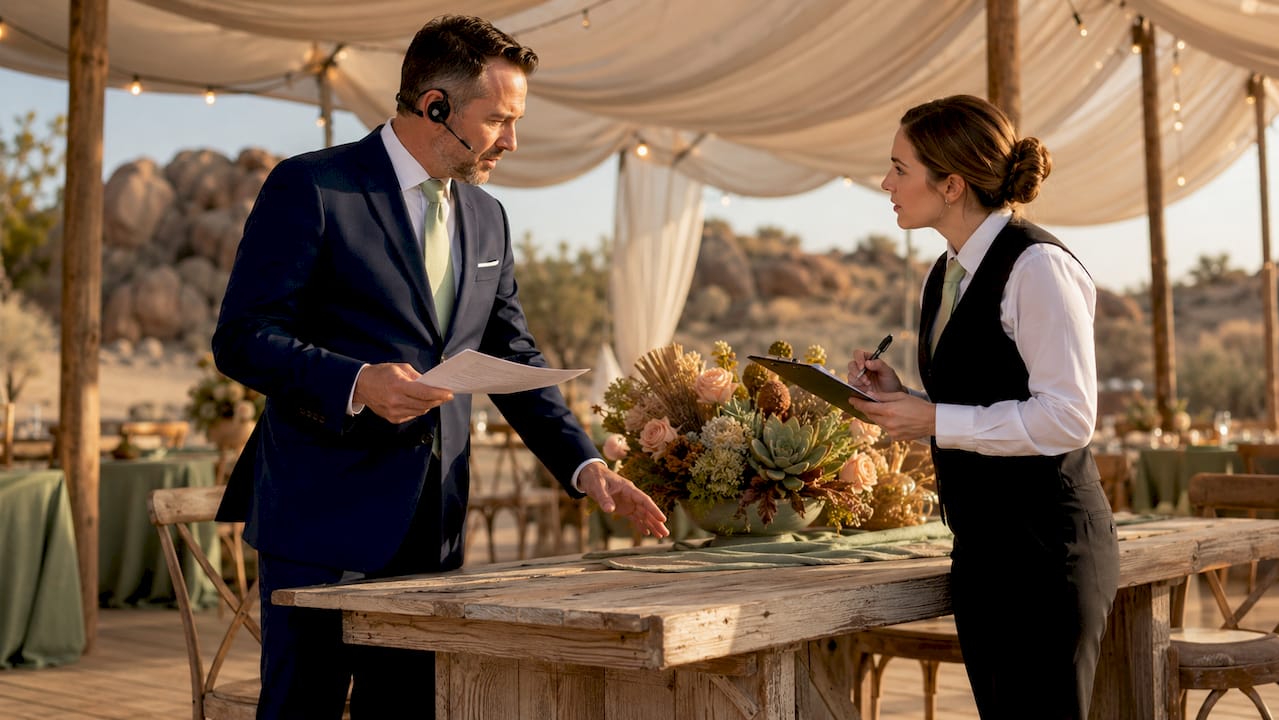
Waitstaff professionalism is a direct extension of your corporate brand. Guests notice attentiveness, timing, and discretion. A server who clears plates loudly during an acceptance speech does more damage than a mediocre appetizer.
The most effective service model for award dinners includes:
- A dedicated floor manager embedded with the catering team throughout the event
- Direct communication lines between catering staff and the AV technician
- Pre-briefed service pauses timed to award presentations and keynote speeches
- Uniform dress code for all staff that aligns with the event’s formality level
“Event planners avoid service disruptions by enabling direct communication between catering staff and AV technicians to pause service during speeches and award presentations.” — Plyvine Catering
Structured program pacing and tight coordination between catering and entertainment are what experienced planners cite as the top factor in a successful awards evening. Poor timing coordination disrupts guest focus and reduces the event’s overall impact.
4. How venue logistics shape your catering options
Venue infrastructure directly dictates what catering styles are feasible. Ceiling height affects live cooking stations. Power availability determines whether you can run induction burners or warming equipment. Load-in access controls how much equipment your caterer can bring on-site.
Evaluate these factors before finalizing your menu style:
- Kitchen access: Does the venue have a full prep kitchen, or will your caterer work from a staging area?
- Power supply: Confirm amperage for live stations, warming drawers, and bar equipment
- Load-in window: A 2-hour load-in window forces simpler menus than a 6-hour window
- Ceiling height: Low ceilings rule out open-flame stations and tall display setups
- Noise restrictions: Some venues prohibit live carving or sizzle-plate service near the stage
| Venue factor | Impact on catering |
|---|---|
| Full prep kitchen | Enables plated multi-course dinners with hot service |
| Staging area only | Limits to pre-plated or cold-station formats |
| Limited power | Rules out live cooking stations |
| Short load-in window | Reduces menu complexity and presentation options |
| Noise restrictions near stage | Eliminates action stations during award program |
Limited venue capabilities can force mid-planning downgrades from plated dinners to simpler buffet styles. Assess the venue at least 6 months out to avoid that outcome.
5. How lighting, décor, and beverage programs enhance catering impact
Lighting and sound quality deliver a higher return on guest engagement than elaborate centerpieces or floral décor. A well-lit table with warm ambient lighting makes food look better and keeps guests focused on the experience. Prioritize the hospitality environment before adding decorative layers.
A curated beverage program featuring signature cocktails, curated wines, and full spirits enhances guest experience when paired thoughtfully with the menu. Licensed bartenders and quality glassware signal event prestige before guests take their first sip.
Key components of a strong beverage and ambiance program:
- Signature cocktail: One branded drink tied to the company or event theme creates a talking point
- Wine pairing: Select two wines, one white and one red, that complement the main course proteins
- Non-alcoholic options: Sparkling water, mocktails, and fresh-pressed juices serve guests who do not drink
- Table settings: Branded menus, custom napkin folds, and consistent color palettes reinforce company identity
| Element | High ROI choice | Lower ROI choice |
|---|---|---|
| Lighting | Warm ambient plus pin-spot on tables | Generic overhead fluorescent |
| Centerpieces | Low floral with candles | Tall arrangements blocking sightlines |
| Beverage | Curated wine plus signature cocktail | Generic open bar with no pairing |
| Table settings | Branded menus and custom linens | Standard venue defaults |
High-end corporate catering prioritizes locally sourced, seasonal ingredients and customizable menus that reflect brand identity. Customization reinforces corporate values and creates a dining experience guests connect to the company, not just the venue. For more on branded presentation ideas, the approach applies directly to award dinner formats.
6. What awards dinner menu choices work best for corporate audiences?
Corporate audiences prefer familiar, high-quality ingredients presented elegantly rather than experimental dishes. The goal is to keep guests comfortable and focused on networking and the award program, not puzzling over unfamiliar preparations.
A reliable awards dinner menu follows this structure:
- Passed appetizers during cocktail hour: 3–4 bite-sized options, one vegetarian, one protein-forward
- First course: A composed salad or chilled soup that plates quickly and holds well
- Main course: Two protein options, typically a beef and a fish or chicken, plus a vegetarian entrée
- Dessert: Plated individually or served as a dessert station after the final award
Avoid overly complex sauces or dishes that require tableside finishing during the award program. Simplicity in execution protects service timing. For detailed guidance on high-end presentation styles, the principles apply directly to formal award dinner formats.
Full-service catering covers setup, staffing, bar service, and cleanup, which lets event hosts stay focused on guests and programming. That end-to-end consistency is what separates a polished event from one that feels disjointed.
Key takeaways
The most successful corporate award dinners combine a structured menu, early dietary planning, professional staffing, and venue-aware logistics into one coordinated execution plan.
| Point | Details |
|---|---|
| Menu structure matters | A 3-course plated dinner is the top choice for formal award events with controlled pacing. |
| Dietary planning is non-negotiable | Confirm all special meal needs at least 30 days out to protect quality and guest satisfaction. |
| Staffing reflects your brand | Discreet, well-briefed waitstaff with direct AV communication prevent program disruptions. |
| Venue assessment comes first | Evaluate power, kitchen access, and load-in windows before finalizing your menu style. |
| Lighting beats décor for ROI | Warm ambient lighting and a curated beverage program deliver stronger guest engagement than elaborate centerpieces. |
What I’ve learned from planning award dinners that actually work
The detail that breaks most award dinners is not the food. It is the timing gap between the kitchen and the stage. I have seen beautifully plated entrées arrive mid-speech because no one established a clear signal system between the floor manager and the AV team. That single failure undoes months of menu planning.
The fix is simple but requires discipline. You need one person whose only job during the event is to sit at the intersection of catering and program flow. Not the event director. Not the caterer’s captain. A dedicated coordinator who holds both timelines and calls the pauses. Most planners skip this role to cut costs, and it shows.
The other thing I would tell any organizer: do not let the menu outpace the venue. I have watched caterers promise elaborate live stations only to discover on load-in day that the venue’s power supply could not support them. Assess the space early, confirm the infrastructure in writing, and build your menu around what the room can actually deliver.
Finally, treat dietary accommodations as a hospitality statement, not a compliance checkbox. When a guest with a dietary restriction receives a plate that looks and tastes as good as the main course, they remember the company that hosted them. That impression lasts far longer than the centerpiece.
— James
Elevate your next award dinner with Desertdine
Desertdine brings full-service corporate event catering to Palm Springs and the greater Coachella Valley, with menus built specifically for formal award dinners and recognition events. From multi-course plated dinners to curated beverage programs, every detail is tailored to your brand and guest list.
Desertdine manages dietary accommodations, staffing coordination, setup, and cleanup so you can focus entirely on your guests and program. Locally sourced ingredients and customizable menus mean your event reflects your company’s identity from the first passed appetizer to the final dessert. Ready to plan your event? Book your event with Desertdine today and get a personalized quote for your award dinner.
FAQ
What is the best catering style for a corporate award dinner?
A formal 3-course plated dinner is the preferred style for corporate award dinners. For events with 150 or more guests, a hybrid cocktail reception plus plated dinner maintains formality while managing service speed.
How far in advance should I confirm dietary requirements?
Dietary requirements should be confirmed at least 30 days before the event. Between 30–40% of guests at corporate dinners typically need vegetarian, vegan, or gluten-free options, so early confirmation protects meal quality for a significant portion of your guest list.
How much does corporate award dinner catering cost per person?
Formal corporate awards dinner catering ranges from $150 to $300 per person in major markets. Budget planners recommend adding a 10–15% contingency fund to cover last-minute changes or additions.
How do I prevent catering from disrupting the award program?
Establish direct communication between your floor manager and the AV technician before the event starts. Pre-brief all waitstaff on service pause cues tied to award presentations and speeches.
What venue factors affect catering quality the most?
Kitchen access, power supply, and load-in window length are the three factors that most directly limit or enable your catering options. Assess all three at least 6 months before the event to avoid mid-planning service style downgrades.
Recommended
- Desert Dine Catering |Corporate Event Catering Best Practices for Planners• Palm Springs & Coachella Valley
- Desert Dine Catering |How to Impress Clients at an Executive Catering Event• Palm Springs & Coachella Valley
- Desert Dine Catering |What Is Catering for Destination Events: Expert Guide• Palm Springs & Coachella Valley
- Desert Dine Catering |Types of High-End Catering Presentations for Events• Palm Springs & Coachella Valley


